Discover Resources
Browse curated homeschool resources from the community
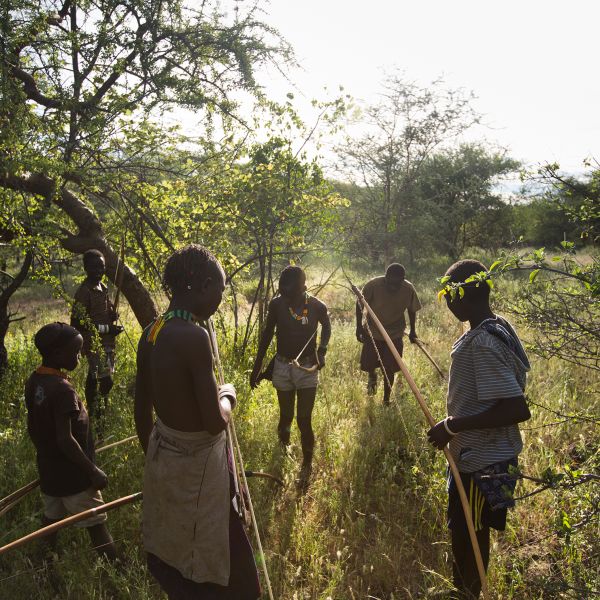
Encyclopedic Entry: Hunter-Gatherer Culture
Hunter-gatherer culture was the way of life for early humans until around 11,000 to 12,000 years ago. The lifestyle of hunter-gatherers was based on hunting animals and foraging for food.

The Sun s Surprising Movement Across the Sky Gordon Williamson
Suppose you placed a camera at a fixed position, took a picture of the sky at the same time every day for an entire year, and overlaid all of the photos on top of each other. What would the sun look like in that combined image? A stationary dot? A circular path? Neither. Oddly enough, it makes a ‘figure 8’ pattern, known as the Sun’s analemma. Gordon Williamson explains why.

How Do Drugs Affect the Brain Sara Garofalo
Most people will take a pill, receive an injection, or otherwise take some kind of medicine during their lives. But most of us don’t know anything about how these substances actually work. How can various compounds impact the way we physically feel, think, and even behave? Sara Garofalo explains how some drugs can alter the communication between cells in the brain.

Do You Speak Monkey the Language of Cotton Top Tamarins Anne Savage
The cotton-top tamarin is a very vocal monkey -- the species communicates using a sophisticated language of 38 distinct and grammatically structured calls! Anne Savage teaches a few of these chirps and whistles, taking us through a day in the life of Shakira the tamarin (using sounds pulled from the wild) as Shakira signals to her family, talks to her food and warns against potential predators.

The Art Forger Who Tricked the Nazis Noah Charney
It was one of the strangest trials in Dutch history. The defendant in a 1947 case was an art forger who had counterfeited millions of dollars worth of paintings. But he wasn’t arguing his innocence— in fact, his life depended on proving that he had committed fraud. Who was this artist, and why was he on trial for his life? Noah Charney investigates the notorious Han van Meegeren.
What is Metallic Glass Ashwini Bharathula
Steel and plastic are essential to much of our infrastructure and technology. Steel is strong and hard, but difficult to shape intricately. Plastic can take on just about any form, but it’s weak and soft. Wouldn’t it be nice if there were one material as strong as the strongest steel and as shapeable as plastic? Ashwini Bharathula discusses the future of metallic glass.
How the Popsicle Was Invented Moments of Vision 11 Jessica Oreck
Each year, approximately 2 billion popsicles are sold worldwide. But where did the idea for this tasty treat come from? In the eleventh installment of our ‘Moments of Vision’ series, Jessica Oreck shares the distracted origins of the popsicle.
How Do Carbohydrates Impact Your Health Richard J Wood
The things we eat and drink on a daily basis can impact our health in big ways. Too many carbohydrates, for instance, can lead to insulin resistance, which is a major contributor to cardiovascular disease and Type 2 Diabetes. But what are carbs, exactly? And what do they do to our bodies? Richard J. Wood explains.

National Museum of Natural History Education
We offer natural history science programs, resources, and professional development to support educators teaching students in grades K to 12.

Why is Bread Fluffy Vinegar Sour and Swiss Cheese Holey Erez Garty
Where does bread get its fluffiness? Swiss cheese its holes? And what makes vinegar so sour? These foods may taste completely different, but all of these phenomena come from microorganisms chowing down on sugar and belching up some culinary byproducts. Erez Garty shows how your kitchen functions as a sort of biotechnology lab, manned by microorganisms that culture your cuisine.

How Braille Was Invented Moments of Vision 9 Jessica Oreck
Today, Braille is the universally accepted system of writing for the blind, translated into almost every language in almost every country across the globe. But it didn’t actually start out as a tool for the blind. Jessica Oreck details the surprising wartime origins of Braille.

How Does Anesthesia Work Steven Zheng
When under anesthesia, you can’t move, form memories, or — hopefully — feel pain. And while it might just seem like you are asleep for that time, you actually aren’t. What’s going on? Steven Zheng explains what we know about the science behind anesthesia.
How Do Birds Learn to Sing Partha Mitra
A brown thrasher knows a thousand songs. A wood thrush can sing two pitches at once. A mockingbird can match the sounds around it — including car alarms. These are just a few of the 4,000 species of songbirds. How do these birds learn songs? How do they know to mimic the songs of their own species? Are they born knowing how to sing? Partha P. Mitra illuminates the beautiful world of birdsong.
The Rise and Fall of the Celtic Warriors Philip Freeman
One summer evening in 335 BCE, Alexander the Great was resting by the Danube River when a band of strangers approached his camp. Alexander had never seen anything like these tall, fierce-looking warriors with huge golden neck rings and colorful cloaks. They were Keltoi or Celts— a collection of independent tribes spread across Europe. Philip Freeman details the rise and fall of the ancient Celts.

Can You Solve Einstein s Riddle Dan Van Der Vieren
Before he turned physics upside down, a young Albert Einstein supposedly showed off his genius by devising a complex riddle involving a stolen exotic fish and a long list of suspects. Can you resist tackling a brain teaser written by one of the smartest people in history? Dan Van der Vieren shows how.

How Did Clouds Get Their Names Richard Hamblyn
The study of clouds has always been a daydreamer’s science, aptly founded by a thoughtful young man whose favorite activity was staring out of the window at the sky. Richard Hamblyn tells the history of Luke Howard, the man who classified the clouds and forever changed humanity’s understanding of these changeable, mysterious objects.
Why Do We Have Museums J V Maranto
Museums have been a part of human history for over 2,000 years -- but they weren't always like the ones we visit today. J.V. Maranto uncovers the evolution of museums, from the first museum in 530 BC (curated by a princess) to PT Barnum’s freak shows and beyond.

How to Sequence the Human Genome Mark J Kiel
Your genome, every human's genome, consists of a unique DNA sequence of A's, T's, C's and G's that tell your cells how to operate. Thanks to technological advances, scientists are now able to know the sequence of letters that makes up an individual genome relatively quickly and inexpensively. Mark J. Kiel takes an in-depth look at the science behind the sequence.