quiz
Resources
View all
Should You Be Suing Your Government Shannon Odell
Since 2015, an unprecedented movement has been sweeping courts around the world. Groups of young plaintiffs are suing their governments for their inaction on tackling climate change. These suits argue that climate inaction violates their basic human rights. But what do human rights have to do with the environment? Shannon Odell examines our right to a healthy environment, food, health, and water.
What Would Happen If Every Human Suddenly Disappeared Dan Kwartler
Human beings are everywhere. With settlements on every continent, we can be found in the most isolated corners of Earth’s jungles, oceans and tundras. Our impact is so profound, most scientists believe humanity has left a permanent mark on Earth’s geological record. So what would happen if suddenly, every human on Earth disappeared? Dan Kwartler investigates.
History vs. Cleopatra - Alex Gendler
Separate fact from fiction about Egypt's famous queen.

The Material That Could Change the World for a Third Time
Today roads, sidewalks, bridges, and skyscrapers are made of a material called concrete (aka cement). There’s three tons of it for every person on Earth. It’s also played a surprisingly large role in rising global temperatures over the last century. What exactly makes concrete problematic, and what can we do to fix it? Explore how scientists are working to create a more sustainable concrete.

Lessons Worth Sharing
TED-Ed celebrates the ideas of teachers and students around the world. Discover hundreds of animated lessons, create customized lessons, and share your big ideas.
How sugar affects the brain - Nicole Avena
Understanding sugar's impact on your brain chemistry.

How is power divided in the United States government? - Belinda Stutzman
Learn about the three branches of government.
Why should you read "One Hundred Years of Solitude"? - Francisco Díez-Buzo
Explore Gabriel García Márquez's magical realist masterpiece.

Why should you read "Hamlet"? - Iseult Gillespie
Discover the enduring power of Shakespeare's masterpiece.

The myth of Sisyphus - Alex Gendler
The Greek myth and its philosophical implications.
TED-Ed: How Stretching Actually Changes Your Muscles
An athlete is preparing for a game. They’ve put on their gear and done their warmup, and now it’s time for one more routine — stretching. Typically, athletes stretch before physical activity to avoid injuries like strains and tears. But does stretching actually prevent these issues? And if so, how long do the benefits of stretching last? Malachy McHugh explores the finer points of flexibility.
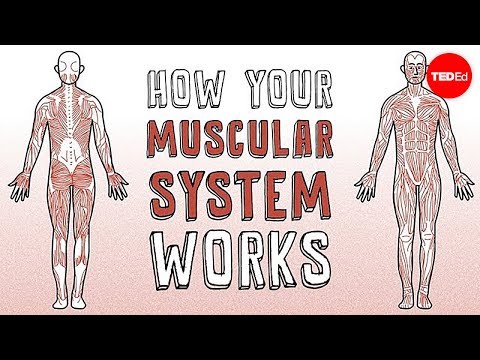
TED-Ed: How Your Muscular System Works
Each time you take a step, 200 muscles work in unison to lift your foot, propel it forward, and set it down. It’s just one of the many thousands of tasks performed by the muscular system: this network of over 650 muscles covers the body and is the reason we can blink, smile, run, jump, and stand upright. So how does it work? Emma Bryce takes you into the body to find out.

TED-Ed: What Happens During a Heart Attack?
Approximately seven million people around the world die from heart attacks every year. And cardiovascular disease, which causes heart attacks and other problems like strokes, is the world’s leading killer. So what causes a heart attack? Krishna Sudhir examines the leading causes and treatments of this deadly disease.
TED-Ed: What Causes Cavities?
When a team of archeologists recently came across some 15,000-year-old human remains, they made an interesting discovery: the teeth of those ancient humans were riddled with holes. So what causes cavities, and how can we avoid them? Mel Rosenberg takes us inside our teeth to find out.

TED-Ed: How Your Digestive System Works
Constantly churning inside of you, the digestive system performs a daily marvel: it transforms your food into the vital nutrients that sustain your body and ensure your survival. Emma Bryce traces food’s nine-meter-long, 40-hour journey through the remarkable digestive tract.

TED-Ed: How Blood Pressure Works
If you lined up all the blood vessels in your body, they’d be 60 thousand miles long. And every day, they carry the equivalent of over two thousand gallons of blood to the body’s tissues. What effect does this pressure have on the walls of the blood vessels? Wilfred Manzano gives the facts on blood pressure.

TED-Ed: How Much Do You Really Know About Ancient Rome?
Minerva, the esteemed Roman goddess of reason, wisdom, handicrafts, and war, is judging a contest: duo vera et mendacium. Three brave contestants will put their knowledge about ancient Rome to the test. How much of what they know about the time period is actually true? And which contestant will come out on top? Stephanie Honchell Smith debunks four common misconceptions about Ancient Rome.
TED-Ed: What Does the Liver Do?
There’s a factory inside you that weighs about 1.4 kilograms and runs for 24 hours a day. It’s your liver: the heaviest organ in your body, which simultaneously acts as a storehouse, a manufacturing hub, and a processing plant. Emma Bryce gives a crash course on the liver and how it helps keep us alive.

TED-Ed: A Day in the Life of an Ancient Athenian
It’s 427 BCE and the worst internal conflict ever to occur in the ancient Greek world is in its fourth year. Athens is facing a big decision: what to do with the people of Mytilene, a city on the island of Lesbos where a revolt against Athenian rule has just been put down. How did these kinds of decisions get made? Robert Garland outlines a day in the life of Athenian democracy.

TED-Ed: The Rise and Fall of the Byzantine Empire
Most history books will tell you that the Roman Empire fell in the fifth century CE, but this would’ve come as a surprise to the millions who lived in the Roman Empire through the Middle Ages. This Medieval Roman Empire, today called the Byzantine Empire, began when Constantine, the first Christian emperor, moved Rome's capital. Leonora Neville details the rise and fall of the Byzantine Empire.