Discover Resources
Browse curated homeschool resources from the community
How sugar affects the brain - Nicole Avena
Understanding sugar's impact on your brain chemistry.
Welcome to CK-12 Foundation | CK-12 Foundation
Complete high school chemistry with labs and practice problems.
TED-Ed: What Causes Cavities?
When a team of archeologists recently came across some 15,000-year-old human remains, they made an interesting discovery: the teeth of those ancient humans were riddled with holes. So what causes cavities, and how can we avoid them? Mel Rosenberg takes us inside our teeth to find out.

TED-Ed: What's the Best Position to Sleep In?
Sleep positions go by countless creative names— the zombie, mountain climber, free faller, soldier, and more. Yet sleep experts typically simplify them into the basic types: side, stomach, or back. Individual sleep styles are highly personal, but how we spend the night affects our bodies and health in several ways. So, what’s the best position to sleep in? Rachel Marie E. Salas investigates.
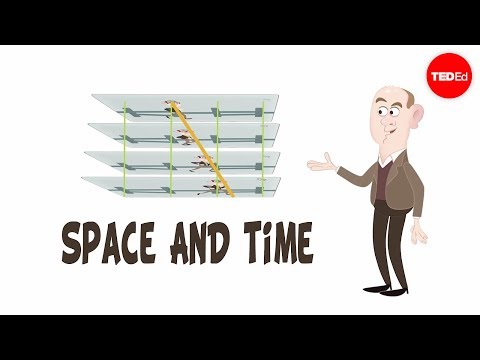
TED-Ed: The Fundamentals of Space-Time
Space is where things happen. Time is when things happen. And sometimes, in order to really look at the universe, you need to take those two concepts and mash them together. In this first lesson of a three-part series on space-time, hilarious hosts Andrew Pontzen and Tom Whyntie go through the basics of space and time individually, and use a flip book to illustrate how we can begin to look at them together.
TED-Ed: Can the Economy Grow Forever?
Many economists think that an eternally growing economy is necessary to keep improving people’s lives, and that if the global economy stops growing, people would fight more over the fixed amount of value that exists, rather than working to generate new value. Which raises the question: is infinite growth possible on a finite planet? Explore how economies can balance efficiency with sustainability.

TED-Ed: The Genes You Don't Get from Your Parents
Inside our cells, each of us has a second set of genes completely separate from our 23 pairs of chromosomes. And this isn’t just true for humans— it’s true of every animal, plant, and fungus on Earth. This second genome belongs to our mitochondria, an organelle inside our cells. So why are they so different from anything else in our bodies? Devin Shuman explores the purpose of mitochondrial DNA.
TED-Ed: The Law of Conservation of Mass
Everything in our universe has mass — from the smallest atom to the largest star. But the amount of mass has remained constant throughout existence even during the birth and death of stars, planets and you. How can the universe grow while maintaining its mass? Todd Ramsey answers that question by unravelling the law of conservation of mass.

TED-Ed: How Your Digestive System Works
Constantly churning inside of you, the digestive system performs a daily marvel: it transforms your food into the vital nutrients that sustain your body and ensure your survival. Emma Bryce traces food’s nine-meter-long, 40-hour journey through the remarkable digestive tract.
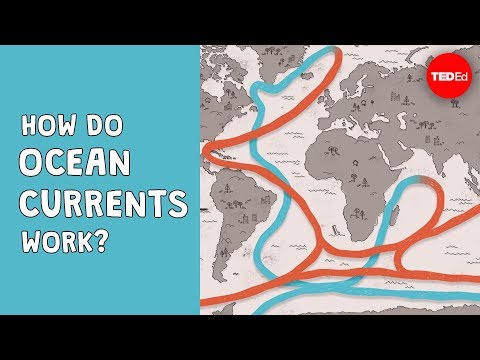
TED-Ed: How Do Ocean Currents Work?
In 1992, a cargo ship carrying bath toys got caught in a storm. Shipping containers washed overboard, and the waves swept 28,000 rubber ducks and other toys into the North Pacific. But they didn’t stick together -- the ducks have since washed up all over the world. How did this happen? Jennifer Verduin dives into the science of ocean currents.
TED-Ed: How Stretching Actually Changes Your Muscles
An athlete is preparing for a game. They’ve put on their gear and done their warmup, and now it’s time for one more routine — stretching. Typically, athletes stretch before physical activity to avoid injuries like strains and tears. But does stretching actually prevent these issues? And if so, how long do the benefits of stretching last? Malachy McHugh explores the finer points of flexibility.

TED-Ed: Can You Solve the Virus Riddle?
Your research team has found a prehistoric virus preserved in the permafrost and isolated it for study. After a late night working, you’re just closing up the lab when a sudden earthquake hits and breaks all the sample vials. Will you be able to destroy the virus before the vents open and unleash a deadly airborne plague? Lisa Winer shows how.

TED-Ed: How Food Affects Your Gut
The bacteria in our guts can break down food the body can’t digest, produce important nutrients, regulate the immune system, and protect against harmful germs. And while we can’t control all the factors that go into maintaining a healthy gut microbiome, we can manipulate the balance of our microbes by paying attention to what we eat. Shilpa Ravella shares the best foods for a healthy gut.

TED-Ed: Can You Solve the Frog Riddle?
You’re stranded in a rainforest, and you’ve eaten a poisonous mushroom. To save your life, you need an antidote excreted by a certain species of frog. Unfortunately, only the female frog produces the antidote. The male and female look identical, but the male frog has a distinctive croak. Derek Abbott shows how to use conditional probability to make sure you lick the right frog and get out alive.

TED-Ed: What Happens to Plastic You Throw Away?
We’ve all been told that we should recycle plastic bottles and containers. But what actually happens to the plastic if we just throw it away? Emma Bryce traces the life cycles of three different plastic bottles, shedding light on the dangers these disposables present to our world.


TED-Ed: How the Stamp Act Divided a Nation
You may think that things are heated in Washington today, but the Kansas-Nebraska Act of 1854 had members of Congress so angry they pulled out their weapons -- and formed the Republican Party. The issues? Slavery and states' rights, which led the divided nation straight into the Civil War. Ben Labaree, Jr. explains how Abraham Lincoln's party emerged amidst the madness.
TED-Ed: How Does Caffeine Keep Us Awake?
Over 100,000 metric tons of caffeine are consumed around the world every year. That’s equivalent to the weight of 14 Eiffel Towers! Caffeine helps us feel alert, focused, and energetic, even if we haven’t had enough sleep — but it can also raise our blood pressure and make us feel anxious. So how does it keep us awake? Hanan Qasim shares the science behind the world’s most widely used drug.

TED-Ed: Could We Actually Live on Mars?
There's a lot of talk these days about when and how we might all move to Mars. But what would it actually be like to live there? Mari Foroutan details the features of Mars that are remarkably similar to those of Earth — and those that can only be found on the red planet.

TED-Ed: How Blood Pressure Works
If you lined up all the blood vessels in your body, they’d be 60 thousand miles long. And every day, they carry the equivalent of over two thousand gallons of blood to the body’s tissues. What effect does this pressure have on the walls of the blood vessels? Wilfred Manzano gives the facts on blood pressure.