Discover Resources
Browse curated homeschool resources from the community

NMNH Teaching Resources
Search more than 350 science teaching resources for grades K to 12. The resources align with core ideas and crosscutting concepts in standards.
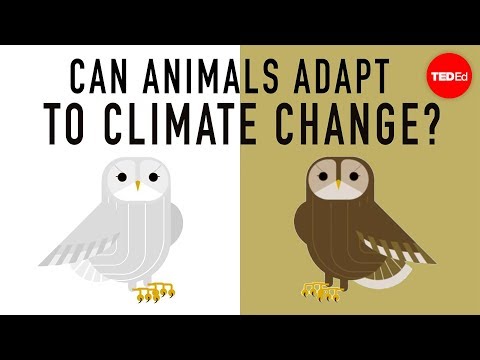
Can Wildlife Adapt to Climate Change Erin Eastwood
With rising temperatures and seas, massive droughts, and changing landscapes, successfully adapting to climate change is increasingly important. For humans, this can mean using technology to find solutions. But for some plants and animals, adapting to these changes involves the most ancient solution of all: evolution. Erin Eastwood explains how animals are adapting to climate change.

The World s Most Mysterious Book Stephen Bax
Deep inside Yale's Beinecke Rare Book and Manuscript Library lies a 240 page tome. Recently carbon dated to around 1420, its pages feature looping handwriting and hand drawn images seemingly stolen from a dream. It is called the Voynich manuscript, and it’s one of history’s biggest unsolved mysteries. The reason why? No one can figure out what it says. Stephen Bax investigates this cryptic work.

If You Had the Chance to Be Immortal Would You Take it Sarah Stroud and Michael Vazquez
While cleaning out your uncle’s attic you find a chest with a sparkling potion. The attached tag declares drinking this liquid will make you immortal. Your body will be frozen at its current age, and these effects would be final and irreversible. The instructions are clear — the only question is, do you drink the potion? Sarah Stroud and Michael Vazquez explore this philosophical debate.

The Continents Are Moving When Will They Collide Jean Baptiste P Koehl
In the early 20th century, Alfred Wegener's theory of Continental Drift laid the foundation for our modern theory of plate tectonics. And today we know something even more exciting: Pangea was only the latest in a long lineage of supercontinents, and it won’t be the last. Jean-Baptiste P. Koehl explores when the next supercontinent will emerge — and what it might mean for Earth’s environment.

What Causes Sonic Booms Katerina Kaouri
Objects that fly faster than the speed of sound (like really fast planes) create a shock wave accompanied by a thunder-like noise: the sonic boom. These epic sounds can cause distress to people and animals and even damage nearby buildings. Katerina Kaouri details how scientists use math to predict sonic booms' paths in the atmosphere, where they will land, and how loud they will be.
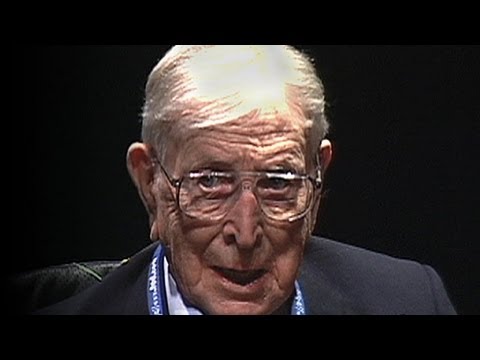
John Wooden on True Success
With profound simplicity, Coach John Wooden redefines success and urges us all to pursue the best in ourselves. In this inspiring talk he shares the advice he gave his players at UCLA, quotes poetry and remembers his father's wisdom.

When Will the Next Mass Extinction Occur Borths D Emic and Pritchard
About 66 million years ago, a terrible extinction event wiped out the dinosaurs. But it wasn’t the only event of this kind -- extinctions of various severity have occurred throughout the Earth’s history -- and are still happening all around us today. Borths, D'Emic, and Pritchard give a quick history of mass extinctions.

Why the Only Future Worth Building Includes Everyone Pope Francis
A single individual is enough for hope to exist, and that individual can be you, says His Holiness Pope Francis in this searing TED Talk delivered directly from Vatican City. In a hopeful message to people of all faiths, to those who have power as well as those who don't, the spiritual leader provides illuminating commentary on the world as we currently find it and calls for equality, solidarity and tenderness to prevail.

A Call to Invention Diy Speaker Edition William Gurstelle
There's a pleasure in making things for yourself -- especially something unexpected. At TEDYouth 2012, William Gurstelle shows how to make your own speakers from objects probably already laying around your house, like copper wire and an empty yogurt cup.

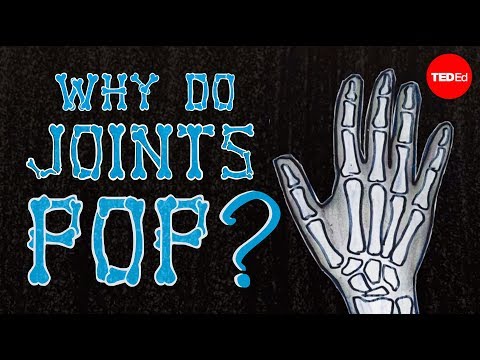
Why Do Your Knuckles Pop Eleanor Nelsen
Some people love the feeling of cracking their knuckles, while others cringe at the sound. But what causes that trademark pop? And is it dangerous? Eleanor Nelsen gives the facts behind joint popping.
Why Do We Love a Philosophical Inquiry Skye C Cleary
Ah, romantic love; beautiful and intoxicating, heart-breaking and soul-crushing... often all at the same time! If romantic love has a purpose, neither science nor psychology has discovered it yet – but over the course of history, some of our most respected philosophers have put forward some intriguing theories. Skye C. Cleary outlines five of these philosophical perspectives on why we love.

Why Are Human Bodies Asymmetrical Leo Q Wan
Symmetry is everywhere in nature. And we usually associate it with beauty: a perfectly shaped leaf or a butterfly with intricate patterns mirrored on each wing. But it turns out that asymmetry is pretty important, too — and more common than you might think. Leo Q. Wan takes us into the human body to show how biological asymmetry can be quite beautiful.
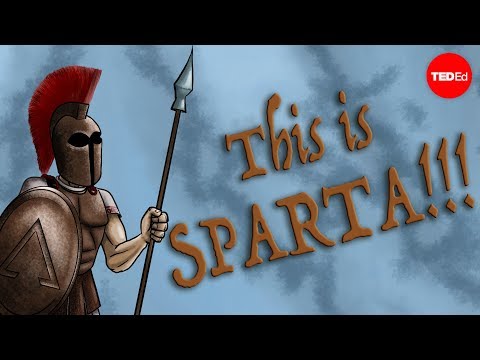
This is Sparta Fierce Warriors of the Ancient World Craig Zimmer
In ancient Greece, violent internal conflict between border neighbors and war with foreign invaders was a way of life, and Greeks were considered premier warriors. Sparta, specifically, had an army of the most feared warriors in the ancient world. What were they doing to produce such fierce soldiers? Craig Zimmer shares some of the lessons that might have been taught at Spartan school.

The Immortal Cells of Henrietta Lacks Robin Bulleri
Imagine something small enough to float on a particle of dust that holds the keys to understanding cancer, virology, and genetics. Luckily for us, such a thing exists in the form of trillions upon trillions of human, lab-grown cells called HeLa. But where did we get these cells? Robin Bulleri tells the story of Henrietta Lacks, a woman whose DNA led to countless cures, patents, and discoveries.