space
Resources
View all
The beginning of the universe, for beginners - Tom Whyntie
Learn about the Big Bang and the origins of everything.
TED-Ed: The Fundamentals of Space-Time
Space is where things happen. Time is when things happen. And sometimes, in order to really look at the universe, you need to take those two concepts and mash them together. In this first lesson of a three-part series on space-time, hilarious hosts Andrew Pontzen and Tom Whyntie go through the basics of space and time individually, and use a flip book to illustrate how we can begin to look at them together.

TED-Ed: What Is the Universe Made Of?
The atoms around you have existed for billions of years -- and most originated in the flaming, gaseous core of a star. Dennis Wildfogel tells the captivating tale of these atoms' long journeys from the Big Bang to the molecules they form today.

TED-Ed: Could We Actually Live on Mars?
There's a lot of talk these days about when and how we might all move to Mars. But what would it actually be like to live there? Mari Foroutan details the features of Mars that are remarkably similar to those of Earth — and those that can only be found on the red planet.

TED-Ed: How Do Tornadoes Form?
Tornadoes are the most violent storms on Earth, with wind velocities that can exceed 200 miles per hour. How do these terrifying cyclones form? Meteorologist James Spann sheds light on the lifespan of tornadoes as they go from supercell thunderstorms to terrible twisters before eventually dissolving back into thin air.
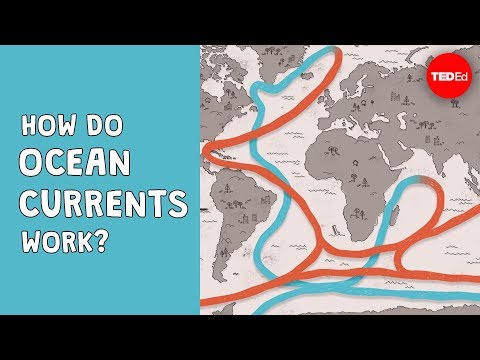
TED-Ed: How Do Ocean Currents Work?
In 1992, a cargo ship carrying bath toys got caught in a storm. Shipping containers washed overboard, and the waves swept 28,000 rubber ducks and other toys into the North Pacific. But they didn’t stick together -- the ducks have since washed up all over the world. How did this happen? Jennifer Verduin dives into the science of ocean currents.

The Myth of the Original Star Crossed Lovers Shannon Zhao
In the court of the Jade Emperor, a young princess had a special skill: she could pluck clouds from the sky and spin them into the softest robes. But her craft was the same day after day, and she longed for new inspiration. So the Queen Mother granted her permission to visit Earth. The weaver soon fell in love with the land— and a cowherd. Shannon Zhao details the myth of the star-crossed lovers.

Why Should You Read Sci Fi Superstar Octavia E Butler Ayana Jamieson and Moya Bailey
Much science fiction features white male heroes who blast aliens or become saviors of brown people. Octavia E. Butler knew she could tell a better story. She built stunning worlds rife with diverse characters, and brought nuance and depth to the representation of their experiences. Ayana Jamieson and Moya Bailey dive into the works of the visionary storyteller who upended science fiction.

The Myth Behind the Chinese Zodiac Megan Campisi and Pen Pen Chen
What’s your sign? In Western astrology, it’s a constellation determined by when your birthday falls in the calendar. But according to the Chinese zodiac (生肖), it’s your shuxiang, meaning the animal assigned to your birth year. And of the many myths explaining these animal signs and their arrangement, the most enduring one is that of The Great Race. Megan Campisi and Pen-Pen Chen recount this classic myth.
Three Ways the Universe Could End Venus Keus
We know about our universe’s past: the Big Bang theory predicts that all matter, time and space began about 14 billion years ago. And we know about the present: scientists’ observations of galaxies tell us that the universe is expanding at an accelerated rate. But what about the future? Do we know how our universe is going to end? Venus Keus explores cosmologists’ three possible scenarios.
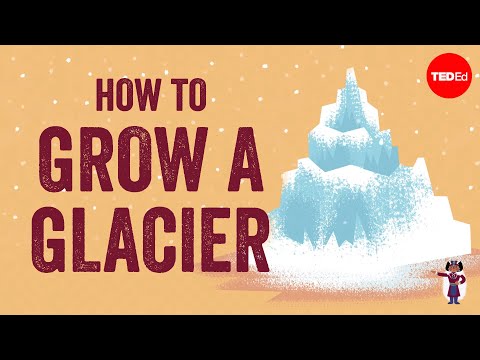
How to Grow Your Own Glacier M Jackson
In the 13th century, Genghis Khan embarked on a mission to take over Eurasia, swiftly conquering countries and drawing them into his empire. But, legend has it that there was one obstacle that even he couldn’t overcome: a towering wall of ice, grown by locals across a mountain pass. M Jackson explores the ancient methods of growing glaciers and how they can be used to combat climate change.

Reasons for the Seasons Rebecca Kaplan
Why do some regions experience full-time heat while others are reckoning with frigid temperatures and snow? And why are the seasons reversed in the two hemispheres? Rebecca Kaplan explains how the shape of the Earth's orbit around the Sun and the Earth's tilt on its axis affect the amount of sunlight each region receives.
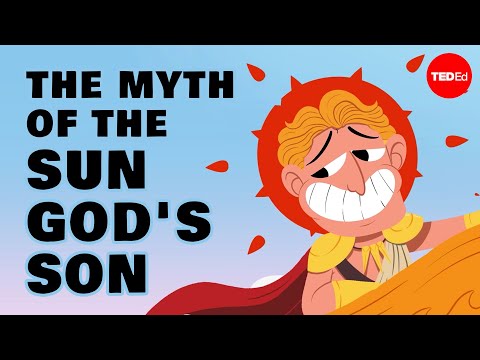
The Tragic Myth of the Sun God s Son Iseult Gillespie
Every morning, Helios unleashed his golden chariot, and set out across the sky. As the Sun God transformed dawn into day, he thought of his son, Phaethon, below. To prove to Phaethon that he was truly his father, Helios decided to grant him anything he wanted. Unfortunately, what Phaethon wanted was to drive Helios’ chariot for a day. Iseult Gillespie shares the tragic myth of the charioteer.
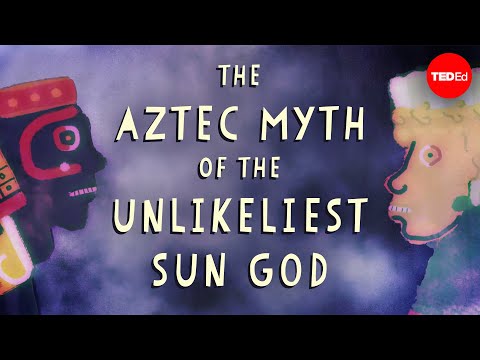
The Aztec Myth of the Unlikeliest Sun God Kay Almere Read
Nanahuatl, weakest of the Aztec gods, sickly and covered in pimples, had been chosen to form a new world. There had already been four worlds, each set in motion by its own “Lord Sun,” and each had been destroyed. For a new world to be created, another god had to leap into the great bonfire and become the fifth sun. Will Nanahuatl complete the sacrifice? Kay A. Read recounts the myth of the sun.

TED-Ed: Earth & Space Science Lessons
TED-Ed celebrates the ideas of teachers and students around the world. Discover hundreds of animated lessons, create customized lessons, and share your big ideas.

How Space Changes an Astronaut s Body Tejal Gala
Imagine a scientist who has teleported to space. His spacesuit’s pressurized air protects his bodily fluids from vaporization, its oxygen tank keeps him breathing, and the insulation prevents him from freezing. But although these features thwart an immediate tragedy, space is still an incredibly dangerous place. So, what does a prolonged stay in space do to the human body? Tejal Gala investigates.

How Did Clouds Get Their Names Richard Hamblyn
The study of clouds has always been a daydreamer’s science, aptly founded by a thoughtful young man whose favorite activity was staring out of the window at the sky. Richard Hamblyn tells the history of Luke Howard, the man who classified the clouds and forever changed humanity’s understanding of these changeable, mysterious objects.

The Cambodian Myth of Lightning Thunder and Rain Prumsodum Ok
"Moni Mekhala Ream Eyso" is the most sacred dance drama in Cambodia. It is performed every year in the buong suong ceremony, and explains the origins of lightning, thunder and rain according to the Khmer people. Prumsodun Ok tells this empowering tale that still enlightens our world today.