Discover Resources
Browse curated homeschool resources from the community
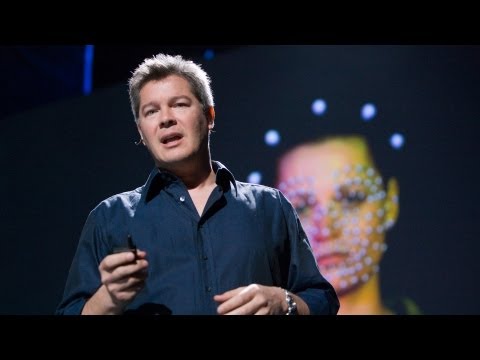
How Benjamin Button Got His Face Ed Ulbrich
Ed Ulbrich, the digital-effects guru from Digital Domain, explains the Oscar-winning technology that allowed his team to digitally create the older versions of Brad Pitt's face for "The Curious Case of Benjamin Button."
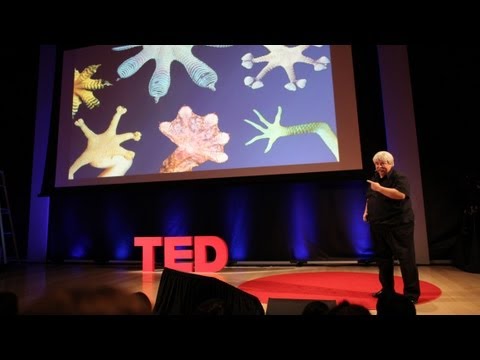
Curiosity Discovery and Gecko Feet Robert Full
The scientific method is widely used to make many scientific discoveries, but Robert Full suggests the possibility of finding world-changing results with less formulaic approaches. In his TEDYouth Talk, Full describes the unlikely way he studied gecko’s feet and how these beneficial discoveries could eventually save lives.

Biodiesel the Afterlife of Oil Natascia Radice
How could you dispose of your cooking oil when you’re done cooking? The easiest thing to do might be to pour it down your drain -- but if you save it up and send it to a processing plant, it can gain useful new life as biodiesel, a biodegradable energy source which can run in diesel engines instead of refined petroleum. Natascia Radice describes the process of turning goop into good.

Kevin Alloca Why Videos Go Viral
Kevin Allocca is YouTube's Trends Manager, and he has deep thoughts about silly web videos. In this talk from TEDYouth, he shares the 4 reasons a video goes viral.

The Turing Test Can a Computer Pass for a Human Alex Gendler
What is consciousness? Can an artificial machine really think? For many, these have been vital considerations for the future of artificial intelligence. But British computer scientist Alan Turing decided to disregard all these questions in favor of a much simpler one: Can a computer talk like a human? Alex Gendler describes the Turing test and details some of its surprising results.

Do Different Dog Breeds Really Have Different Personalities Kathleen Morrill Pirovich
The immense physical variety of dogs makes them among the world’s most diverse species and likely the one with the greatest range in size. A Pomeranian, for example, might weigh 2 kilograms, while a Mastiff could tip the scale to 100. So, why is this? And what does a dog’s breed actually say about them? Kathleen Morrill Pirovich explores the dizzying diversity of dogs.
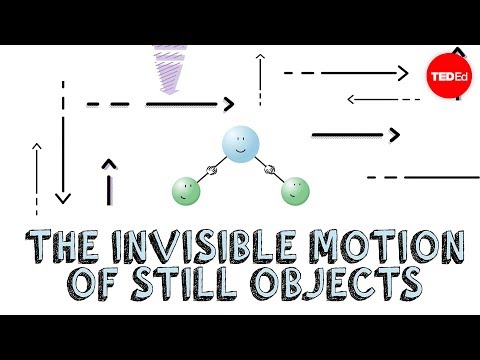
The Invisible Motion of Still Objects Ran Tivony
Many of the inanimate objects around you probably seem perfectly still. But look deep into the atomic structure of any of them, and you’ll see a world in constant flux — with stretching, contracting, springing, jittering, drifting atoms everywhere. Ran Tivony describes how and why molecular movement occurs and investigates if it might ever stop.

The First and Last King of Haiti Marlene Daut
The royal couple of Haiti rode into their coronation to thunderous applause. After receiving his ornate crown, Henry Christophe ascended his throne, towering 20 meters in the air. But little did the cheering onlookers know that the first king of Haiti would also be its last. Who was this revolutionary? Marlene Daut details how a man enslaved at birth rose through the ranks to become king.

Majora Carter Greening the Ghetto
In an emotionally charged talk, MacArthur-winning activist Majora Carter details her fight for environmental justice in the South Bronx -- and shows how minority neighborhoods suffer most from flawed urban policy.

What Would Happen If the Amazon Rainforest Disappeared Anna Rothschild
As of 2022, humans have deforested 17% of the Amazon, and scientists warn that we may be approaching a tipping point. It’s like removing bricks from a house: take a few and the house remains standing; remove too many and the whole thing will collapse. So, what would happen if the entire Amazon disappeared? Anna Rothschild explores the relationship between this ecosystem and the rest of the planet.
Rachel Pike the Science Behind a Climate Headline
In 4 minutes, atmospheric chemist Rachel Pike provides a glimpse of the massive scientific effort behind the bold headlines on climate change, with her team -- one of thousands who contributed -- taking a risky flight over the rainforest in pursuit of data on a key molecule.

Condoleezza Rice at Smu Commencement 2012
Former U.S. Secretary of State Condoleezza Rice gave the Commencement address at Southern Methodist University on May 12, 2012. She was introduced by SMU President R. Gerald Turner.

Making Sense of Irrational Numbers Ganesh Pai
Like many heroes of Greek myths, the philosopher Hippasus was rumored to have been mortally punished by the gods. But what was his crime? Did he murder guests or disrupt a sacred ritual? No, Hippasus's transgression was mathematically proving the hitherto unprovable. Ganesh Pai describes the history and math behind irrational numbers.

Brian Greene on String Theory
Physicist Brian Greene explains superstring theory, the idea that miniscule strands of energy vibrating in 11 dimensions create every particle and force in the universe.

Encyclopedic Entry: Nonrenewable Resources
Nonrenewable energy resources include coal, natural gas, oil, and nuclear energy. Once these resources are used up, they cannot be replaced, which is a major problem for humanity as we are currently dependent on them to supply most of our energy needs.

North America: Physical Geography
North America, the third-largest continent, extends from the tiny Aleutian Islands in the northwest to the Isthmus of Panama in the south.

Alex Steffen Sees a Sustainable Future
Worldchanging.com founder Alex Steffen argues that reducing humanity's ecological footprint is especially vital now, as the western consumer lifestyle spreads to developing countries.