college
Resources
View all
Why should you read "One Hundred Years of Solitude"? - Francisco Díez-Buzo
Explore Gabriel García Márquez's magical realist masterpiece.

Lessons Worth Sharing
TED-Ed celebrates the ideas of teachers and students around the world. Discover hundreds of animated lessons, create customized lessons, and share your big ideas.

The myth of Sisyphus - Alex Gendler
The Greek myth and its philosophical implications.

TED-Ed: Why You Should Read Don Quixote
Mounting his skinny steed, Don Quixote charges an army of giants. It is his duty to vanquish these behemoths in the name of his beloved lady, Dulcinea. There’s only one problem: the giants are merely windmills. What is it about this tale of the clumsy yet valiant knight that makes it so beloved? Ilan Stavans investigates.

TED-Ed: What Is a Gig Economy?
A 2016 survey of freelancers in six countries found that those who freelance by choice– 70% of respondents– were happier than people in traditional jobs, specifically when it came to things like independence and flexibility in terms of where and when they work. So what does it take to be a successful freelancer? Explore the benefits and drawbacks of the gig economy.
TED-Ed: How Will AI Change the World?
In the coming years, artificial intelligence is probably going to change your life— and likely the entire world. But people have a hard time agreeing on exactly how AI will affect our society. Can we build AI systems that help us fix the world? Or are we doomed to a robotic takeover? Explore the limitations of artificial intelligence and the possibility of creating human-compatible technology.

TED-Ed: Why You Should Read The God of Small Things
Set in a small town in India, “The God of Small Things” revolves around fraternal twins Rahel and Estha, who are separated for 23 years after the fateful hours in which their cousin drowns, their mother’s affair is revealed, and her lover is murdered. The book is set at the point of the twins’ reunion and confronts the social mores of India. Laura Wright dives into Arundhati Roy’s masterful storytelling.

TED-Ed: Would You Sacrifice One Person to Save Five?
Imagine you’re watching a runaway trolley barreling down the tracks, straight towards five workers. You happen to be standing next to a switch that will divert the trolley onto a second track. Here’s the problem: that track has a worker on it, too — but just one. What do you do? Do you sacrifice one person to save five? Eleanor Nelsen details the ethical dilemma that is the trolley problem.
TED-Ed: Why You Should Read Crime and Punishment
What drives someone to kill in cold blood? What goes through the murderer’s mind? And what kind of a society breeds such people? Over 150 years ago Fyodor Mikhailovich Dostoyevsky took these questions up in what would become one of the best-known works of Russian literature: “Crime and Punishment.” Alex Gendler digs into the classic novel's exploration of alienation, morality and redemption.

TED-Ed: Why You Should Read Dune
A mother and son trek across an endless desert. Wearing special suits to dissipate heat and recycle moisture, the travelers aren’t worried about dying of thirst. Their fears are much greater. Soon, the sound of the desert is drowned out by a hissing: a mound of sand 400 meters long bursts from the desert floor and races towards them. This is the world of “Dune.” Dan Kwartler dives into the epic story.
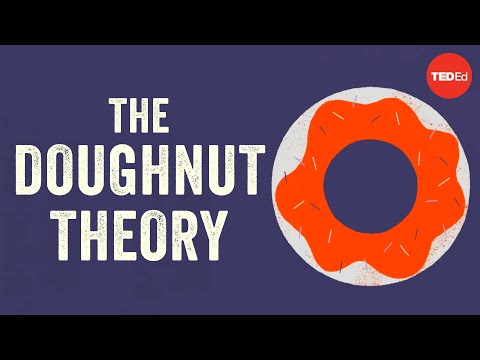
TED-Ed: How Do We Create a Better Economy?
Can we call any economy “healthy” in the face of dwindling resources and growing inequality? What if we cut off our addiction to endless growth, and used a new compass for modern prosperity? One such compass is known as “doughnut economics,” which aims to meet the needs of people without overshooting Earth's ecological limits. Explore how this model reframes our economic systems.
TED-Ed: These Companies with No CEO Are Thriving
Co-ops are a big part of the global economy: they employ 10% of the world’s workforce and over two trillion dollars flow through their doors every year. At a co-op, there’s no single person with overarching, top-down power over everyone else, like a CEO at a traditional company. So what exactly is a co-op and how does it work? Explore the different types of cooperatives and how they operate.

TED-Ed: Strengths and Weaknesses of Acids and Bases
Vinegar may have a powerful smell, but did you know it's actually a weak acid? In the chemical economy, acids actively give away their protons while bases actively collect them -- but some more aggressively than others. George Zaidan and Charles Morton use the currency of subatomic particles to explain this unseen exchange.
TED-Ed: Can the Economy Grow Forever?
Many economists think that an eternally growing economy is necessary to keep improving people’s lives, and that if the global economy stops growing, people would fight more over the fixed amount of value that exists, rather than working to generate new value. Which raises the question: is infinite growth possible on a finite planet? Explore how economies can balance efficiency with sustainability.

TED-Ed: Democracy Is Being Tested. Citizen Assemblies Can Help
How can everyday people help foster and protect democracy? Detailing her work fighting for people power as an activist in Madagascar, Ketakandriana Rafitoson discusses how citizen assemblies — meetings where ordinary citizens get educated about democracy — empower communities to protect their rights, debate important civic questions and take action to create a brighter future.
TED-Ed: Does Trickle-Down Economics Work?
In 1981, the US economy was struggling: unemployment rates were climbing and inflation had peaked at an all-time high. To combat these issues, President Reagan introduced a number of economic policies, including tax cuts for large corporations and high-income earners. But did these policies actually stimulate economic growth or improve circumstances for Americans? Jonathan Smith investigates.

The paradox at the heart of mathematics: Gödel's Incompleteness Theorem - Marcus du Sautoy
Explore Gödel's incompleteness theorem and the limits of mathematics.

TED-Ed: How CRISPR Lets You Edit DNA
From the smallest single-celled organism to the largest creatures on Earth, every living thing is defined by its genes. With recent advancements, scientists can change an organism’s fundamental features in record time using gene editing tools such as CRISPR. But where did this medical marvel come from and how does it work? Andrea M. Henle examines the science behind this new technology.
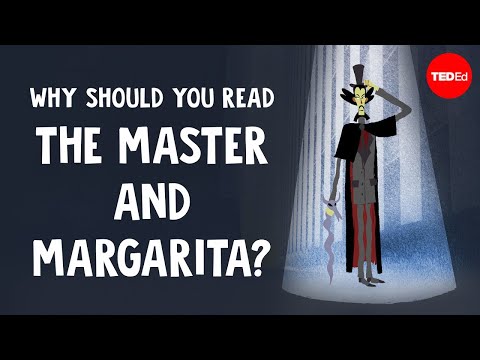
TED-Ed: Why You Should Read The Master and Margarita
The Devil has come to town. But don’t worry– all he wants to do is stage a magic show. This absurd premise forms the central plot of Mikhail Bulgakov’s masterpiece, “The Master and Margarita.” Its blend of political satire, historical fiction and occult mysticism has earned a legacy as one of the 20th century’s greatest novels– and one of its strangest. Alex Gendler explores the subversive novel.
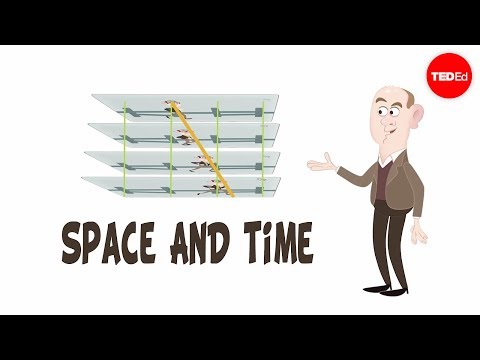
TED-Ed: The Fundamentals of Space-Time
Space is where things happen. Time is when things happen. And sometimes, in order to really look at the universe, you need to take those two concepts and mash them together. In this first lesson of a three-part series on space-time, hilarious hosts Andrew Pontzen and Tom Whyntie go through the basics of space and time individually, and use a flip book to illustrate how we can begin to look at them together.