Discover Resources
Browse curated homeschool resources from the community

How Computer Memory Works Kanawat Senanan
In many ways, our memories make us who we are, helping us remember our past, learn and retain skills, and plan for the future. And for the computers that often act as extensions of ourselves, memory plays much the same role. Kanawat Senanan explains how computer memory works.

Five Fingers of Evolution
How can a “thumbs up” sign help us remember five processes that impact evolution? The story of the Five Fingers of Evolution gives us a clever way of understanding change in gene pools over time.

The Mayan Myth of the Morning Star
Chak Ek’, the morning star, rose from the underworld to the surface of the eastern sea and on into the heavens. His brother K’in Ahaw, the sun, followed. Though Chak Ek’ had risen first, K’in Ahaw outshone him, and the resentful Chak Ek’ descended back to the underworld to plot against his brother and his allies. Gabrielle Vail details the Maya myth of the morning star.

Nancy Etcoff on the Surprising Science of Happiness
Cognitive researcher Nancy Etcoff looks at happiness -- the ways we try to achieve and increase it, the way it's untethered to our real circumstances, and its surprising effect on our bodies.

Sex Determination More Complicated Than You Thought
From something as small and complex as a chromosome to something as seemingly simple as the weather, sex determination systems vary significantly across the animal kingdom. Biologist and teacher Aaron Reedy shows us the amazing differences between species when it comes to determination of gender.
Patricia Burchat Sheds Light on Dark Matter
Physicist Patricia Burchat sheds light on two basic ingredients of our universe: dark matter and dark energy. Comprising 96% of the universe between them, they can't be directly measured, but their influence is immense.
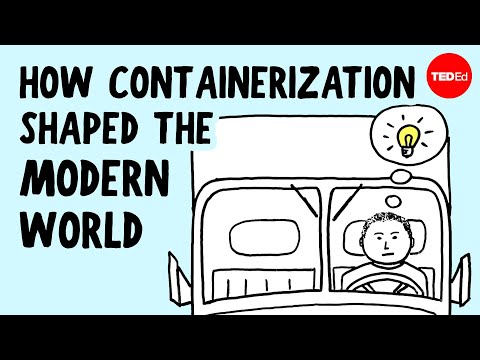
How Containerization Shaped the Modern World
Sometimes a single unlikely idea can have massive impact across the world. Sir Harold Evans, the author of They Made America, describes how frustration drove Malcom McLean, a small-town truck driver, to invent the shipping container. Containerization was born, and it transformed the modern global economy.

Malcolm Gladwell on Spaghetti Sauce
Tipping Point author Malcolm Gladwell gets inside the food industry's pursuit of the perfect spaghetti sauce -- and makes a larger argument about the nature of choice and happiness.
The Paradox of Efficiency Edward Tenner
Is our obsession with efficiency actually making us less efficient? In this revelatory talk, writer and historian Edward Tenner discusses the promises and dangers of our drive to get things done as quickly as possible— and suggests seven ways we can use "inspired inefficiency" to be more productive.

How Some Friendships Last and Others Dont Iseult Gillespie
Friendships can change how we see and move through the world. They can boost our academic performance, help us deal with setbacks, and even improve our health. And the relationships we form in adolescence can shape our beliefs, values, and emotional growth. But making and maintaining friends isn’t always easy. Iseult Gillespie shares how to build healthy friendship habits.

Bird Migration a Perilous Journey Alyssa Klavans
Nearly 200 species of songbirds migrate south for winter, some traveling up to 7,000 miles. No easy task, the annual journey is dangerous to birds due to landscape change -- so much so, that only half the birds that migrate south will return home for spring. Alyssa Klavans details why bird migration is so taxing and how we can assist our chirping friends.
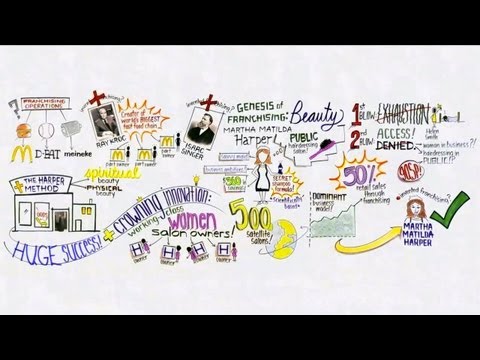
The Real Origin of the Franchise
One of the most successful business models is the franchise, but it didn't originate with McDonald's. Sir Harold Evans describes the remarkable story of a beauty salon that allowed hundreds of women to own their own businesses.

How Pandemics Spread
In our increasingly globalized world, a single infected person can board a plane and spread a virus across continents. Mark Honigsbaum describes the history of pandemics and how that knowledge can help halt future outbreaks.

Aparna Rao High Tech Art with a Sense of Humor
Artist and TED Fellow Aparna Rao reimagines the familiar in surprising, often humorous ways. With her collaborator Soren Pors, Rao creates high-tech art installations -- a typewriter that sends emails, a camera that tracks you through the room only to make you invisible on screen -- that put a playful spin on ordinary objects and interactions.

Just How Small is an Atom
Just how small are atoms? And what's inside them? The answers turn out to be astounding, even for those who think they know. This fast-paced animation uses spectacular metaphors (imagine a blueberry the size of a football stadium!) to give a visceral sense of the building blocks that make our world.
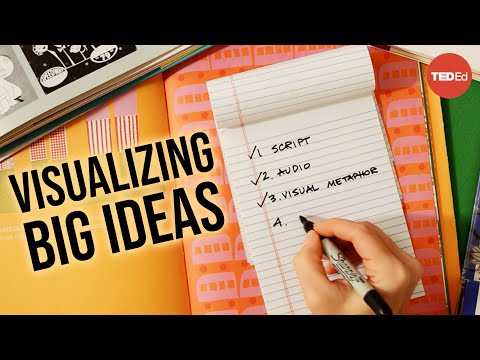
Making a Ted Ed Lesson Visualizing Complex Ideas
How can animation convey complex, intangible concepts? A visual metaphor, or an idea represented through imagery, can take an idea as massive as Big Data and tie it to the familiar depiction of a growing tree. TED-Ed animators explain how to make an abstract idea come alive visually.

On Being Wrong Kathryn Schulz
Most of us will do anything to avoid being wrong. But what if we're wrong about that? "Wrongologist" Kathryn Schulz makes a compelling case for not just admitting but embracing our fallibility.
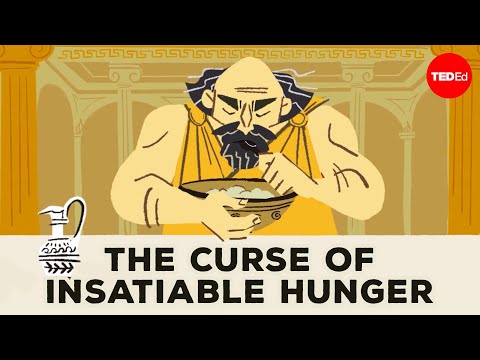
The Greek Myth of Demeter s Revenge Iseult Gillespie
Mestra, princess of Thessaly, was far from home. She had watched her father, King Erysichthon, plunge into a ruin of his own making. Now, to save himself, he’d sold his own daughter to the highest bidder. But Mestra refused to accept this fate and began to plan her escape. Iseult Gillespie shares the Greek myth of Mestra's bid for freedom.
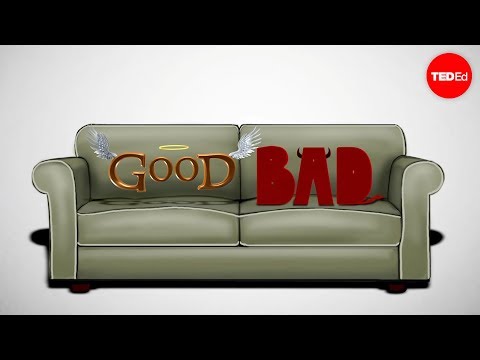
The Case Against Good and Bad
Don’t take the easy route! Instead, use this little trick to improve your writing -- let go of the words “good” and “bad,” and push yourself to illustrate, elucidate and illuminate your world with language.
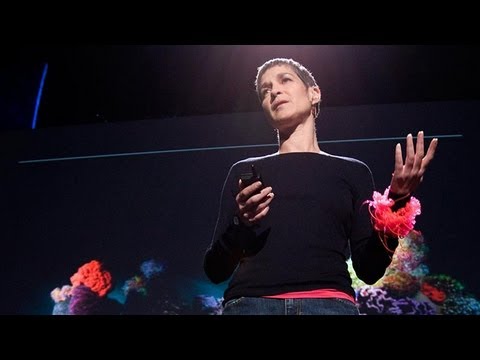
Margaret Wertheim the Beautiful Math of Coral
Science writer Margaret Wertheim re-creates the creatures of the coral reefs using a technique invented by a mathematician -- simultaneously celebrating the amazements of the reef and deep-diving into the hyperbolic underpinnings of coral creation.