philosophy
Resources
View all
The myth of Sisyphus - Alex Gendler
The Greek myth and its philosophical implications.

The paradox at the heart of mathematics: Gödel's Incompleteness Theorem - Marcus du Sautoy
Explore Gödel's incompleteness theorem and the limits of mathematics.

TED-Ed: Would You Sacrifice One Person to Save Five?
Imagine you’re watching a runaway trolley barreling down the tracks, straight towards five workers. You happen to be standing next to a switch that will divert the trolley onto a second track. Here’s the problem: that track has a worker on it, too — but just one. What do you do? Do you sacrifice one person to save five? Eleanor Nelsen details the ethical dilemma that is the trolley problem.
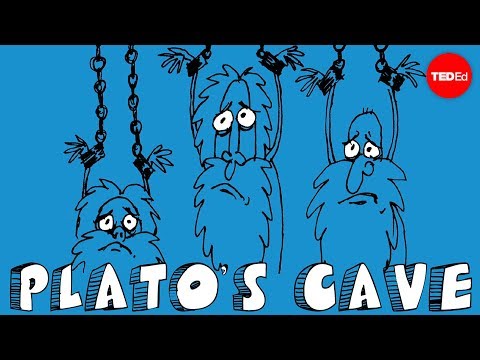
TED-Ed: Plato's Allegory of the Cave
Twenty four hundred years ago, Plato, one of history’s most famous thinkers, said life is like being chained up in a cave forced to watch shadows flitting across a stone wall. Beyond sounding quite morbid, what exactly did he mean? Alex Gendler unravels Plato's Allegory of the Cave, found in Book VII of The Republic.

TED-Ed: What Is Consciousness?
Patient P.S. suffered a stroke that damaged the right side of her brain, leaving her unaware of everything on her left side. If someone threw a ball at her left side, she might duck. But she wouldn’t have awareness of the ball or know why she ducked. Where does consciousness come from? Michael Graziano explores the question that has vexed scientists and philosophers for centuries.

TED-Ed: The Big Questions
TED-Ed celebrates the ideas of teachers and students around the world. Discover hundreds of animated lessons, create customized lessons, and share your big ideas.
TED-Ed: Philosophy Lessons
TED-Ed celebrates the ideas of teachers and students around the world. Discover hundreds of animated lessons, create customized lessons, and share your big ideas.


Can You Outsmart the Slippery Slope Fallacy Elizabeth Cox
It’s 1954. Vietnamese nationalists are on the verge of securing an independent Vietnam under communist leader Ho Chi Minh. U.S. President Eisenhower claims that by virtue of the "falling domino principle," communist control of Vietnam would lead to the global spread of authoritarian communist regimes. Can you spot the problem with this argument? Elizabeth Cox explores the slippery slope fallacy.
Introduction to Charlotte Mason's Philosophy of Education
Charlotte Mason homeschool curriculum


The Philosophy of Cynicism William D Desmond
In the 4th century BCE, a young Diogenes of Sinope was found to be counterfeiting coins. He was stripped of his citizenship, his money, all his possessions and sent into exile. He decided he would live self-sufficiently, close to nature, without materialism, vanity, or conformity and only then could he be truly free. William D. Desmond details how Diogenes gave rise to the philosophy of cynicism.

Can You Outsmart This Logical Fallacy Alex Gendler
Meet Lucy. She was a math major in college, and aced all her courses in probability and statistics. Which do you think is more likely: that Lucy is a portrait artist, or that Lucy is a portrait artist who also plays poker? How do we know which statement is more likely to be true? Alex Gendler explores our tendency to look for shortcuts and the phenomenon known as the conjunction fallacy.
Charlotte Mason's Original Home Education Series (Online)
Charlotte Mason homeschool curriculum
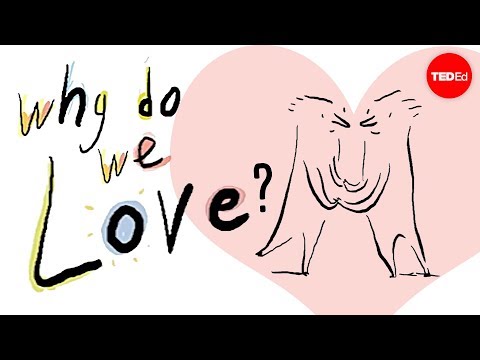
Why Do We Love a Philosophical Inquiry Skye C Cleary
Ah, romantic love; beautiful and intoxicating, heart-breaking and soul-crushing... often all at the same time! If romantic love has a purpose, neither science nor psychology has discovered it yet – but over the course of history, some of our most respected philosophers have put forward some intriguing theories. Skye C. Cleary outlines five of these philosophical perspectives on why we love.

Is it Ethical for Parents to Choose Their Babys Traits Michael Vazquez and Raye Ploeger
Andre and Leslie are a deaf couple who have decided to have a child, and they’re considering using a process to ensure deafness in their child. As deaf parents, they feel they could provide better guidance to a child that would share their lived experience and grow up immersed in deaf culture. But is this genetic intervention ethical? Michael Vazquez and Raye Ploeger explore this classic dilemma.

Easy Peasy Apologetics
Found a problem? Check here. Credits: 0.5 Prerequisite: none Recommended: 8th through adult Welcome to EP’s Apologetics course! The purpose of the course is to give students an introduction t…