Discover Resources
Browse curated homeschool resources from the community
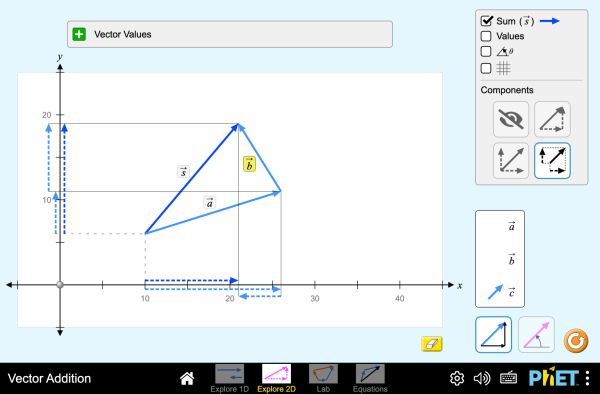
PhET: Vector Addition
Explore vectors in 1D or 2D, and discover how vectors add together. Specify vectors in Cartesian or polar coordinates, and see the magnitude, angle, and components of each vector. Experiment with vector equations and compare vector sums and differences.
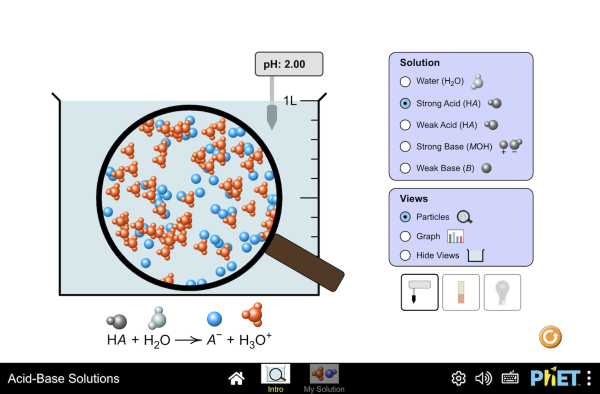
PhET: Acid-Base Solutions
How do strong and weak acids differ? Use lab tools on your computer to find out! Dip the paper or the probe into solution to measure the pH, or put in the electrodes to measure the conductivity. Then see how concentration and strength affect pH. Can a weak acid solution have the same pH as a strong acid solution?
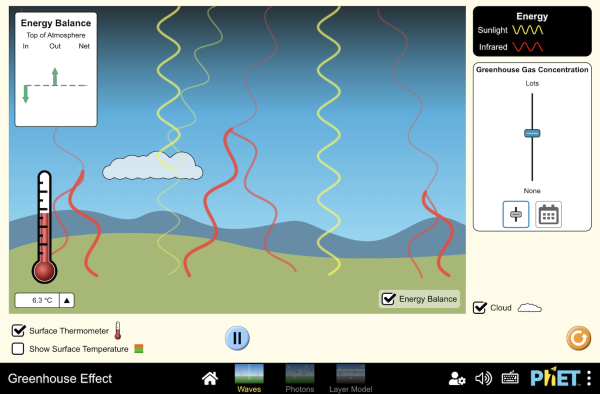
PhET: Greenhouse Effect
How do greenhouse gases affect the climate? Explore the atmosphere during the ice age and today. What happens when you add clouds? Change the greenhouse gas concentration and see how the temperature changes.
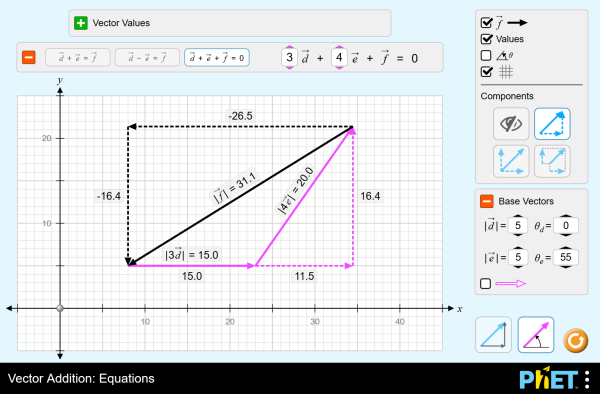
PhET: Vector Addition: Equations
Experiment with vector equations and compare vector sums and differences. Customize the base vectors or explore scalar multiplication by adjusting the coefficients in equation. Specify vectors in Cartesian or polar coordinates, and view the magnitude, angle, and components of each vector.
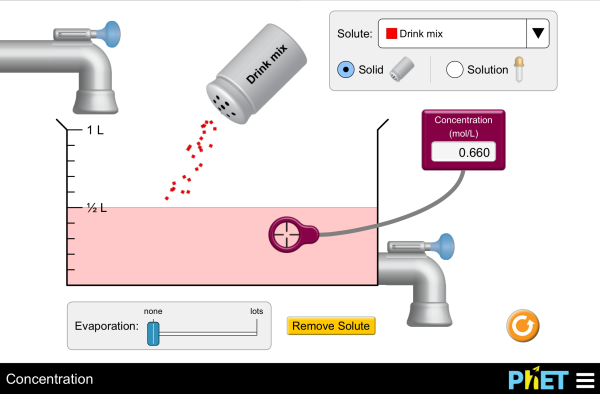
PhET: Concentration
Watch your solution change color as you mix chemicals with water. Then check molarity with the concentration meter. What are all the ways you can change the concentration of your solution? Switch solutes to compare different chemicals and find out how concentrated you can go before you hit saturation!
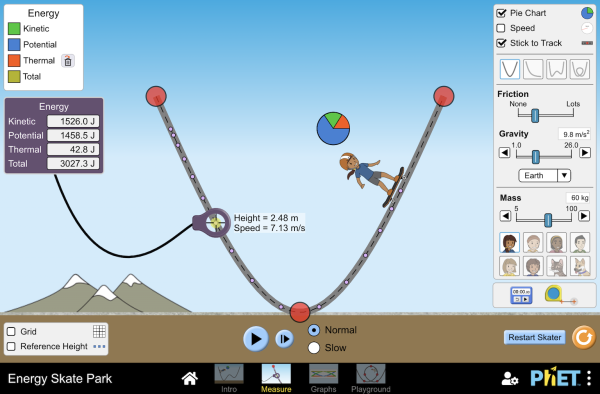
PhET: Energy Skate Park
Learn about the conservation of energy at the skate park! Build tracks, ramps, and jumps for the skater. View the skater's kinetic energy, potential energy, and thermal energy as they move along the track. Measure the speed and adjust the friction, gravity, and mass.
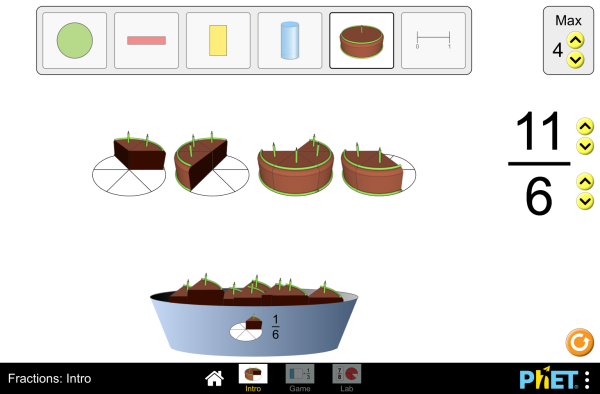
PhET: Fractions: Intro
Explore fractions while you help yourself to 1/3 of a chocolate cake and wash it down with 1/2 a glass of water! Create your own fractions using fun interactive objects. Match shapes and numbers to earn stars in the fractions game. Challenge yourself on any level you like. Try to collect lots of stars!
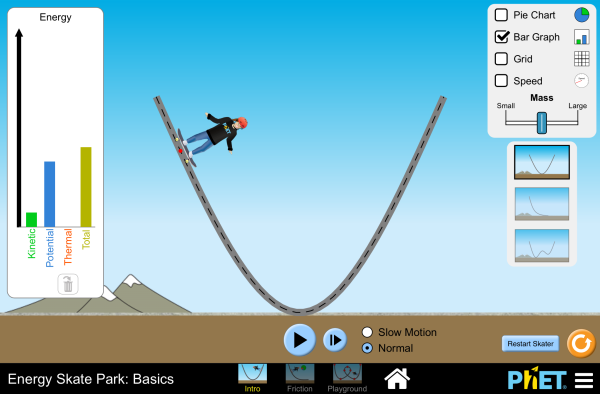
PhET: Energy Skate Park: Basics
Learn about conservation of energy with a skater gal! Explore different tracks and view the kinetic energy, potential energy and friction as she moves. Build your own tracks, ramps, and jumps for the skater.
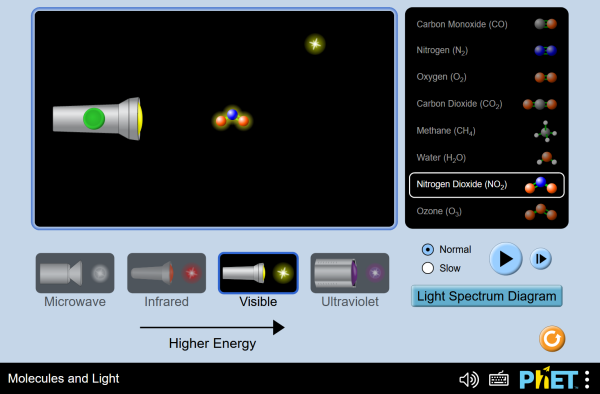
PhET: Molecules and Light
Turn light source on to explore. Observe what happens in the observation window as you set up different combinations of light source and molecule. Note this simulation is the first to support our pan and zoom feature, so zoom in for a closer look, if you need to.
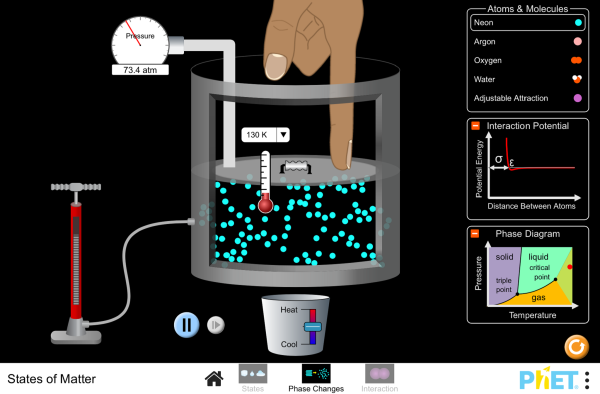
PhET: States of Matter
Watch different types of molecules form a solid, liquid, or gas. Add or remove heat and watch the phase change. Change the temperature or volume of a container and see a pressure-temperature diagram respond in real time. Relate the interaction potential to the forces between molecules.
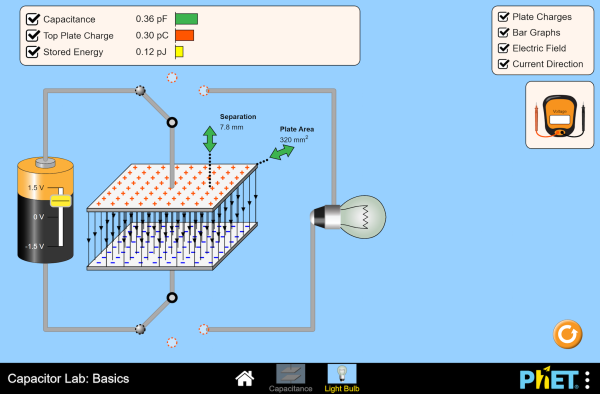
PhET: Capacitor Lab: Basics
Explore how a capacitor works! Change the size of the plates and the distance between them. Change the voltage and see charges build up on the plates. View the electric field, and measure the voltage. Connect a charged capacitor to a light bulb and observe a discharging RC circuit.
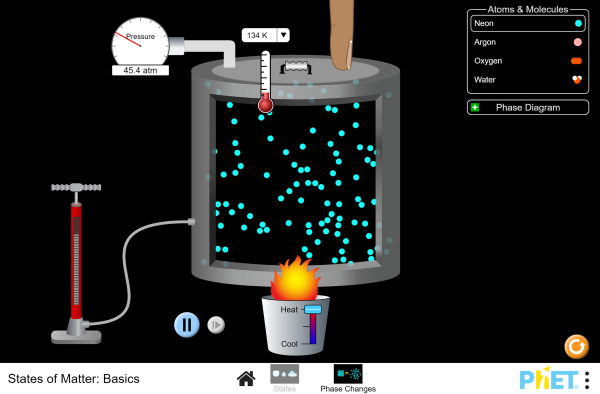
PhET: States of Matter: Basics
Heat, cool and compress atoms and molecules and watch as they change between solid, liquid and gas phases.
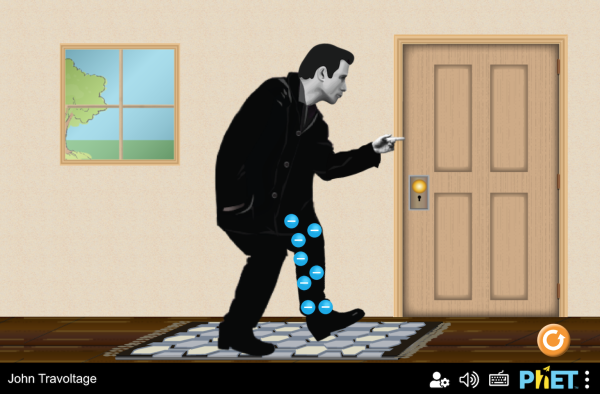
PhET: John Travoltage
Play with John’s foot and arm to explore when he gets a shock!
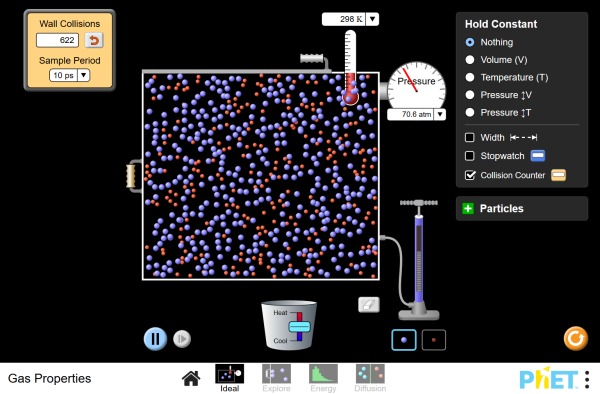
PhET: Gas Properties
Pump gas molecules to a box and see what happens as you change the volume, add or remove heat, and more. Measure the temperature and pressure, and discover how the properties of the gas vary in relation to each other. Examine kinetic energy and speed histograms for light and heavy particles. Explore diffusion and determine how concentration, temperature, mass, and radius affect the rate of diffusion.
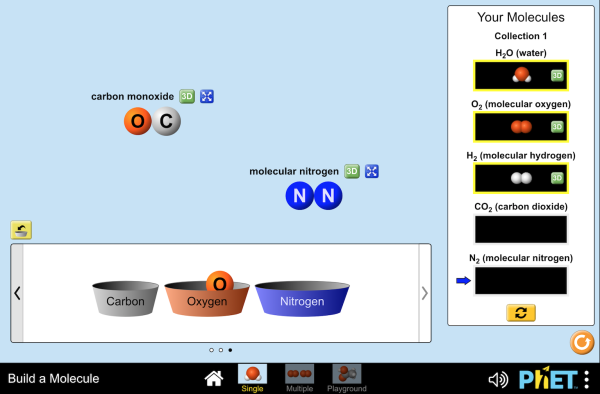
PhET: Build a Molecule
Starting from atoms, see how many molecules you can build. Collect your molecules and view them in 3D!
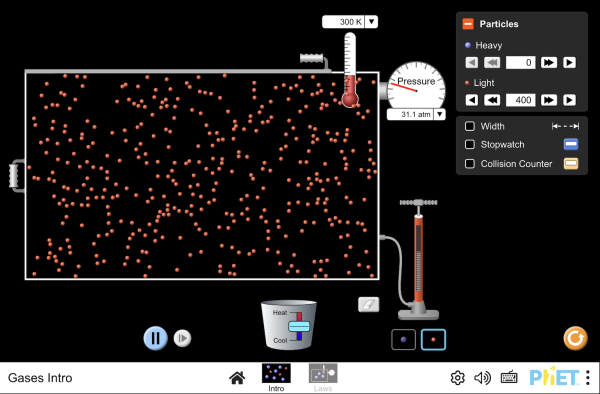
PhET: Gases Intro
Pump gas molecules to a box and see what happens as you change the volume, add or remove heat, and more. Measure the temperature and pressure, and discover how the properties of the gas vary in relation to each other.

TED-Ed: Visual Arts Lessons
TED-Ed celebrates the ideas of teachers and students around the world. Discover hundreds of animated lessons, create customized lessons, and share your big ideas.
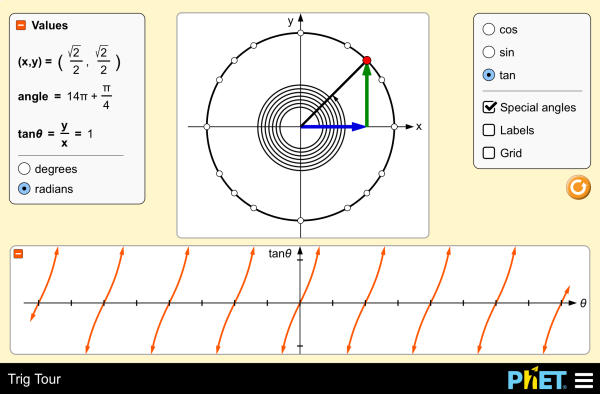
PhET: Trig Tour
Take a tour of trigonometry using degrees or radians! Look for patterns in the values and on the graph when you change the value of theta. Compare the graphs of sine, cosine, and tangent.
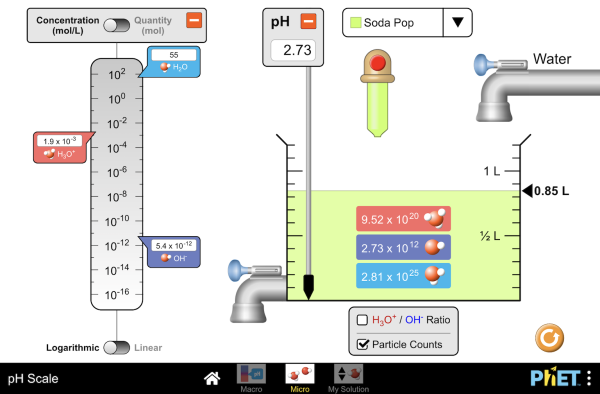
PhET: pH Scale
Test the pH of things like coffee, spit, and soap to determine whether each is acidic, basic, or neutral. Visualize the relative number of hydroxide ions and hydronium ions in solution. Switch between logarithmic and linear scales. Investigate whether changing the volume or diluting with water affects the pH. Or you can design your own liquid!
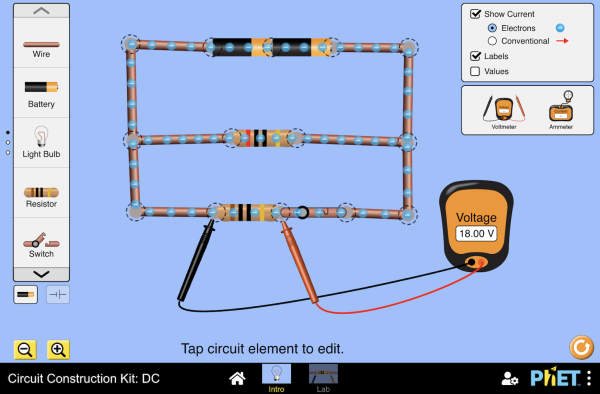
PhET: Circuit Construction Kit: DC
Experiment with an electronics kit! Build circuits with batteries, resistors, ideal and non-Ohmic light bulbs, fuses, and switches. Determine if everyday objects are conductors or insulators, and take measurements with an ammeter and voltmeter. View the circuit as a schematic diagram, or switch to a lifelike view.
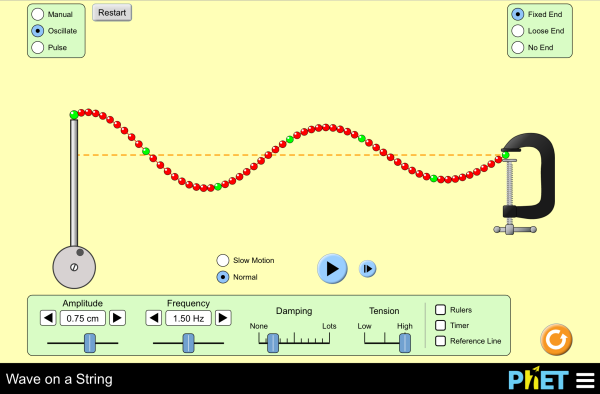
PhET: Wave on a String
Explore the wonderful world of waves! Even observe a string vibrate in slow motion. Wiggle the end of the string and make waves, or adjust the frequency and amplitude of an oscillator.