Discover Resources
Browse curated homeschool resources from the community

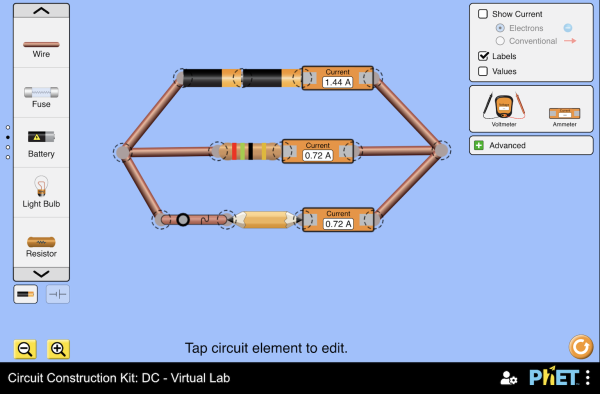
PhET: Circuit Construction Kit: DC - Virtual Lab
Do you like Circuit Construction Kit: DC, but want to use only in-line ammeters? This is the sim for you! Experiment with an electronics kit. Build circuits with batteries, resistors, ideal and non-Ohmic light bulbs, fuses, and switches. Determine if everyday objects are conductors or insulators, and take measurements with a lifelike ammeter and voltmeter. View the circuit as a schematic diagram, or switch to a lifelike view.
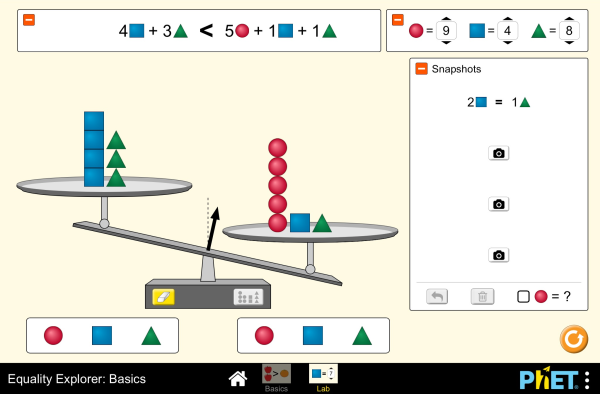
PhET: Equality Explorer: Basics
Explore what it means for a mathematical statement to be balanced or unbalanced by interacting with objects on a balance. Find all the ways to balance cats and dogs or apples and oranges.
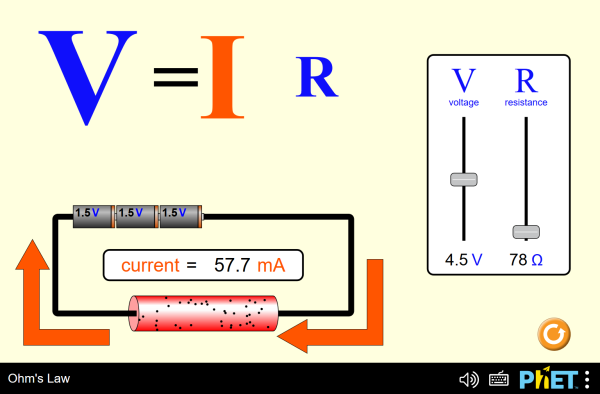
PhET: Ohm's Law
See how the equation form of Ohm's law relates to a simple circuit. Adjust the voltage and resistance, and see the current change according to Ohm's law.
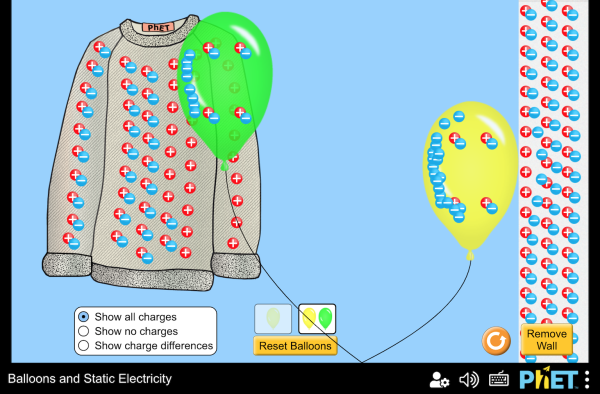
PhET: Balloons and Static Electricity
Grab a balloon to explore concepts of static electricity such as charge transfer, attraction, repulsion, and induced charge.
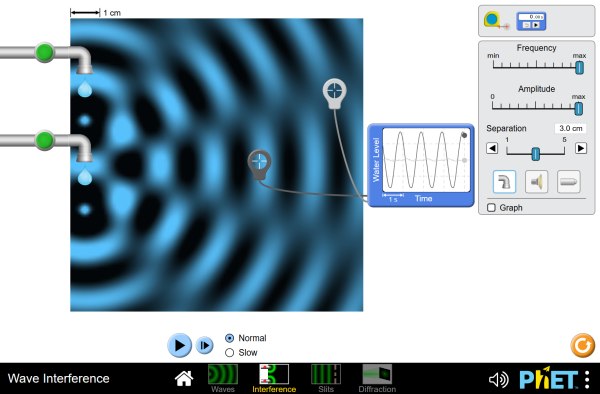
PhET: Wave Interference
Make waves with a dripping faucet, audio speaker, or laser! Add a second source to create an interference pattern. Put up a barrier to explore single-slit diffraction and double-slit interference. Experiment with diffraction through elliptical, rectangular, or irregular apertures.
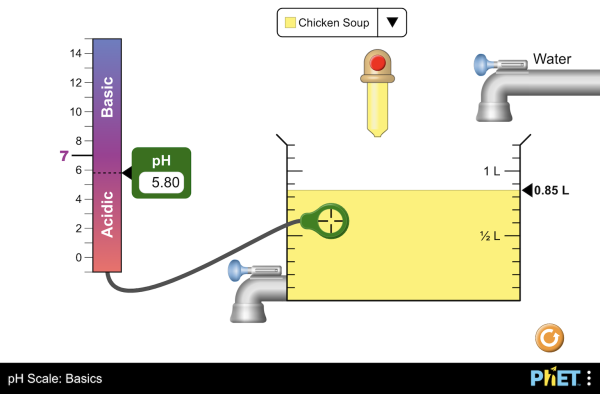
PhET: pH Scale: Basics
Test the pH of everyday liquids such as coffee, spit, and soap to determine whether each is acidic, basic, or neutral. Investigate how adding more of a liquid or diluting with water affects pH.
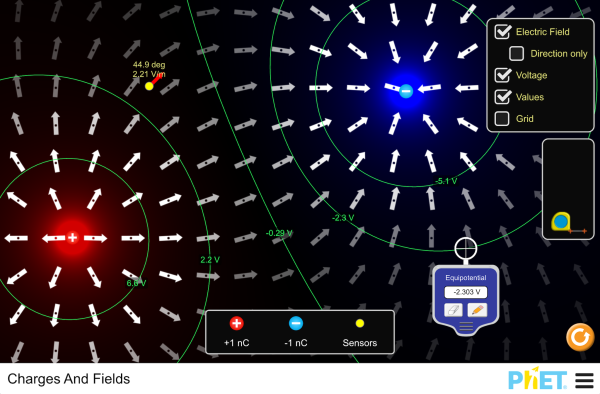
PhET: Charges and Fields
Arrange positive and negative charges in space and view the resulting electric field and electrostatic potential. Plot equipotential lines and discover their relationship to the electric field. Create models of dipoles, capacitors, and more!
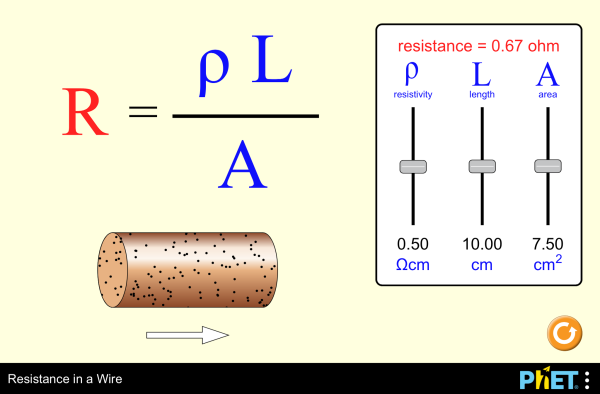
PhET: Resistance in a Wire
Observe changes to the equation and wire as you play with the resistivity, length, and area sliders.
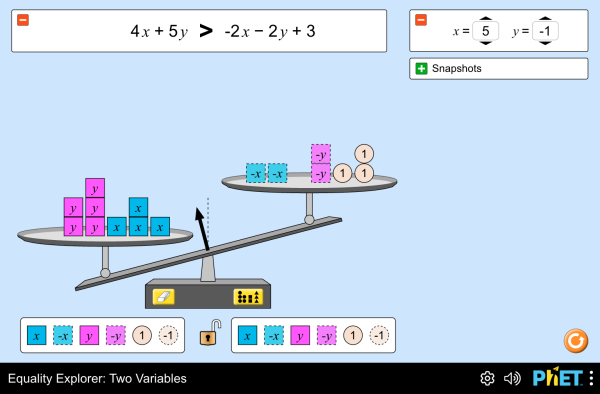
PhET: Equality Explorer: Two Variables
Explore what it means for a mathematical statement to be balanced or unbalanced by interacting with integers and variables on a balance. Find multiple ways to balance x and y to build a system of equations.
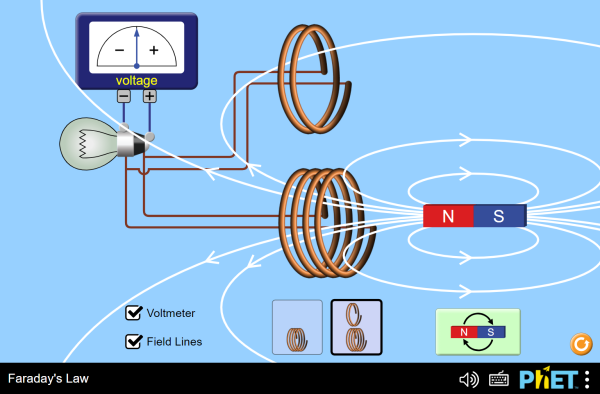
PhET: Faraday's Law
Investigate Faraday's law and how a changing magnetic flux can produce a flow of electricity!
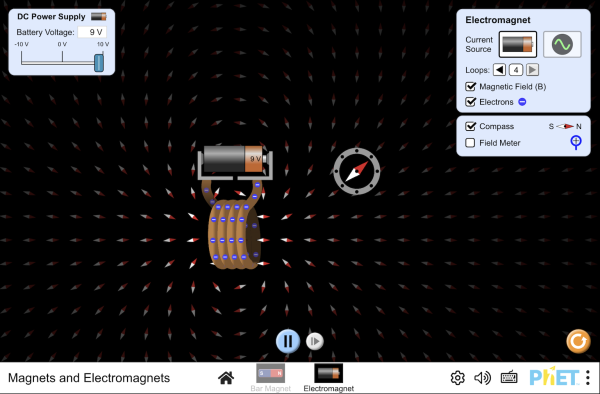
PhET: Magnets and Electromagnets
Explore the interactions between a compass and bar magnet. Discover how you can use a battery and coil to make an electromagnet. Explore the ways to change the magnetic field, and measure its direction and magnitude around the magnet.

PhET: Models of the Hydrogen Atom
This simulation is designed for undergraduate level students who are studying atomic structure. The simulation could also be used by high school students in advanced level physical science courses.
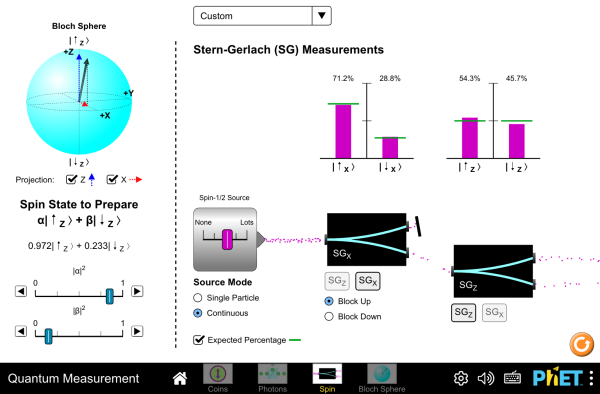
PhET: Quantum Measurement
Explore 2-level quantum systems and the results of measuring quantum states. Discover the similarities and differences between how a flip of a classical biased coin compares to observations of a quantum "coin". Discover how a quantum state can be visualized with the Bloch sphere representation.
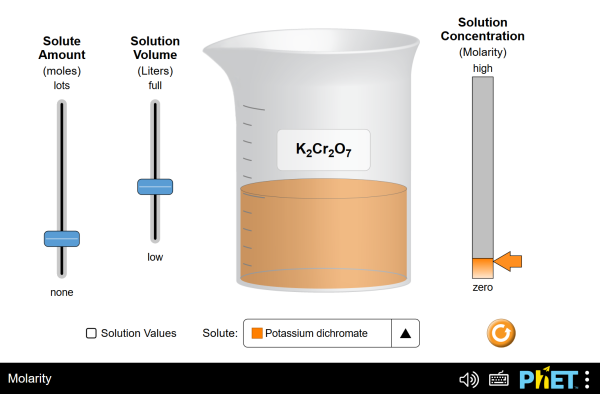
PhET: Molarity
What determines the concentration of a solution? Learn about the relationships between moles, liters, and molarity by adjusting the amount of solute and solution volume. Change solutes to compare different chemical compounds in water.

TED-Ed: Performing Arts Lessons
TED-Ed celebrates the ideas of teachers and students around the world. Discover hundreds of animated lessons, create customized lessons, and share your big ideas.
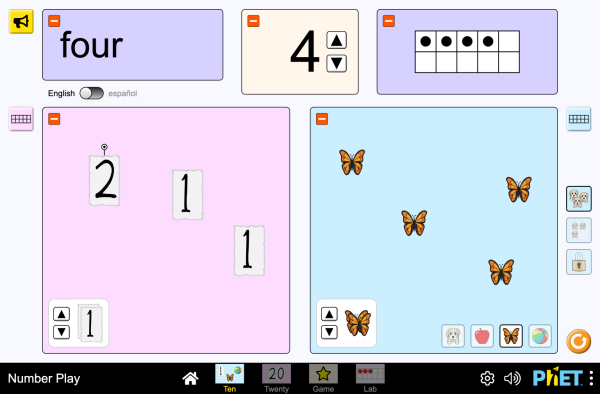
PhET: Number Play
Play with counting and cardinality. Compare representations, including word, numeral, ten frame, and objects. Hear the number spoken aloud in two different languages. Challenge yourself to subitize numbers up to ten!
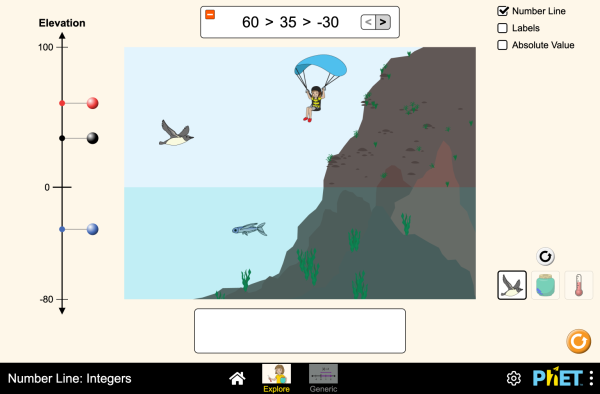
PhET: Number Line: Integers
What do elevation, account balances, and temperature have in common? They can all be represented on a number line. Compare integers on a number line and in an inequality statement. Discover the meaning of absolute value.
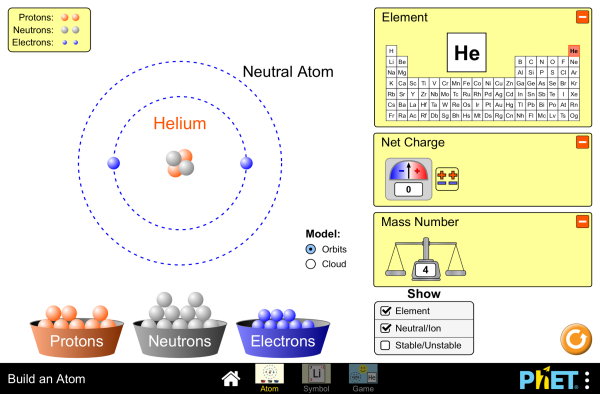
PhET: Build an Atom
Build an atom out of protons, neutrons, and electrons, and see how the element, charge, and mass change. Then play a game to test your ideas!