Discover Resources
Browse curated homeschool resources from the community
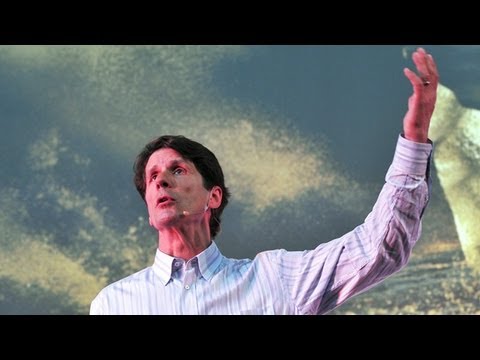
James Balog Time Lapse Proof of Extreme Ice Loss
Photographer James Balog shares new image sequences from the Extreme Ice Survey, a network of time-lapse cameras recording glaciers receding at an alarming rate, some of the most vivid evidence yet of climate change.

History s Worst Nun Theresa a Yugar
Juana Ramírez de Asbaje sat before a panel of prestigious theologians, jurists, and mathematicians. They had been invited to test Juana’s knowledge with the most difficult questions they could muster. But she successfully answered every challenge, from complicated equations to philosophical queries. Who was this impressive woman? Theresa Yugar details the life of the Mexican poet and scholar.

Can You Solve the Sea Monster Riddle Dan Finkel
According to legend, once every thousand years a host of sea monsters emerges from the depths to demand tribute from the floating city of Atlantartica. As the ruler of the city, you’d always dismissed the stories… until today, when they rose out of the roiling waters, surrounded your city and demanded a ransom of pearls. Can you figure out which chest of pearls is the ransom? Dan Finkel shows how.

David Mccandless the Beauty of Data Visualization
David McCandless turns complex data sets, like worldwide military spending, media buzz, and Facebook status updates, into beautiful, simple diagrams that tease out unseen patterns and connections. Good design, he suggests, is the best way to navigate information glut -- and it may just change the way we see the world.

Does Math Have a Major Flaw Jacqueline Doan and Alex Kazachek
A mathematician with a knife and ball begins slicing and distributing the ball into an infinite number of boxes. She then recombines the parts into five precise sections. Moving and rotating these sections around, she recombines them to form two identical, flawless, and complete copies of the original ball. How is this possible? Jacqueline Doan and Alex Kazachek explore the Banach-Tarski paradox.
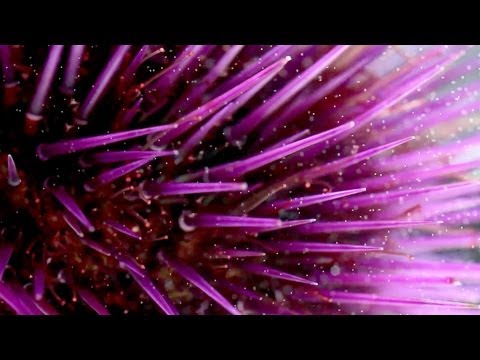
How Life Begins in the Deep Ocean
Where do squid, jellyfish and other sea creatures begin life? The story of a sea urchin reveals a stunningly beautiful saga of fertilization, development and growth in the ocean depths.
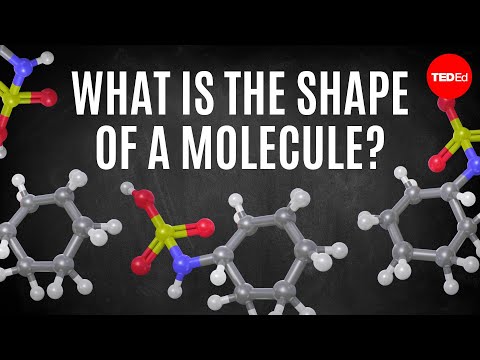
What is the Shape of a Molecule George Zaidan and Charles Morton
A molecule is nearly all empty space, apart from the extremely dense nuclei of its atoms and the clouds of electrons that bond them together. When that molecule forms, it arranges itself to maximize attraction of opposite charges and minimize repulsion of unlike. George Zaidan and Charles Morton shape our image of molecules.
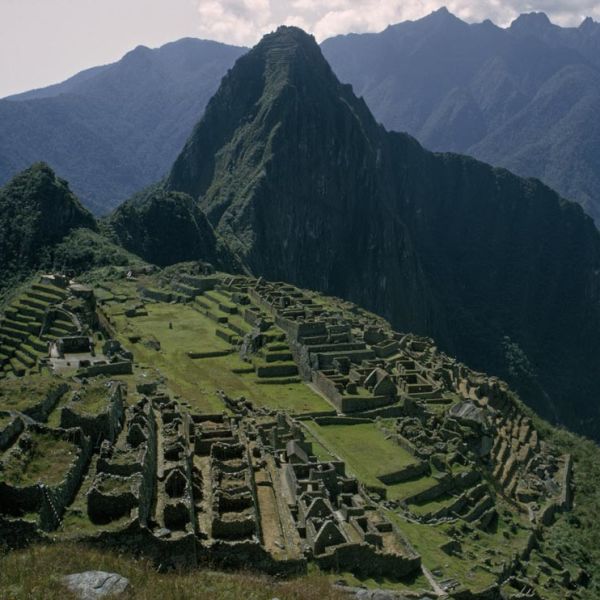
South America: Human Geography
South America’s human landscape is deeply influenced by indigenous and immigrant populations, and their connection to the physical environment.

Why Do We Cry the Three Types of Tears Alex Gendler
Whether we cry during a sad movie, while chopping onions, or completely involuntarily, our eyes are constantly producing tears. Alex Gendler tracks a particularly watery day in the life of Iris (the iris) as she cycles through basal, reflex and emotional tears.

3 Reasons Why Medications Are so Expensive in the Us Kiah Williams
A century after its discovery, insulin remain essential in treating diabetes, and has a relatively low production cost, with a vial generally costing less than $6 to make. But those in the US pay on average 10 times more than those in other countries— leading some patients to take less than prescribed. Kiah Williams takes a look at the US supply chain to explore why medications are so expensive.

Would You Weigh Less in an Elevator Carol Hedden
What happens when you jump in a moving elevator? Do you weigh more when you're going up and less when you're going down? Carol Hedden explores the relationship between gravity, weight, and relative motion, using a moving elevator to explain the fascinating physics.

History s Deadliest Colors J V Maranto
When radium was first discovered, its luminous green color inspired people to add it into beauty products and jewelry. It wasn’t until much later that we realized that radium’s harmful effects outweighed its visual benefits. Unfortunately, radium isn’t the only pigment that historically seemed harmless or useful but turned out to be deadly. J. V. Maranto details history’s deadliest colors.

Chip Conley Measuring What Makes Life Worthwhile
When the dot-com bubble burst, hotelier Chip Conley went in search of a business model based on happiness. In an old friendship with an employee and in the wisdom of a Buddhist king, he learned that success comes from what you count. Chip Conley creates joyful hotels, where he hopes his employees, customers and investors alike can realize their full potential. His books share that philosophy with the wider world.

Insults by Shakespeare
“You’re a fishmonger!” By taking a closer look at Shakespeare’s words--specifically his insults--we see why he is known as a master playwright whose works transcend time and appeal to audiences all over the world.

Steve Jobs at Stanford University Commencement 2005
At his Stanford University commencement speech, Steve Jobs, CEO and co-founder of Apple and Pixar, urges us to pursue our dreams and see the opportunities in life's setbacks -- including death itself.
Calculating the Odds of Intelligent Alien Life
Could there be intelligent life on other planets? This question has piqued imagination and curiosity for decades. Explore the answer with the Drake Equation -- a mathematical formula that calculates the possibility of undiscovered life.

What Happened to Antimatter Rolf Landua
Particles come in pairs, which is why there should be an equal amount of matter and antimatter in the universe. Yet, scientists have not been able to detect any in the visible universe. Where is this missing antimatter? CERN scientist Rolf Landua returns to the seconds after the Big Bang to explain the disparity that allows humans to exist today.
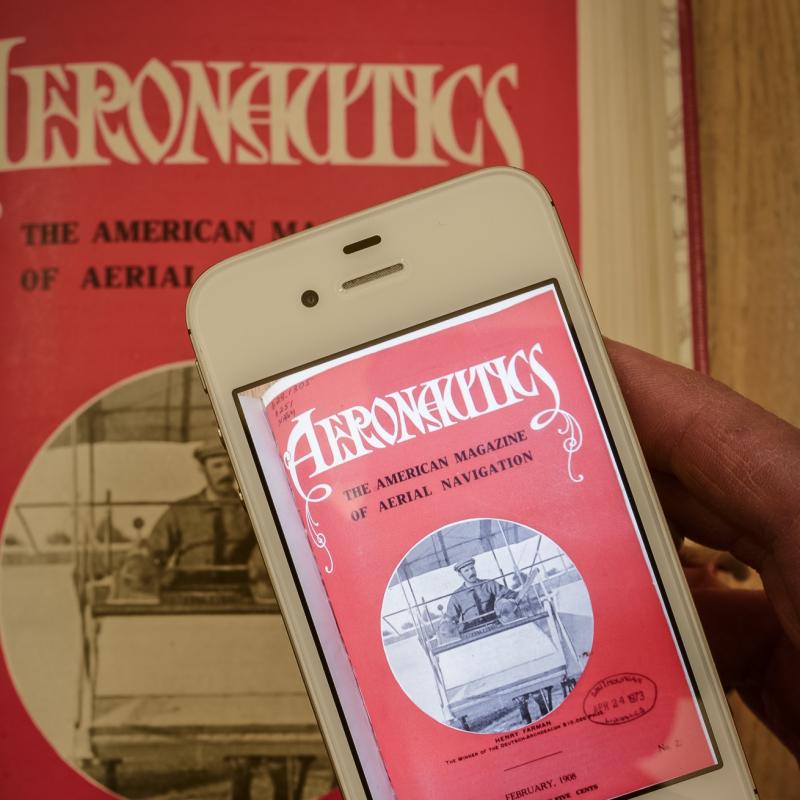
Smithsonian Libraries Digital Library
Books Online The Libraries has over seven thousand rare books, journals and manuscripts online on subjects ranging from advertising and aeronautics to zinc sculpture and Zuni cuisine, though the

Carl Honore Praises Slowness
Journalist Carl Honoré believes the Western world's emphasis on speed erodes health, productivity and quality of life. But there's a backlash brewing, as everyday people start putting the brakes on their all-too-modern lives. Honoré is best known for his advocacy of the Slow Movement. His book "In Praise of Slowness" dissects our speed-obsessed society and celebrates those who have gotten in touch with their "inner tortoise."

Neil Gaiman at the University of the Arts Commencement 2012
Neil Gaiman Addresses the University of the Arts Class of 2012. One of the best commencement speeches. A must watch for any artist and everyone who hopes to be creative and successful. Make Good Art.

The Survival of the Sea Turtle
Watch the miraculous journey of infant sea turtles as these tiny animals run the gauntlet of predators and harsh conditions. Then, in numbers, see how human behavior has made their tough lives even more challenging.

The Good and the Beautiful Kingdoms and Classification
The full-color course book guides the parent through each lesson in the Kingdoms and Classification science course. Hands-on activities, vocabulary words, access to captivating videos, vocabulary words, mini books, beautiful illustrations and images, along with engaging information is found throughout the course. Once