Discover Resources
Browse curated homeschool resources from the community
Want to Be Happier Stay in the Moment Matt Killingsworth
When are humans most happy? To gather data on this question, Matt Killingsworth built an app, Track Your Happiness, that let people report their feelings in real time. Among the surprising results: We're often happiest when we're lost in the moment. And the flip side: The more our mind wanders, the less happy we can be. (Filmed at TEDxCambridge.)

How to Turn Protest Into Powerful Change Eric Liu
We live in an age of protest. On campuses, in public squares, on streets and social media, protestors around the world are challenging the status quo. But while protest is often necessary, is it sufficient? Eric Liu outlines three strategies for peacefully turning awareness into action and protest into durable political power.

Why Are Earthquakes so Hard to Predict Jean Baptiste P Koehl
In 132 CE, Zhang Heng presented his latest invention: a large vase he claimed could tell them whenever an earthquake occurred for hundreds of miles. Today, we no longer rely on pots as warning systems, but earthquakes still offer challenges to those trying to track them. Why are earthquakes so hard to anticipate, and how could we get better at predicting them? Jean-Baptiste P. Koehl investigates.
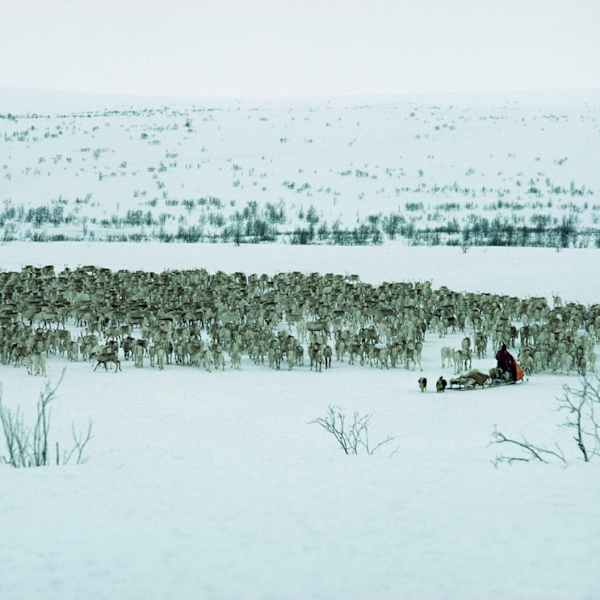
Europe: Human Geography Unit
Europe has a long history of human development and is considered the birthplace of Western Civilization.

Let Us Ruin Your Day with This Tongue Eating Parasite Niko Zlotnik
The infamous tongue-eating louse is one of nearly 400 species belonging to a family of fish parasites. Some latch onto their host’s head, others suck blood from fish gills, and others still burrow into fish flesh. But the Cymothoa exigua goes specifically for fish tongues. How do these parasites do it, and why? Niko Zlotnik explores the strategies tongue biters use to find a fish to call home.

Could Underwater Farms Help Fight Climate Change Ayana Elizabeth Johnson and Megan Davis
For billions of people, seafood provides a significant source of protein and nutrition, but over half the seafood we eat isn’t caught in the wild, it’s grown through aquaculture. Farmed seafood is one of the fastest-growing food industries, but the farming methods echo the problems we’ve seen in industrial agriculture. Is there a way to sustainably farm the ocean? Ayana Elizabeth Johnson and Megan Davis investigate.

Beach Bodies in Spoken Word David Fasanya and Gabriel Barralaga
What leads to the way we perceive our body image? In a thought-provoking and humorous performance at TEDYouth 2012, spoken word poets David Fasanya and Gabriel Barralaga pose a challenge to rethink how we see ourselves.
Why Can T You Divide by Zero
In the world of math, many strange results are possible when we change the rules. But there’s one rule that most of us have been warned not to break: don’t divide by zero. How can the simple combination of an everyday number and a basic operation cause such problems?
What Causes Headaches Dan Kwartler
In ancient Greece, the best-known remedy for a long-standing headache was to drill a small hole in the skull to drain supposedly infected blood. Fortunately, doctors today don’t resort to power tools to cure headaches, but we still have a lot to learn about this ancient ailment. Dan Kwartler shares what we know (and don't know) about headaches.
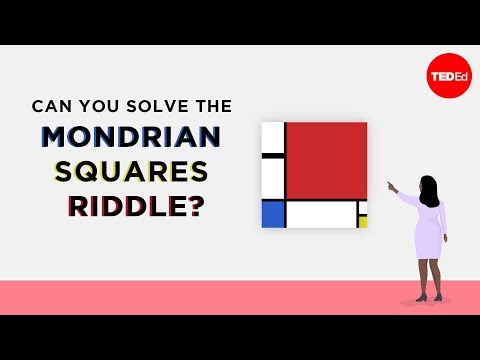
Can You Solve the Mondrian Squares Riddle Gord Hamilton
Dutch artist Piet Mondrian’s abstract, rectangular paintings inspired mathematicians to create a two-fold challenge. Can you solve the puzzle and get to the lowest score possible? Gordon Hamilton shows how.

Geography Standard 14: Human Modification of Environment
How human actions modify the physical environment.

Why Do Our Bodies Age Monica Menesini
Human bodies aren’t built for extreme aging: our capacity is set at about 90 years. But what does aging really mean, and how does it counteract the body’s efforts to stay alive? Monica Menesini details the nine physiological traits that play a central role in aging.

The Incredible Evolution of Fish Bodies Lauren Sallan
In tropical seas, flying fish leap out of the water, gliding for up to 200 meters, before dipping back into the sea. In the Indo-Pacific, a hunting sailfish swims up to 110 kilometers per hour. These feats are made possible by a fish’s form—which in most species is a smooth, long body, fins, and a tail. Lauren Sallan explains why these features are so common, and what it reveals about fish.

Can You Solve the Wizard Standoff Riddle Daniel Finkel
You’ve been chosen as a champion to represent your wizarding house in a deadly duel against two rival magic schools. Your opponents are a powerful sorcerer who wields a wand that can turn people into fish, and a powerful enchantress who wields a wand that turns people into statues. Can you choose a wand and devise a strategy that ensures you will win the duel? Dan Finkel shows how.
Can You Survive Nuclear Fallout Brooke Buddemeier and Jessica s Wieder
Nuclear weapons are some of the most powerful tools of destruction on Earth, and the full scope of a nuclear detonation is almost unimaginable. However, there is a scientifically supported plan of action that could save thousands of lives. What is this plan, and what exactly would it protect us from? Brooke Buddemeier and Jessica S. Wieder explore the possibility of surviving nuclear detonation.
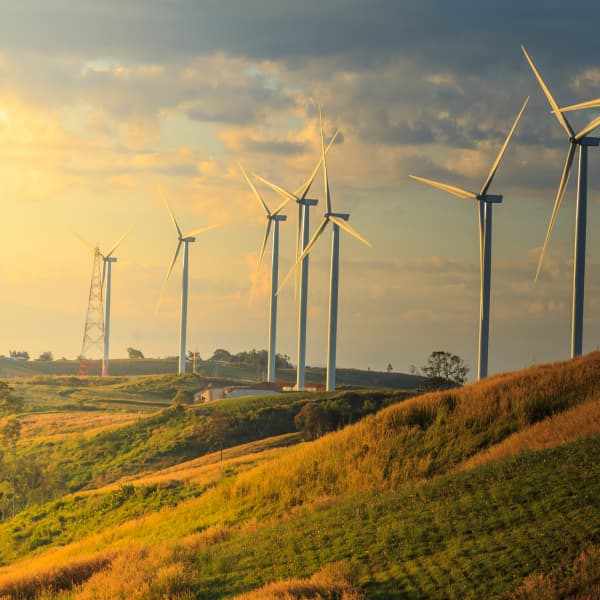
Geography Standard 16: Changes in Resources
The changes that occur in the meaning, use, distribution, and importance of resources.
Could the Earth Be Swallowed by a Black Hole Fabio Pacucci
From asteroids capable of destroying entire species to supernovae that could exterminate life on Earth, outer space has no shortage of forces that could wreak havoc on our planet. But there’s something in space that is even more terrifying than any of these -- something that wipes out everything it comes near. Fabio Pacucci examines the probability of Earth being gobbled up by a black hole.