Discover Resources
Browse curated homeschool resources from the community

Do Larger Animals Take Longer to Pee David L Hu
A cat’s bladder can only store a golf ball’s worth of urine. For humans, it’s a coffee mug and for elephants, a kitchen trash can. An elephant’s bladder is 400 times the size of a cat’s, but it doesn’t take an elephant 400 times longer to pee. So, how does this work? David L. Hu digs into what scientists call the “Other Golden Rule.”
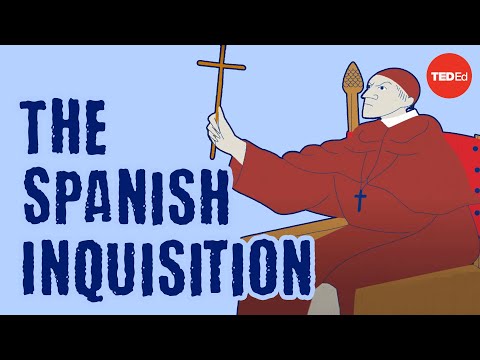
Ugly History the Spanish Inquisition Kayla Wolf
In 1478, Pope Sixtus IV issued a decree authorizing the Catholic monarchs, Ferdinand and Isabella, to root out heresy in the Spanish kingdoms. The inquisition quickly turned its attention to ridding the region of people who were not part of the Catholic Church— leading to more than 350 years of ethnic cleansing. Kayla Wolf digs into the persecution and brutality of the Spanish Inquisition.

How to Make a Sad Story Funny Jodie Houlston Lau
It may seem counterintuitive, but comedy is often key to a serious story. As a writer, you need your audience to experience a range of emotions, no matter what your genre. Comic relief is a tried-and-true way of creating the varied emotional texture a compelling story needs. So how can you create this effect in your own stories? Jodie Houlston-Lau shares some tips for lightening the mood.

2 Questions to Uncover Your Passion and Turn it Into a Career Noeline Kirabo
What's your passion? Social entrepreneur Noeline Kirabo reflects on her work helping out-of-school young people in Uganda turn their passions into profitable businesses — and shares the two questions you can ask yourself to begin doing the same.

What is the coldest thing in the world? - Lina Marieth Hoyos
Explore the science of extreme cold temperatures.

Building the World s Largest and Most Controversial Power Plant Alex Gendler
In 2018, a single power plant produced more energy than the world’s largest coal-powered and gas-powered plants combined. China’s Three Gorges Dam relies on running water, and is capable of producing more energy than any other power plant on Earth. So what allows Three Gorges to generate all this power? And how do hydroelectric plants work in the first place? Alex Gendler investigates.
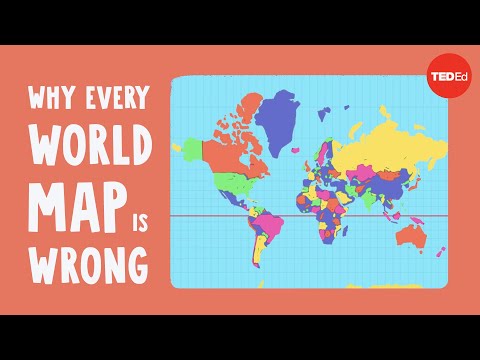
Why Every World Map is Wrong Kayla Wolf
Fourteen Greenlands could fit in Africa— but you wouldn’t guess it from most maps of the world. The fact is, every world map humans have ever made is wrong. Actually, it’s impossible to make a flat map of the whole spherical world 100% right. So why do we bother with these inaccurate maps at all? Kayla Wolf explores how even the simplest changes in map design can shift our point of view.
How Do You Know You Re Not Dreaming Daniel Gregory
Bizarre things happen in dreams: you fly, or conjure an all-you-can-eat buffet out of thin air, or get chased by witches through the halls of your school. But the strange things that happen in dreams don’t seem strange at the time. So, how do you know you’re not in a dream right now? Is there a way to prove that you're awake? Daniel Gregory digs into the philosophical theories of wakefulness.

Can You Survive the Creation of the Universe by Solving This Riddle James Tanton
It’s moments after the Big Bang and you’re still reeling. You’re a particle of matter, amidst a chaotic stew of forces, fusion, and annihilation. If you’re lucky and avoid being destroyed by antimatter, you’ll be the seed of a future galaxy. Can you ensure that you’re the last particle standing? James Tanton shows how.

How Can You Change Someone s Mind Spoiler Facts Don T Work so Well Hugo Mercier
Why do arguments change people’s minds in some cases and backfire in others? Hugo Mercier explains how arguments are more convincing when they rest on a good knowledge of the audience, taking into account what the audience believes, who they trust, and what they value.
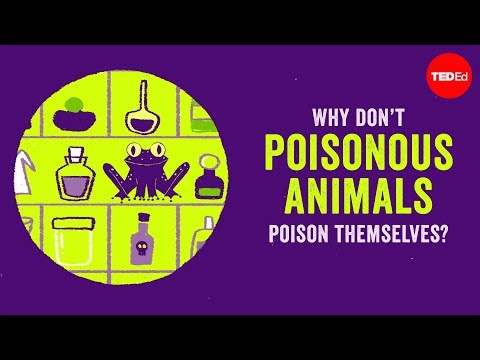
Why Don T Poisonous Animals Poison Themselves Rebecca D Tarvin
Thousands of animal species use toxic chemicals to defend themselves from predators. Snakes have blood clotting compounds in their fangs, the bombardier beetle has corrosive liquid in its abdomen and jellyfish have venomous, harpoon-like structures in their tentacles. But how do these animals survive their own poisons? Rebecca D. Tarvin details the strategies that protect animals from themselves.
How to Get Motivated Even When You Don T Feel Like it
Motivation is complicated. Psychologists define motivation as the desire or impetus to initiate and maintain a particular behavior. But sometimes, no matter how passionate you are about a goal or hobby, finding the motivation to actually do it can be difficult. Why is motivation so fickle? Explore intrinsic and extrinsic motivation, and dig into how these forces contribute to our drive.

The Ethical Dilemma of the Accused Spouse Alex Worsnip
You’re sitting on the couch, when you hear a knock on the door. The police have arrived to arrest your spouse— for murder. This accusation comes as a total shock, but their fingerprints were found on the murder weapon. Your spouse insists they’re innocent. Should you believe your spouse, even though the evidence against them looks damning? Alex Worsnip takes a look at this classic ethical dilemma.

Why Don T We Cover the Desert with Solar Panels Dan Kwartler
Stretching over roughly nine million square kilometers and with sands reaching temperatures of up to 80° Celsius, the Sahara Desert receives about 22 million terawatt hours of energy from the Sun every year. That’s well over 100 times more energy than humanity consumes annually. So, could covering the desert with solar panels solve our energy problems? Dan Kwartler digs into the possibility.