Discover Resources
Browse curated homeschool resources from the community

Why the Sun Could Crash Your Internet Fabio Pacucci
In September 1859, miners following the Colorado gold rush woke up to another sunny day. Or so they thought. To their surprise, they soon discovered it was actually 1am and the sky wasn’t lit by the sun, but rather by brilliant drapes of light. The blazing glow was a solar storm— the largest in recorded history. So what exactly is a solar storm? Fabio Paccuci explains this astrophysical phenomena.

The Myth of Narcissus and Echo Iseult Gillespie
One day, Echo was drifting through the woods and fell in love with a handsome young hunter named Narcissus. Cursed by Hera to only repeat the last words spoken by another, Echo was unable to converse with him and was soon cruelly rejected. Heartbroken, she died. Seeing this, the goddess Nemesis decided it was time for retribution. Iseult Gillespie details the myth of Narcissus's punishment.
The Rise and Fall of the Maya Empire s Most Powerful City Geoffrey E Braswell
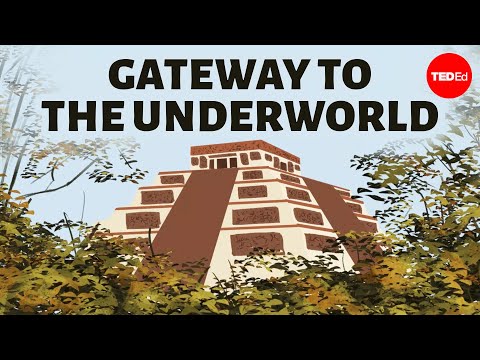
During the 8th century CE, warfare and failing agriculture forced Maya people to move north, to hotter, drier Yucatán. Because of its freshwater access, Chichen Itza became the most powerful Maya city, with nearly 50,000 citizens at its height. But the region presented its own challenges and the city's golden age wouldn’t last forever. Geoffrey E. Braswell traces the city's rise and fall.

Are We Living in a Simulation Zohreh Davoudi
All life on Earth— living and inanimate, microscopic and cosmic— is governed by mathematical laws with apparently arbitrary constants. And this opens up a question: If the universe is completely governed by these laws, couldn’t a powerful enough computer simulate it exactly? Could our reality actually be a detailed simulation set in place by a more advanced civilization? Zohreh Davoudi investigates.

How Do Executive Orders Work Christina Greer
On January 1, 1863, Abraham Lincoln legally changed the status of over 3 million people from “slave” to “free.” But his emancipation proclamation wasn’t a law — it was an executive order. The framers of the American Constitution made this power available to the executive branch. But what exactly is this tool, how does it work, and what’s the extent of its power? Christina Greer explains.

Earth s Mysterious Red Glow Explained Zoe Pierrat
In 2009, a satellite circled Earth, scanning and sorting the wavelengths reflecting off the planet’s surface. Researchers noticed something baffling: an unexpected wavelength of unknown origin. They tried looking at Earth with only this wavelength, and saw the planet covered in a red hue of varying intensity. So, what was going on? Zoe Pierrat explores the science of chlorophyll fluorescence.
What Caused the Rwandan Genocide Susanne Buckley Zistel
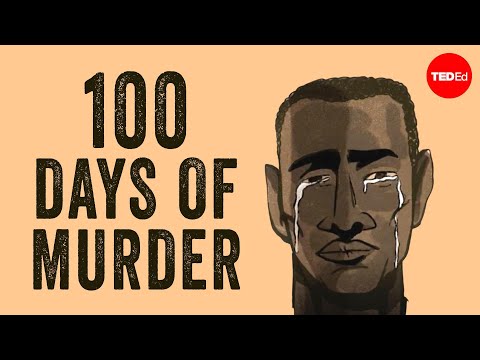
For one hundred days in 1994, the African country of Rwanda suffered a horrific campaign of mass murder. Neighbor turned against neighbor as violence engulfed the region, resulting in the deaths of over one-tenth of the country’s population. How did this happen? And why didn't international organizations intervene? Susanne Buckley-Zistel digs into the history of the Rwandan Genocide.

How Likely is a Shark Attack Gerd Gigerenzer
A new drug reduces the risk of heart attacks by 40%. Shark attacks are up by a factor of two. Drinking a liter of soda per day doubles your chance of developing cancer. These are all examples of a common way risk is presented in news articles, and can often be misleading. So how can we better evaluate risk? Gerd Gigerenzer explores the difference between relative and absolute risk.

Why You Should Get Paid for Your Data Jennifer Zhu Scott
The world's most valuable tech companies profit from the personal data you generate. So why aren't you getting paid for it? In this eye-opening talk, entrepreneur and technologist Jennifer Zhu Scott makes the case for private data ownership and shows how this growing movement could put power (and cash) back into the hands of people.

What Happened to the Lost Kingdom of Kush Geoff Emberling
Along the Nile River, in what is now northern Sudan, lay the ancient civilization of Kush. Though they were once conquered by a powerful neighbor, the kings and queens of Kush would go on to successfully challenge two of the most dominant empires in history: the Egyptians and the Romans. So what happened to this African kingdom? Geoff Emberling details the rise and fall of the Kush empire.
How Does Impeachment Work Alex Gendler
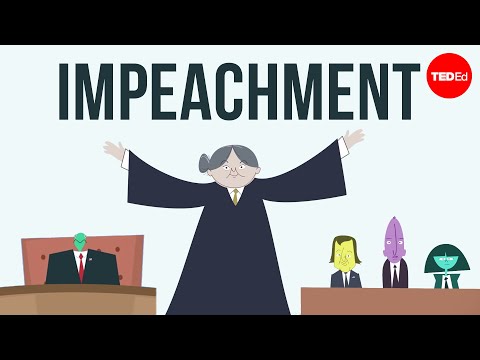
For most jobs, it’s understood that you can be fired – whether for crime, incompetence, or just poor performance. But what if your job happens to be the most powerful position in the country – or the world? That's where impeachment comes in. But how does it work? Alex Gendler details the process of impeachment.
The Myth of Hades and Persephone Iseult Gillespie
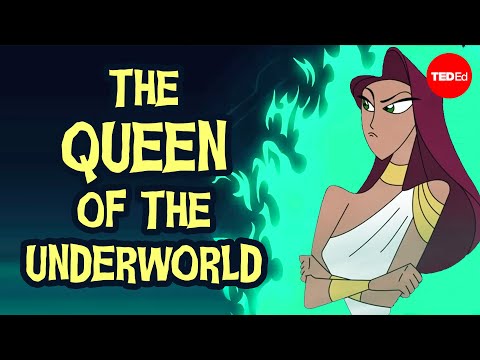
One day, Persephone was frolicking in a meadow with the nymph, Cyane. As they admired a flower, they noticed it tremble in the ground. Suddenly, the earth split, and a terrifying figure arose. It was Hades, god of the underworld. He wrenched Persephone from Cyane, dragged her into his inky chariot, and blasted back through the earth. Iseult Gillespie shares the myth of the goddess of spring.
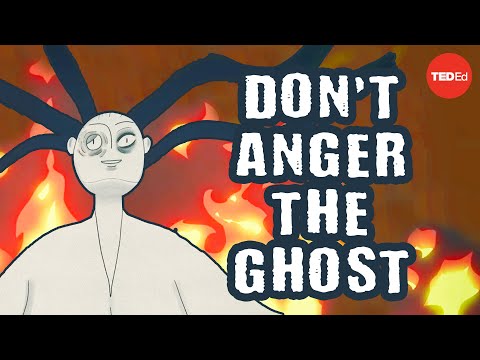
Japan s Scariest Ghost Story Kit Brooks
Oiwa’s only hope for ending her marriage to the cruel and dishonorable samurai, Iemon, was her father. But after he tried to end the union, Iemon murdered him in cold blood. With plans to marry another, Iemon conspired to poison his wife and left her for dead. But unfortunately for Iemon, it wouldn’t be the last of Oiwa. Kit Brooks shares the chilling tale of Oiwa’s ghostly revenge.

These 70 Writers Are Actually All the Same Person Ilan Stavans
On November 30th, 1935, dozens of writers passed away. They came from different backgrounds, espoused divergent beliefs, and wrote in a variety of styles. Yet almost 30,000 pages of their work was stashed in a trunk in an apartment in Lisbon, Portugal. So, what mysterious string tied all these writers together? Ilan Stavans explores the enigmatic life of Fernando Pessoa and his many identities.
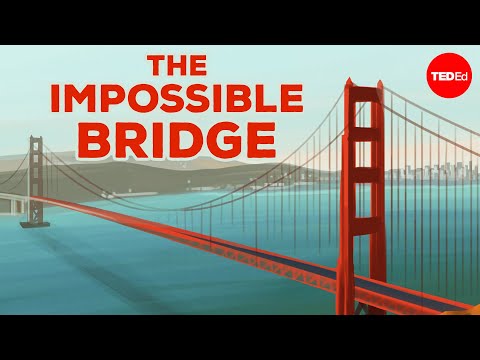
Building the Impossible Golden Gate Bridge Alex Gendler
Stretching 227 meters tall, two towers were assembled to support California’s Golden Gate Bridge. They were just one of the challenges facing engineers Charles Ellis and Joseph Strauss. Even before construction began, many thought the project impossible: the strait was home to powerful winds, constant fog, and earthquakes. So how was this iconic bridge created? Alex Gendler details the feat.

Is Marijuana Bad for Your Brain Anees Bahji
In 1970, marijuana was classified as a schedule 1 drug in the United States: the strictest designation possible, meaning it was completely illegal and had no recognized medical uses. Today, marijuana’s therapeutic benefits are widely acknowledged, but a growing recognition for its medical value doesn’t answer the question: is recreational marijuana use bad for your brain? Anees Bahji investigates.