Discover Resources
Browse curated homeschool resources from the community

TED-Ed: Why Is Biodiversity So Important?
Our planet’s diverse, thriving ecosystems may seem like permanent fixtures, but they’re actually vulnerable to collapse. Jungles can become deserts, and reefs can become lifeless rocks. What makes one ecosystem strong and another weak in the face of change? Kim Preshoff details why the answer, to a large extent, is biodiversity.

TED-Ed: How Memories Form and How We Lose Them
Think back to a really vivid memory. Got it? Now try to remember what you had for lunch three weeks ago. That second memory probably isn’t as strong—but why not? Why do we remember some things, and not others? And why do memories eventually fade? Catharine Young gives the basics on memory and memory loss.
TED-Ed: How Does the Stock Market Work?
In the 1600s, the Dutch East India Company employed hundreds of ships to trade goods around the globe. In order to fund their voyages, the company turned to private citizens to invest money to support trips in exchange for a share of the profits. In doing so, they unknowingly invented the world’s first stock market. So how do companies and investors use the market today? Oliver Elfenbaum explains.
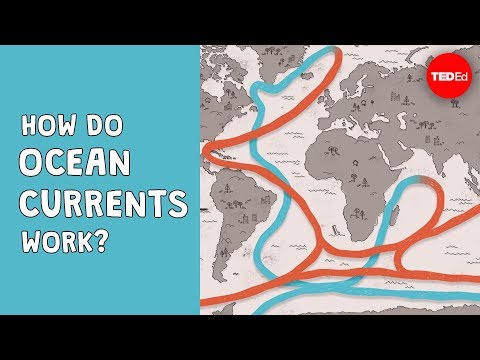
TED-Ed: How Do Ocean Currents Work?
In 1992, a cargo ship carrying bath toys got caught in a storm. Shipping containers washed overboard, and the waves swept 28,000 rubber ducks and other toys into the North Pacific. But they didn’t stick together -- the ducks have since washed up all over the world. How did this happen? Jennifer Verduin dives into the science of ocean currents.

TED-Ed: The Carbon Cycle
What exactly is the carbon cycle? Nathaniel Manning provides a basic look into the cyclical relationship of carbon, humans and the environment.
TED-Ed: What Causes Cavities?
When a team of archeologists recently came across some 15,000-year-old human remains, they made an interesting discovery: the teeth of those ancient humans were riddled with holes. So what causes cavities, and how can we avoid them? Mel Rosenberg takes us inside our teeth to find out.

How one journalist risked her life to hold murderers accountable - Christina Greer
The story of Ida B. Wells and her fight against injustice.
TED-Ed: A Day in the Life of an Ancient Egyptian Doctor
It’s another sweltering morning in Memphis, Egypt. As the sunlight brightens the Nile, Peseshet checks her supplies. Honey, garlic, cumin, acacia leaves, cedar oil -- she’s well stocked with the essentials she needs to treat her patients. Elizabeth Cox outlines a day in the life of an ancient Egyptian doctor.

TED-Ed: Can You Solve the Stolen Rubies Riddle?
Townspeople are demanding that a corrupt merchant’s collection of 30 rubies be confiscated to reimburse the victims of his schemes. The king announces that the fine will be determined through a game of wits between the merchant and the king’s most clever advisor – you. Can you outfox the merchant and win back the greatest amount of rubies to help his victims? Dennis Shasha shows how.
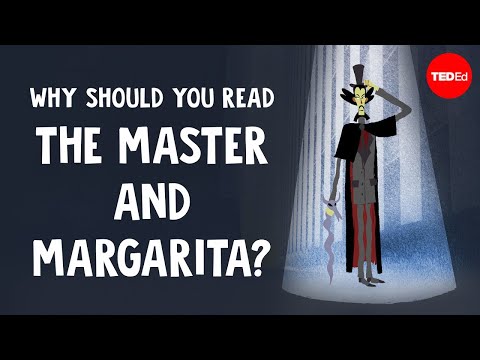
TED-Ed: Why You Should Read The Master and Margarita
The Devil has come to town. But don’t worry– all he wants to do is stage a magic show. This absurd premise forms the central plot of Mikhail Bulgakov’s masterpiece, “The Master and Margarita.” Its blend of political satire, historical fiction and occult mysticism has earned a legacy as one of the 20th century’s greatest novels– and one of its strangest. Alex Gendler explores the subversive novel.

TED-Ed: The Myth of Pandora's Box
Pandora was the first mortal woman, breathed into being by Hephaestus, god of fire. The gods gave her gifts of language, craftsmanship and emotion. From Zeus she received two gifts: the trait of curiosity and a heavy box screwed tightly shut -- never to be opened. But what treasure could never be seen by human eyes, and why was it in her care? Iseult Gillespie explores the mystery of Pandora’s box.

TED-Ed: How Do Your Hormones Work?
Over our lifetimes, our bodies undergo a series of extraordinary metamorphoses: we grow, experience puberty, and many of us reproduce. Behind the scenes, the endocrine system works constantly to orchestrate these changes. Emma Bryce explains how this system regulates everything from your sleep to the rhythm of your beating heart, exerting its influence over each and every one of your cells.

TED-Ed: The Rise and Fall of the Byzantine Empire
Most history books will tell you that the Roman Empire fell in the fifth century CE, but this would’ve come as a surprise to the millions who lived in the Roman Empire through the Middle Ages. This Medieval Roman Empire, today called the Byzantine Empire, began when Constantine, the first Christian emperor, moved Rome's capital. Leonora Neville details the rise and fall of the Byzantine Empire.
TED-Ed: How to Communicate Clearly
This is episode 3 of the animated series, “Public Speaking 101.” Ideas change everything — and since language lets us share our ideas, learning how to use it well gives speakers the power to inspire people and even change how they think. This 11-episode course will teach you how to identify, develop, and share your best ideas, while mastering essential communication skills along the way.

TED-Ed: What Is Bipolar Disorder?
The word bipolar means ‘two extremes.’ For the many millions experiencing bipolar disorder around the world, life is split between two different realities: elation and depression. So what causes this disorder? And can it be treated? Helen M. Farrell describes the root causes and treatments for bipolar disorder.

TED-Ed: What Would Happen If You Didn't Drink Water?
Water is essentially everywhere in our world, and the average human is composed of between 55 and 60% water. So what role does water play in our bodies, and how much do we actually need to drink to stay healthy? Mia Nacamulli details the health benefits of hydration.
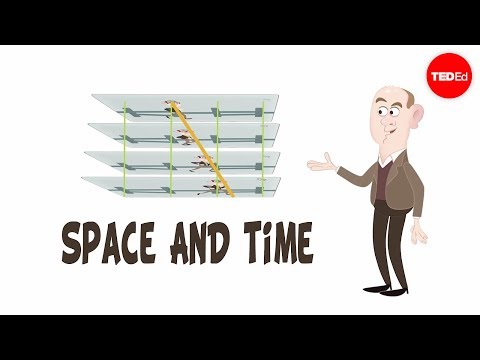
TED-Ed: The Fundamentals of Space-Time
Space is where things happen. Time is when things happen. And sometimes, in order to really look at the universe, you need to take those two concepts and mash them together. In this first lesson of a three-part series on space-time, hilarious hosts Andrew Pontzen and Tom Whyntie go through the basics of space and time individually, and use a flip book to illustrate how we can begin to look at them together.

TED-Ed: Can You Solve the Egg Drop Riddle?
The city has just opened its one-of-a-kind Faberge Egg Museum, with a single egg displayed on each floor of a 100-story building -- and the world’s most notorious jewel thief already has her eyes on the prize. Can you help the thief formulate a plan that will drop the most expensive egg she can get safely into her waiting truck? Yossi Elran shows how.

What is the tragedy of the commons? - Nicholas Amendolare
Understand this crucial concept in economics and ecology.
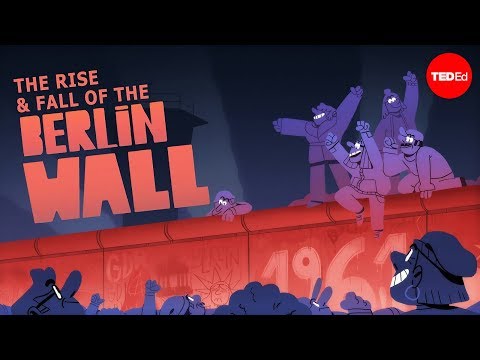
TED-Ed: The Rise and Fall of the Berlin Wall
On August 13, 1961, construction workers began tearing up streets and erecting barriers in Berlin. This night marked the beginning of one of history’s most infamous dividing lines: the Berlin Wall. Construction continued for a decade as the wall cut through neighborhoods, separated families, and divided not just Germany, but the world. Konrad H. Jarausch details the history of the Berlin Wall.
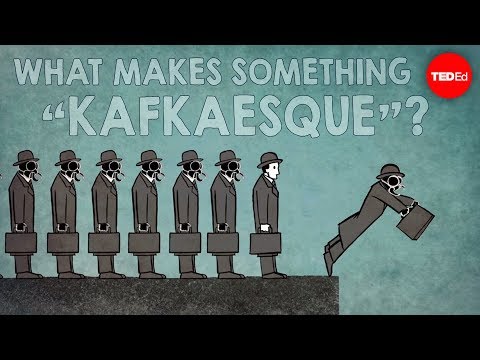
TED-Ed: What Makes Something Kafkaesque?
The term Kafkaesque has entered the vernacular to describe unnecessarily complicated and frustrating experiences, especially with bureaucracy. But does standing in a long line to fill out confusing paperwork really capture the richness of Kafka’s vision? Beyond the word’s casual use, what makes something "Kafkaesque"? Noah Tavlin explains.