Discover Resources
Browse curated homeschool resources from the community

How Pigeons Took Over the World Elizabeth Carlen and Joanna Moles
Seeing their meat as a protein source and their poop as the perfect fertilizer, humans brought pigeons into captivity as far back as 10,000 years ago. As we carried pigeons around the world, they formed the wild urban flocks we're familiar with today and became one of the most abundant species on the planet. Elizabeth Carlen and Joanna Moles track the feathery flier's rise to world domination.

Who Decides How Long a Second is John Kitching
In 1967, researchers gathered to answer a long-running scientific question: just how long is a second? It might seem obvious at first. A second is the tick of a clock, the swing of a pendulum, the time it takes to count to one. But how precise are those measurements? And what is that length based on? John Kitching digs into how we scientifically define this fundamental unit of time.
The Aztec Myth of the Unlikeliest Sun God Kay Almere Read
Nanahuatl, weakest of the Aztec gods, sickly and covered in pimples, had been chosen to form a new world. There had already been four worlds, each set in motion by its own “Lord Sun,” and each had been destroyed. For a new world to be created, another god had to leap into the great bonfire and become the fifth sun. Will Nanahuatl complete the sacrifice? Kay A. Read recounts the myth of the sun.

No One Really Knows What a Tree is Max G Levy
Plants assume a variety of forms, and trees are just one of them. What makes or breaks a tree can come down to some pretty specific characteristics, based on how the plant develops as a result of how it evolved. Trees don’t all comprise one closely related group, like insects or mammals. So, how exactly do trees get classified as trees? Max G. Levy explains what distinguishes these woody plants.

The Murderous Medieval King Who Inspired Macbeth Benjamin Hudson
Of all Shakespeare’s plays, perhaps none is stranger than “Macbeth”— a parable on power rife with supernatural elements. But according to texts from the 11th century, this tragedy has its roots in reality. What’s more, other accounts mention witches, prophecies, and arboreal armies. Which raises the question: just how much of Shakespeare’s strange story is true? Benjamin Hudson investigates.

The Best Kindergarten You Ve Ever Seen Takaharu Tezuka
At this school in Tokyo, five-year-olds cause traffic jams and windows are for Santa to climb into. Meet: the world's cutest kindergarten, designed by architect Takaharu Tezuka. In this charming talk, he walks us through a design process that really lets kids be kids.

Can You See Images in Your Mind Some People Cant Adam Zeman
When reading "Alice's Adventures in Wonderland," most readers visualize the queen’s croquet game play out in their heads. A few might see the scene in vivid detail. However, a small fraction of readers have a drastically different experience: within their heads, they "see" absolutely nothing. Why do some people have an inability to visualize images? Adam Zeman explores the science of aphantasia.
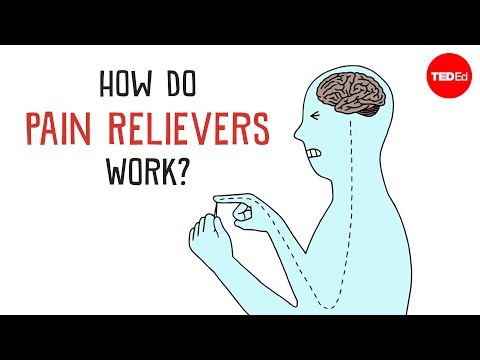
How Do Pain Relievers Work
Some people take aspirin or ibuprofen to treat everyday aches and pains, but how exactly do the different classes of pain relievers work? Learn about the basic physiology of how humans experience pain, and the mechanics of the medicines we've invented to block or circumvent that discomfort.

How Brass Instruments Work Al Cannon
What gives the trumpet its clarion ring and the tuba its gut shaking oompah-pah? And what makes the trombone so jazzy? Al Cannon shows how these answers lie not in the brass the instruments are made of, but in the journey that air takes from the musician’s lungs to the instrument’s bell.

Why We Must Confront Hard Historical Truths Hasan Kwame Jeffries
To move forward in the U.S., we must look back and confront the difficult history that has shaped widespread injustice. Revisiting a significant yet overlooked piece of the past, Hasan Kwame Jeffries emphasizes the need to weave historical context, no matter how painful, into our understanding of society— so we can disrupt the continuum of inequality massively affecting marginalized communities.

Which Type of Milk is Best for You Jonathan J O Sullivan Grace E Cunningham
If you go to the store in search of milk, there are a dizzying number of products to choose from. There’s dairy milk, but also plant-based products such as almond, soy, and oat milks. So which milk is actually best for you? And which uses the fewest resources and produces the least pollution? Jonathan J. O’Sullivan and Grace E. Cunningham dive into some of the most popular milks to find out.

The Hidden Treasures of Timbuktu Elizabeth Cox
On the edge of the vast Sahara desert, citizens snuck out of the city of Timbuktu and took to the wilderness. They buried chests in the desert sand, hid them in caves, and sealed them in secret rooms. Inside these chests was a treasure more valuable than gold: the city’s ancient books. Why were they hiding these priceless manuscripts? Elizabeth Cox digs into the literary tradition of Timbuktu.

The Problem with the U s Bail System Camilo Ramirez
Since 2000, the annual number of people convicted of crimes in the United States has stayed steady, but the average number of people in jail each year has shot up. How can that be? The answer lies in the bail system— which isn’t doing what it was intended to do. Camilo Ramirez details how the cash bail system disproportionally hurts people in low-income communities and communities of color.

The Myth of Medusa Laura Aitken Burt
Medusa, transformed into a monstrous Gorgon by a wrathful Athena, sought refuge in a hidden cave. Time after time, would-be heroes journeyed to the cave to make their names by murdering Medusa— but fell to her gaze every time. Until another young man, Perseus, began his quest for glory. Laura Aitken-Burt shares the myth of Medusa and her infamous power to petrify.

How Stress Affects Your Body Sharon Horesh Bergquist
Our hard-wired stress response is designed to give us the quick burst of heightened alertness and energy needed to perform our best. But stress isn’t all good. When activated too long or too often, stress can damage virtually every part of our body. Sharon Horesh Bergquist gives us a look at what goes on inside our body when we are chronically stressed.

The Nurdles Quest for Ocean Domination Kim Preshoff
Nurdles are the tiny, factory-made pellets that form the raw material for every plastic product that we use, from toys to toothbrushes. And while they look pretty harmless on land, they can really wreak havoc on our oceans. Kim Preshoff details the nurdles’quest for ocean domination, shedding light on the particular features that allow these pervasive polluters to persist for entire generations.

The Cambodian Myth of Lightning Thunder and Rain Prumsodum Ok
"Moni Mekhala Ream Eyso" is the most sacred dance drama in Cambodia. It is performed every year in the buong suong ceremony, and explains the origins of lightning, thunder and rain according to the Khmer people. Prumsodun Ok tells this empowering tale that still enlightens our world today.

How to Let Go of Being a Good Person and Become a Better Person Dolly Chugh
What if your attachment to being a "good" person is holding you back from actually becoming a better person? In this accessible talk, social psychologist Dolly Chugh explains the puzzling psychology of ethical behavior -- like why it's hard to spot your biases and acknowledge mistakes -- and shows how the path to becoming better starts with owning your mistakes.

Noreena Hertz How to Use Experts and When Not to
We make important decisions every day -- and we often rely on experts to help us decide. But, says economist Noreena Hertz, relying too much on experts can be limiting and even dangerous. She calls for us to start democratizing expertise -- to listen not only to "surgeons and CEOs, but also to shop staff."

The Greek Myth of the Fates Prophecy Iseult Gillespie
The night of her son's birth, the queen of Calydon was visited by three shadowy goddesses, known as the Fates. They gestured towards the blazing hearth and decreed that her son would live only until the burning log was reduced to embers. Terrified, the queen locked the log in a chest and guarded the key— but the secret would loom over his life. Iseult Gillespie shares the Greek myth of Meleager.