Discover Resources
Browse curated homeschool resources from the community

TED-Ed: Democracy Is Being Tested. Citizen Assemblies Can Help
How can everyday people help foster and protect democracy? Detailing her work fighting for people power as an activist in Madagascar, Ketakandriana Rafitoson discusses how citizen assemblies — meetings where ordinary citizens get educated about democracy — empower communities to protect their rights, debate important civic questions and take action to create a brighter future.

TED-Ed: What Triggers a Chemical Reaction?
Chemicals are in everything we see, and the reactions between them can look like anything from rust on a spoon to an explosion on your stovetop. But why do these reactions happen in the first place? Kareem Jarrah answers this question by examining the two underlying forces that drive both endothermic and exothermic chemical reactions: enthalpy and entropy.

TED-Ed: How Much Do You Really Know About Ancient Rome?
Minerva, the esteemed Roman goddess of reason, wisdom, handicrafts, and war, is judging a contest: duo vera et mendacium. Three brave contestants will put their knowledge about ancient Rome to the test. How much of what they know about the time period is actually true? And which contestant will come out on top? Stephanie Honchell Smith debunks four common misconceptions about Ancient Rome.

TED-Ed: How Cancer Cells Behave Differently
How do cancer cells grow? How does chemotherapy fight cancer (and cause negative side effects)? The answers lie in cell division. George Zaidan explains how rapid cell division is cancer’s "strength" -- and also its weakness.
TED-Ed: How to Increase Your Happiness
Many people would say the connection between happiness and gratefulness is very simple: when you are happy, you are grateful. But think again. Is it really the happy people that are grateful? Quite a number of people have everything that it would take to be happy, and they are not happy. So, how does gratefulness work? Explore the key components to living gratefully.
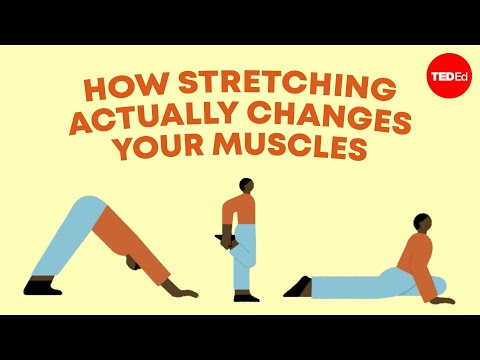
TED-Ed: How Stretching Actually Changes Your Muscles
An athlete is preparing for a game. They’ve put on their gear and done their warmup, and now it’s time for one more routine — stretching. Typically, athletes stretch before physical activity to avoid injuries like strains and tears. But does stretching actually prevent these issues? And if so, how long do the benefits of stretching last? Malachy McHugh explores the finer points of flexibility.

TED-Ed: What Can DNA Tests Tell Us About Our Ancestry?
Two sisters take the same DNA test. The results show that one sister is 10% French, the other 0%. Both sisters share the same two parents, and therefore the same set of ancestors. So how can one be 10% more French than the other? Tests like these rely on our DNA to answer questions about our ancestry, but DNA actually can’t tell us everything. Prosanta Chakrabarty explores the accuracy of DNA tests.

TED-Ed: Does Trickle-Down Economics Work?
In 1981, the US economy was struggling: unemployment rates were climbing and inflation had peaked at an all-time high. To combat these issues, President Reagan introduced a number of economic policies, including tax cuts for large corporations and high-income earners. But did these policies actually stimulate economic growth or improve circumstances for Americans? Jonathan Smith investigates.
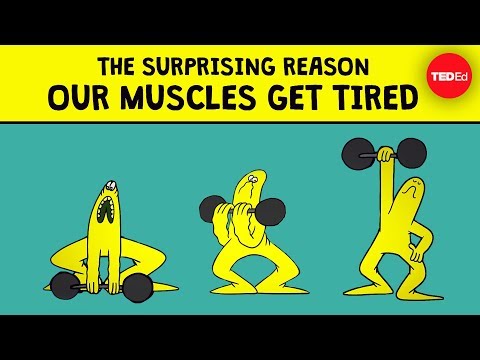
TED-Ed: Why Our Muscles Get Tired
You're lifting weights. The first time feels easy, but each lift takes more and more effort until you can’t continue. Inside your arms, the muscles responsible for the lifting have become unable to contract. What’s going on? Christian Moro explains how exactly our muscles operate, and what causes them to become fatigued.

The paradox at the heart of mathematics: Gödel's Incompleteness Theorem - Marcus du Sautoy
Explore Gödel's incompleteness theorem and the limits of mathematics.

TED-Ed: How Do We Study Living Brains?
As far as we know, there’s only one thing in our solar system sophisticated enough to study itself: the human brain. But this self-investigation is challenging because a living brain is shielded by skull, swaddled in tissue, and made up of billions of tiny cells. How do we study living brains without harming their owners? Elizabeth Waters and John Borghi explain how EEGs, fMRIs, and PETs work.

TED-Ed: How CRISPR Lets You Edit DNA
From the smallest single-celled organism to the largest creatures on Earth, every living thing is defined by its genes. With recent advancements, scientists can change an organism’s fundamental features in record time using gene editing tools such as CRISPR. But where did this medical marvel come from and how does it work? Andrea M. Henle examines the science behind this new technology.
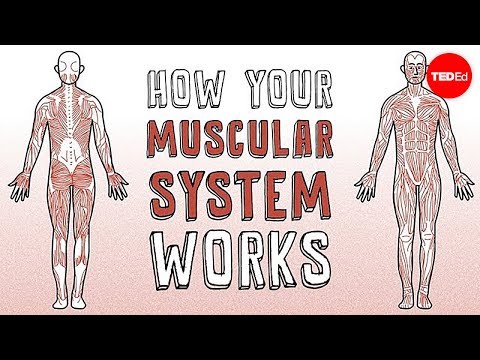
TED-Ed: How Your Muscular System Works
Each time you take a step, 200 muscles work in unison to lift your foot, propel it forward, and set it down. It’s just one of the many thousands of tasks performed by the muscular system: this network of over 650 muscles covers the body and is the reason we can blink, smile, run, jump, and stand upright. So how does it work? Emma Bryce takes you into the body to find out.
The science of skin color - Angela Koine Flynn
Discover the biology behind human skin color variation.
TED-Ed: Why Is It So Hard to Break a Bad Habit?
Many people deal with a nail-biting habit at some point in their lives. Some will go to great lengths to try to stop, employing strategies like dipping their hands in salt or wearing gloves. And while not all of us are nail-biters, most of us do have a habit we’d like to kick. So, what's the best way to break one? Explore how habits are formed, and discover tips on how to manage these behaviors.
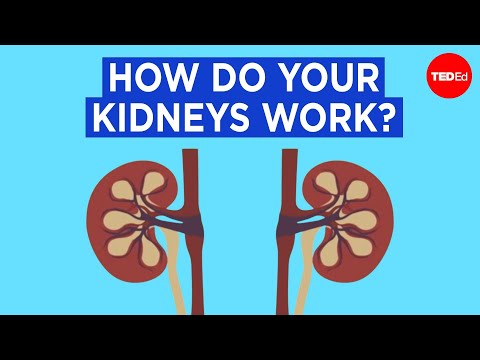
TED-Ed: How Do Your Kidneys Work?
After drinking a few glasses of water on a hot day, you might be struck with a sudden ... urge. Behind that feeling are two bean-shaped organs that work as fine-tuned internal sensors. Emma Bryce details how the incredible kidneys balance the amount of fluid in your body, detect waste in your blood, and know when to release the vitamins, minerals, and hormones you need to stay alive.

How do vaccines work? - Kelwalin Dhanasarnsombut
Understand how vaccines train your immune system.

TED-Ed: History vs. Egypt's Most Powerful Pharaoh
Pharaoh Ramesses II reigned for almost 70 years in the 13th century BCE. He presided over a golden age of Egyptian prosperity, power, and wealth. But was he a model leader or a shameless egomaniac and master of propaganda? Jessica Tomkins puts this controversial figure on trial in History vs. Ramesses the Great.

Cell vs. virus: A battle for health - Shannon Stiles
Watch the epic battle between your cells and invading viruses.