Discover Resources
Browse curated homeschool resources from the community

TED-Ed: A Climate Change Solution Under Our Feet
There's two times more carbon in the Earth's soil than in all of its vegetation and the atmosphere — combined. Biogeochemist Asmeret Asefaw Berhe dives into the science of soil and shares how we could use its awesome carbon-trapping power to offset climate change.

TED-Ed: Why You Should Read Dune
A mother and son trek across an endless desert. Wearing special suits to dissipate heat and recycle moisture, the travelers aren’t worried about dying of thirst. Their fears are much greater. Soon, the sound of the desert is drowned out by a hissing: a mound of sand 400 meters long bursts from the desert floor and races towards them. This is the world of “Dune.” Dan Kwartler dives into the epic story.
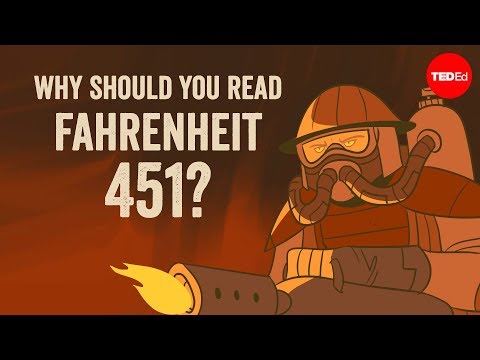
Why should you read “Fahrenheit 451”? - Iseult Gillespie
Ray Bradbury's warning about censorship and conformity.
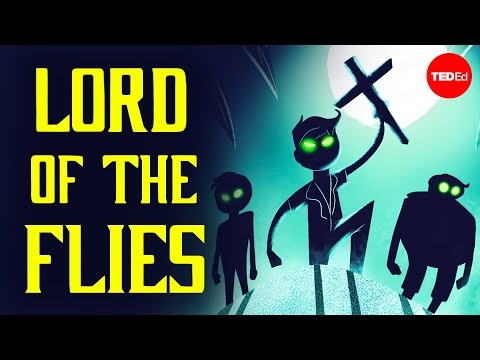
Why should you read “Lord of the Flies” by William Golding? - Jill Dash
William Golding's dark exploration of human nature.
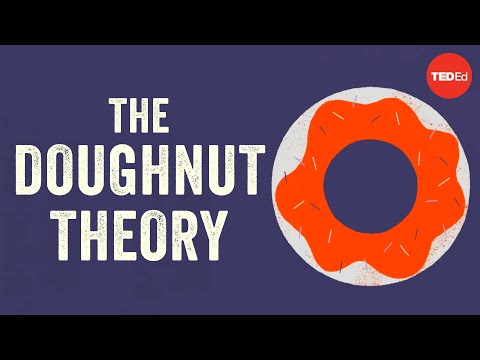
TED-Ed: How Do We Create a Better Economy?
Can we call any economy “healthy” in the face of dwindling resources and growing inequality? What if we cut off our addiction to endless growth, and used a new compass for modern prosperity? One such compass is known as “doughnut economics,” which aims to meet the needs of people without overshooting Earth's ecological limits. Explore how this model reframes our economic systems.

TED-Ed: What's the Best Position to Sleep In?
Sleep positions go by countless creative names— the zombie, mountain climber, free faller, soldier, and more. Yet sleep experts typically simplify them into the basic types: side, stomach, or back. Individual sleep styles are highly personal, but how we spend the night affects our bodies and health in several ways. So, what’s the best position to sleep in? Rachel Marie E. Salas investigates.

TED-Ed: How to Make Your Stress Work for You
An upcoming project deadline, a fight with a family member, or even an embarrassing moment can easily trigger our body’s stress response. While we can’t always control what life throws at us, there are ways to better prepare for stressful events we may experience. So, how can we train our minds and bodies to manage our stress response? Shannon Odell shares best practices for dealing with stress.
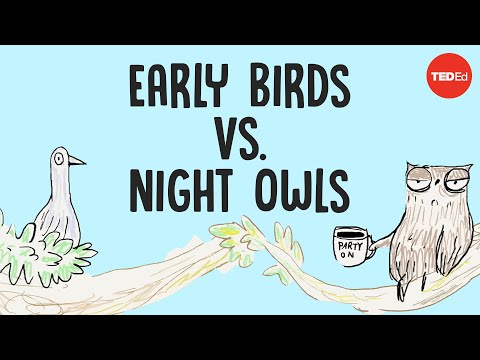
TED-Ed: Can You Change Your Sleep Schedule?
An early bird rises with the sun, springing out of bed abuzz with energy. Meanwhile, a night owl groggily rises much later, not hitting their stride until late in the day. How many people are truly night owls or early birds? And are our sleep schedules predetermined at birth, or can we change them? Explore how our circadian systems act as internal clocks to keep our bodies functioning properly.
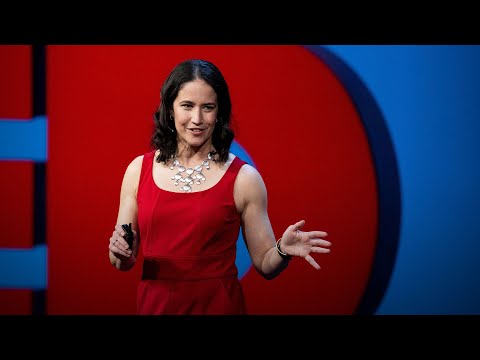
TED-Ed: Why Having Fun Is the Secret to a Healthier Life
Have you had your daily dose of fun? It's not just enjoyable, it's also essential for your health and happiness, says science journalist Catherine Price. She proposes a new definition of fun — what she calls "true fun" — and shares easy, evidence-backed ways to weave playfulness, flow and connection into your everyday life.

TED-Ed: The Japanese Myth of the Trickster Raccoon
On the dusty roads of a small village, a traveling salesman was having difficulty selling his wares. As he wandered the outskirts of town in the hopes of finding some new customers, he heard a high-pitched yelp coming from the edge of the forest. Following the screams to their source, he discovered a trapped tanuki. Iseult Gillespie details the Japanese myth of the shape-shifting creature.
TED-Ed: How Does Caffeine Keep Us Awake?
Over 100,000 metric tons of caffeine are consumed around the world every year. That’s equivalent to the weight of 14 Eiffel Towers! Caffeine helps us feel alert, focused, and energetic, even if we haven’t had enough sleep — but it can also raise our blood pressure and make us feel anxious. So how does it keep us awake? Hanan Qasim shares the science behind the world’s most widely used drug.
What would happen if you didn’t sleep? - Claudia Aguirre
The importance of sleep for health and cognition.

TED-Ed: The Myth of King Midas
In Greek mythology, King Midas is known as a rogue ruler whose antics bemused his people and irritated the Gods. Many know the classic story of Midas's golden touch, but the foolish king was also known for his unusual pair of ears. Iseult Gillespie shares the myth of King Midas.
TED-Ed: These Companies with No CEO Are Thriving
Co-ops are a big part of the global economy: they employ 10% of the world’s workforce and over two trillion dollars flow through their doors every year. At a co-op, there’s no single person with overarching, top-down power over everyone else, like a CEO at a traditional company. So what exactly is a co-op and how does it work? Explore the different types of cooperatives and how they operate.

TED-Ed: History vs. Vladimir Lenin
Vladimir Lenin overthrew Russian Czar Nicholas II and founded the Soviet Union, forever changing the course of Russian politics. But was he a hero who toppled an oppressive tyranny or a villain who replaced it with another? Alex Gendler puts this controversial figure on trial, exploring both sides of a nearly century-long debate.

TED-Ed: History vs. Genghis Khan
He was one of the most fearsome warlords who ever lived, waging an unstoppable conquest across the Eurasian continent. But was Genghis Khan a vicious barbarian or a unifier who paved the way for the modern world? Alex Gendler puts this controversial figure on trial in History vs Genghis Khan.

TED-Ed: Strengths and Weaknesses of Acids and Bases
Vinegar may have a powerful smell, but did you know it's actually a weak acid? In the chemical economy, acids actively give away their protons while bases actively collect them -- but some more aggressively than others. George Zaidan and Charles Morton use the currency of subatomic particles to explain this unseen exchange.

TED-Ed: Is Perfectionism Just Procrastination in Disguise?
What separates struggling artists from successful ones? Looking to creative geniuses like Mozart, Edison and Monet, video creator Jon Youshaei explains why aiming to be prolific — despite flops and failures along the way — is the key to unlocking your creative success.
TED-Ed: Can the Economy Grow Forever?
Many economists think that an eternally growing economy is necessary to keep improving people’s lives, and that if the global economy stops growing, people would fight more over the fixed amount of value that exists, rather than working to generate new value. Which raises the question: is infinite growth possible on a finite planet? Explore how economies can balance efficiency with sustainability.

The benefits of a good night's sleep - Shai Marcu
How sleep improves learning, memory, and health.
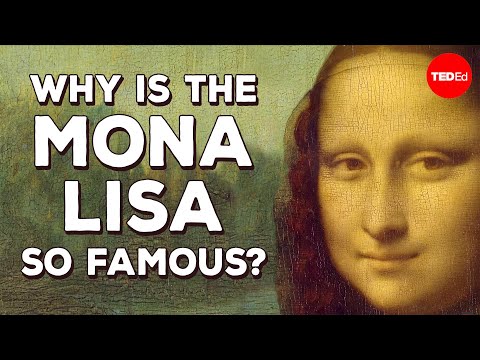
Why is the Mona Lisa so famous? - Noah Charney
The story behind the world's most famous painting.

TED-Ed: How the Stamp Act Divided a Nation
You may think that things are heated in Washington today, but the Kansas-Nebraska Act of 1854 had members of Congress so angry they pulled out their weapons -- and formed the Republican Party. The issues? Slavery and states' rights, which led the divided nation straight into the Civil War. Ben Labaree, Jr. explains how Abraham Lincoln's party emerged amidst the madness.
TED-Ed: What Is Depression?
Depression is the leading cause of disability in the world; in the United States, close to ten percent of adults struggle with the disease. But because it’s a mental illness, it can be a lot harder to understand than, say, high cholesterol. Helen M. Farrell examines the symptoms and treatments of depression, and gives some tips for how you might help a friend who is suffering.

TED-Ed: How to Manage Time According to Machines
Human beings and computers alike share the challenge of how to get as much done as possible in a limited time. Over the last fifty or so years, computer scientists have learned a lot of good strategies for managing time effectively — and they have a lot of experience with what can go wrong. Brian Christian shares how we can use some of these insights to help make the most of our own lives.