Discover Resources
Browse curated homeschool resources from the community

The History of Keeping Time
Where did time-telling come from? What are time zones and why are there so many of them? Get the answers to these questions and more in this journey through the history of time -- from sundials to hourglasses to modern clocks.
How Big is Infinity
Using the fundamentals of set theory, explore the mind-bending concept of the “infinity of infinities” -- and how it led mathematicians to conclude that math itself contains unanswerable questions.

Electric Vocabulary
We all know the words around electricity -- “charge,” “positive,” “battery” and more. But where do they come from and what do they really mean? Let the history of these words illuminate the physics of electric phenomena.

Why Don T Oil and Water Mix John Pollard
Salt dissolves in water; oil does not. But why? You can think of that glass of water as a big, bumpin' dance party where the water molecules are always switching dance partners -- and they'd much rather dance with a salt ion. John Pollard explains how two chemistry principles, energetics and entropy, rule the dance floor.
A 3 Minute Guide to the Bill of Rights Belinda Stutzman
Daily, Americans exercise their rights secured by the Constitution. The most widely discussed and debated part of the Constitution is known as the Bill of Rights. Belinda Stutzman provides a refresher course on exactly what the first ten amendments grant each and every American citizen.
Who Made the American Constitution Judy Walton
How did a meeting intended to revise the Articles of Confederation lead to the new Constitution for the United States? Discover how a handful of men--sitting in sweltering heat and shrouded by secrecy--changed the course of history for America in 1787.

The History of Tea Shunan Teng
Tea is the second most consumed beverage in the world after water –– and from sugary Turkish Rize tea to salty Tibetan butter tea, there are almost as many ways of preparing the beverage as there are cultures on the globe. Where did this beverage originate, and how did it become so popular? Shunan Teng details tea’s long history.

The Myth of Jason and the Argonauts Iseult Gillespie
Hercules, the strongest man alive with a mighty heart to match. Orpheus, charmer of nature and master of music. Castor and Pollux, the twin tricksters. The Boreads, sons of the North Wind who could hurtle through the air. Brought together by a young man’s call for help, these heroes joined forces and named themselves the Argonauts. Iseult Gillespie traces their quest to steal the Golden Fleece.

Gerrymandering How Drawing Jagged Lines Can Impact an Election Christina Greer
District lines, and the groups of voters within them, may seem arbitrary, but a lot of thought (and political bickering) is put into these carefully drawn lines. From “packing” a district to “cracking” a district--learn how the shape of districts impacts political parties during election season.
Michele Weldon Capturing Authentic Narratives
Journalism can be much more than reporting. An authentic, human narrative touches audiences and keeps them reading. Learn how to shape a human-centered news story, and the importance of facts, context and heart.
Jane Hirshfield the Art of the Metaphor
How do metaphors help us better understand the world? And, what makes a good metaphor? Explore these questions with writers like Langston Hughes and Carl Sandburg, who have mastered the art of bringing a scene or emotion to life.

Leigh Nataro What Happens If You Guess
Will it rain tomorrow? How likely is your favorite team to win the Super Bowl? Questions like these are answered through the mathematics of probability. Watch this artistic visualization of your odds of passing a test if you don’t know any of the answers.

Mosquitos Malaria and Education Bill Gates
Bill Gates hopes to solve some of the world's biggest problems using a new kind of philanthropy. In a passionate and, yes, funny 18 minutes, he asks us to consider two big questions and how we might answer them.
Scott Kennedy How to Prove a Mathematical Theory
Euclid of Alexandria revolutionized the way that mathematics is written, presented or thought about, and introduced the concept of mathematical proofs. Discover what it takes to move from a loose theory or idea to a universally convincing proof.

Michael Mitchell a Clever Way to Estimate Enormous Numbers
Have you ever tried to guess how many pieces of candy there are in a jar? Or tackled a mindbender like: “How many piano tuners are there in Chicago?” Physicist Enrico Fermi was very good at problems like these -- learn how he used the power of 10 to make amazingly fast estimations of big numbers.

Can You Solve the Cuddly Duddly Fuddly Wuddly Riddle Dan Finkel
You’ve promised to get your son the cutest creature in creation: the cuddly. It’s part of the Wuddly species, cousin to the terrifying duddly and the hideous fuddly. To make one, 100 eggs are placed in an incubator to undergo egg fusion, and the resulting combination will produce either a cuddly, a duddly or a fuddly. Can you make the right combination to get a cuddly? Dan Finkel shows how.
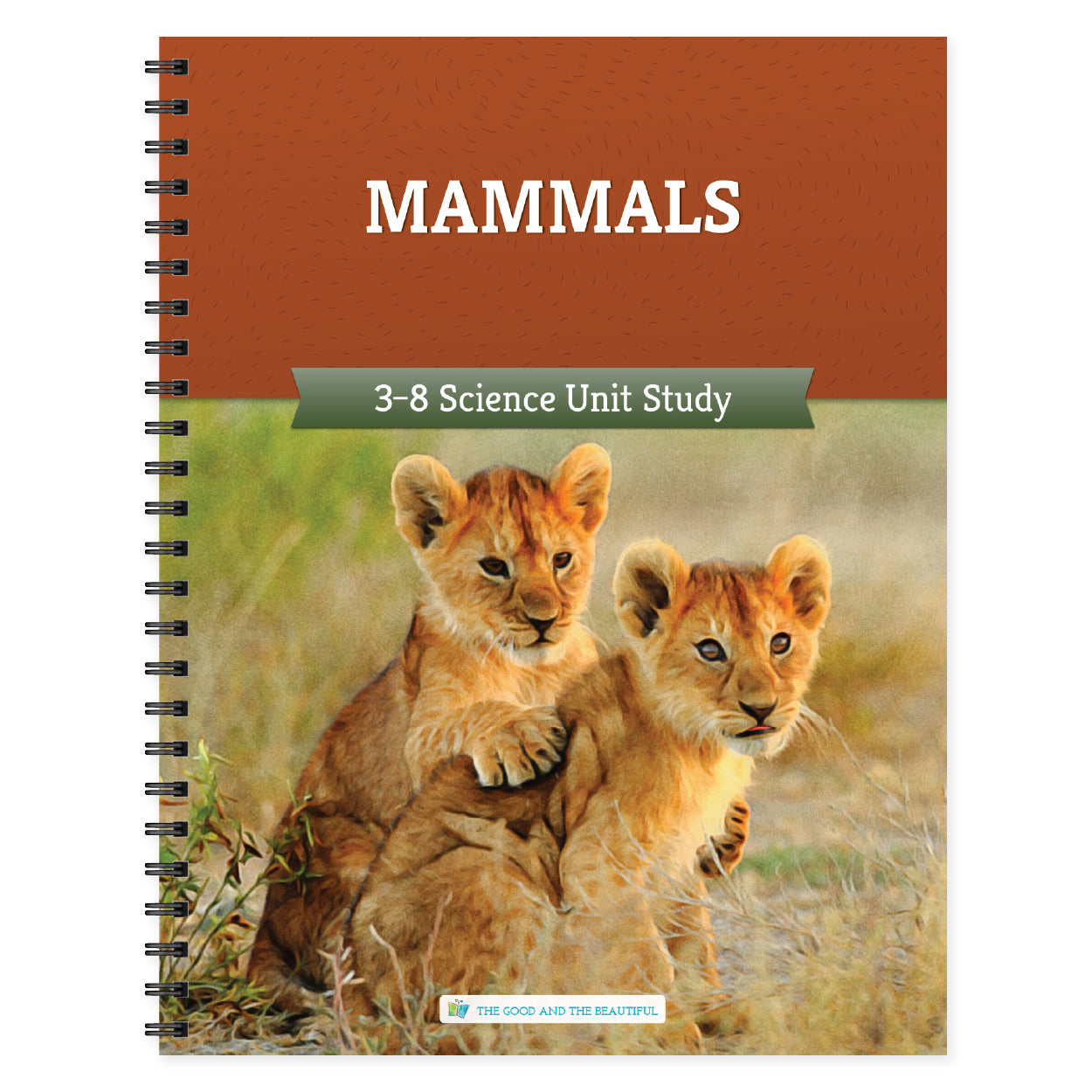
The Good and the Beautiful Mammals
The full-color course book guides the parent through each lesson in the Mammals science course. Hands-on activities, engaging videos, vocabulary words, beautiful illustrations and images, along with engaging information is found throughout the course. Once you gather any simple lesson supplies, the lessons are open-and
Mark Salata How Taking a Bath Led to Archimedes Principle
Stories of discovery and invention often begin with a problem that needs solving. Summoned by the king to investigate a suspicious goldsmith, the early Greek mathematician Archimedes stumbles on the principle that would make him famous.
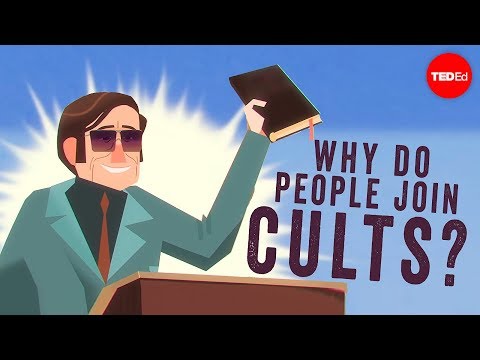
Why do people join cults? - Janja Lalich
Understanding the psychology of cult recruitment.

A Brief History of Plastic
For centuries, billiard balls were made of ivory from elephant tusks. But when excessive hunting caused elephant populations to decline, they began to look for alternatives. John Wesley Hyatt took up the challenge. In five years, he invented a new material called celluloid, which would become known as the first plastic. Trace the history of the material that ushered in the “plastics century.”

What Causes Lice and How Do You Get Rid of Them Nazzy Pakpour
For as long as humans have had lice, we’ve fought hard to get rid of them. Nit combs, the fine-tooth brushes used to remove lice and their sticky eggs, have been found among the ancient remains of cultures across the globe. Today it’s estimated we spend billions of dollars each year treating infestations. So why are lice so difficult to get rid of? Nazzy Pakpour digs into these stubborn insects.
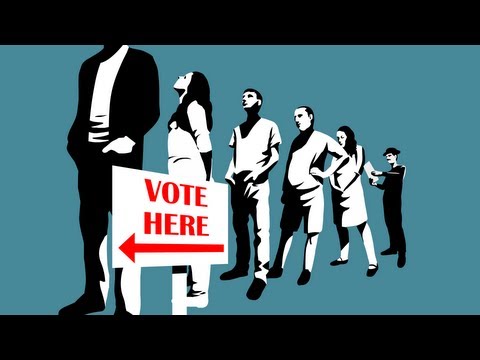
The Fight for the Right to Vote in the United States Nicki Beaman Griffin
In the United States today, if you are over eighteen, a citizen, and the resident of a state, you can vote (with some exceptions). So, how have voting rights changed since the first election in 1789? Nicki Beaman Griffin outlines the history of the long fight for a more inclusive electorate.