Discover Resources
Browse curated homeschool resources from the community

Surviving the Coldest Place on Earth Nadia Frontier
The vast, white surface of Antarctica stretches for over 3 million square kilometers. On the coast of this expanse, just a few meters beneath the ice, lies a remarkably diverse realm that is home to over 8,000 species of sea denizens who rely on an arsenal of otherworldly traits to survive. So how do these species not only live, but thrive, in such harsh conditions? Nadia Frontier investigates.

How Space Changes an Astronaut s Body Tejal Gala
Imagine a scientist who has teleported to space. His spacesuit’s pressurized air protects his bodily fluids from vaporization, its oxygen tank keeps him breathing, and the insulation prevents him from freezing. But although these features thwart an immediate tragedy, space is still an incredibly dangerous place. So, what does a prolonged stay in space do to the human body? Tejal Gala investigates.

How to Tell If You Have Seasonal Affective Disorder Kelly Rohan
As winter approaches, shorter days spark a cascade of changes within the brains of animals. As a result, groundhogs retreat to their burrows for hibernation, weasels’ coats turn from brown to white, and birds cease their singing. And scientists are finding that seasonal behavioral changes similarly happen for some humans. Kelly Rohan digs into what we know about seasonal affective disorder.

A Brief History of Plural Word s John Mcwhorter
All it takes is a simple S to make most English words plural. But it hasn't always worked that way (and there are, of course, exceptions). John McWhorter looks back to the good old days when English was newly split from German -- and books, names and eggs were beek, namen and eggru!
Protecting the Brain Against Concussion Kim Gorgens
In a lively talk, neuropsychologist Kim Gorgens makes the case for better protecting our brains against the risk of concussion -- with a compelling pitch for putting helmets on kids. (Filmed at TEDxDU.)
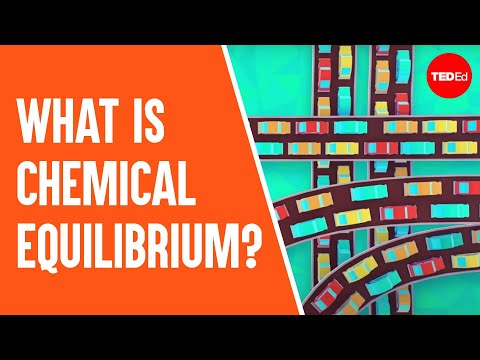
If Molecules Were People George Zaidan and Charles Morton
When molecules collide, chemical reactions can occur -- causing major structural changes akin to getting a new arm on your face! George Zaidan and Charles Morton playfully imagine chemical systems as busy city streets, and the colliding molecules within them as your average, limb-swapping joes.

The Good and the Beautiful Doodles and Pre-Writing for Littles Part 1
Doodles & Pre-writing for Littles is designed for children between the ages of 2 1/2 and 5 years old who are ready to develop the dexterity and coordination of small muscles as well as the mental focus needed to write. This level focuses on the strokes and forms used to create letters and common shapes and is desig

The Good News of the Decade Hans Rosling
Hans Rosling reframes 10 years of UN data with his spectacular visuals, lighting up an astonishing -- mostly unreported -- piece of front-page-worthy good news: We're winning the war against child mortality. Along the way, he debunks one flawed approach to stats that blots out such vital stories. (Filmed at TEDxChange.)
The Networked Beauty of Forests Suzanne Simard
Deforestation causes more greenhouse gas emissions than all trains, planes and automobiles combined. What can we do to change this contributor to global warming? Suzanne Simard examines how the complex, symbiotic networks of our forests mimic our own neural and social networks -- and how those connections might make all the difference.

How Tsunamis Work Alex Gendler
The immense swell of a tsunami can grow up to 100 feet, hitting speeds over 500 mph -- a treacherous combination for anyone or anything in its path. Alex Gendler details the causes of these towering terrors and explains how scientists are seeking to reduce their destruction in the future.

The Shape Shifting Future of the Mobile Phone Fabian Hemmert
Fabian Hemmert demos one future of the mobile phone -- a shape-shifting and weight-shifting handset that "displays" information nonvisually, offering a delightfully intuitive way to communicate. (Filmed at TEDxBerlin.)

Mao Zedong s Infamous Mango Cult Vivian Jiang
In August 1968, factory workers overheard news of a mandatory meeting. Whispered rumors described shipments of a gift from the country’s Communist leader, Chairman Mao Zedong. And sure enough, managers soon distributed a gift to every factory worker– a glass box encasing a golden wax replica of a mango. What was the meaning behind this unusual offering? Vivian Jiang investigates.

Can You Solve the Secret Sauce Riddle Alex Gendler
One of the top chefs from Pasta Palace has been kidnapped by operatives from Burger Bazaar hoping to learn the location of their secret sauce recipe. Little do they know that a third party— Sausage Saloon— has sent you, their top spy, to take advantage of the situation. Can you figure out the location of the secret recipe and steal it for yourself? Alex Gendler shows how.

The Good and the Beautiful Handwriting Overview
The Good and the Beautiful is a Christian homeschool curriculum company offering Language Arts, Math, Science History, and elective courses.

The Treadmill s Dark and Twisted Past Conor Heffernan
The constant thud underneath your feet. The constrained space. The monotony of going nowhere fast. Running on a treadmill can certainly feel like torture, but did you know it was originally used for that very purpose? Conor Heffernan details the dark and twisted history of the treadmill.

Animation Basics the Optical Illusion of Motion Ted Ed
How do animators make still images come to life? Are the images really moving, or are they merely an optical illusion? TED-Ed takes you behind the scenes to reveal the secret of motion in movies.

The Good and the Beautiful Science Overview
The Good and the Beautiful is a Christian homeschool curriculum company offering Language Arts, Math, Science History, and elective courses.
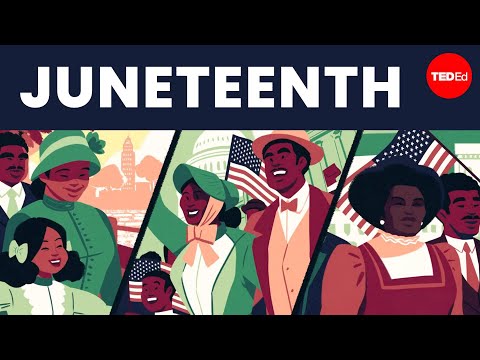
When Did Slavery Actually End in the United States Karlos K Hill and Soraya Field Fiorio
At the end of the Civil War, though slavery was technically illegal in all states, it still persisted in the last bastions of the Confederacy. This was the case when Union General Gordon Granger marched his troops into Galveston, Texas on June 19th and announced that all enslaved people there were officially free. Karlos K. Hill and Soraya Field Fiorio dig into the history of Juneteenth.
The Moral Dangers of Non Lethal Weapons Stephen Coleman
Pepper spray and tasers are in increasing use by both police and military, and more exotic non-lethal weapons such as heat rays are in the works. In this talk, ethicist Stephen Coleman explores the unexpected consequences of their introduction and asks some challenging questions. (Filmed at TEDxCanberra.)
How Epic Solar Winds Make Brilliant Polar Lights Michael Molina
Why do we see those stunning lights in the northern- and southernmost portions of the night sky? The Aurora Borealis and Aurora Australis occur when high-energy particles are flung from the Sun’s corona toward the Earth and mingle with the neutral atoms in our atmosphere -- ultimately emitting extraordinary light and color. Michael Molina explains every step of this dazzling phenomenon.
The Weird Wonderful World of Bioluminescence Edith Widder
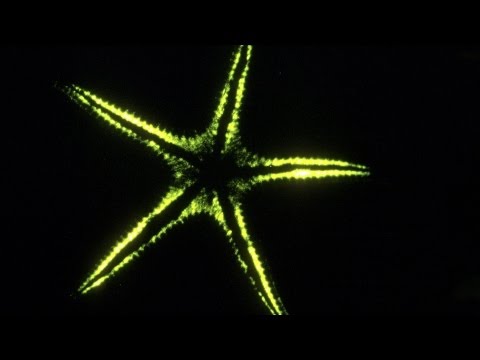
In the deep, dark ocean, many sea creatures make their own light for hunting, mating and self-defense. Bioluminescence expert Edith Widder was one of the first to film this glimmering world. At TED2011, she brings some of her glowing friends onstage, and shows more astonishing footage of glowing undersea life.
Mysteries of Vernacular Fizzle
From a stinky and crude inception, the word fizzle’s history is nothing to poo poo at. Jessica Oreck and Rachael Teel track the road from flatulence to its modern meaning of a failure or weak ending.