Discover Resources
Browse curated homeschool resources from the community
Where Do Math Symbols Come from John David Walters
Math is full of symbols: lines, dots, arrows, English letters, Greek letters, superscripts, subscripts ... it can look like an illegible jumble. Where did all of these symbols come from? John David Walters shares the origins of mathematical symbols, and illuminates why they’re still so important in the field today.
The Psychological Traits That Shape Your Political Beliefs Dannagal G Young
Social psychologist Dannagal G. Young breaks down the link between our psychology and politics, showing how personality types largely fall into people who prioritize openness and flexibility (liberals) and those who prefer order and certainty (conservatives). Hear why both sets of traits are crucial to any society — and how our differences are being dangerously exploited to divide us.

How Bones Make Blood Melody Smith
Bones might seem rock-solid, but they’re actually quite porous inside. Most of the large bones of your skeleton have a hollow core filled with soft bone marrow. Marrow's most essential elements are blood stem cells and for patients with advanced blood cancers like leukemia and lymphoma, the best chance for a cure is often a bone marrow transplant. How does this procedure work? Melody Smith explains.

Weaving Narratives in Museum Galleries Thomas P Campbell 2
As the director of the Metropolitan Museum of Art in New York, Thomas P. Campbell thinks deeply about curating—not just selecting art objects, but placing them in a setting where the public can learn their stories. With glorious images, he shows how his curation philosophy works for displaying medieval tapestries—and for the over-the-top fashion/art of Alexander McQueen. (From The Design Studio session at TED2012, guest-curated by Chee Pearlman and David Rockwell.)

5 tips to improve your critical thinking - Samantha Agoos
Practical strategies for better reasoning.
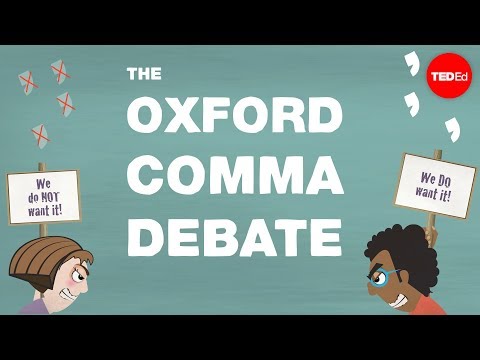
Grammar s Great Divide the Oxford Comma Ted Ed
If you read "Bob, a DJ and a clown" on a guest list, are three people coming to the party, or only one? That depends on whether you're for or against the Oxford comma -- perhaps the most hotly contested punctuation mark of all time. When do we use one? Can it really be optional, or is there a universal rule? TED-Ed explores both sides of this comma conundrum.

Shashi Tharoor Why Nations Should Pursue Soft Power
India is fast becoming a superpower, says Shashi Tharoor -- not just through trade and politics, but through "soft" power, its ability to share its culture with the world through food, music, technology, Bollywood. He argues that in the long run it's not the size of the army that matters as much as a country's ability to influence the world's hearts and minds. After a long career at the UN, and a parallel life as a novelist, Shashi Tharoor became a member of India's Parliament. He spent 10 months as India's Minister for External Affairs, building connections between India and the world.
Susan Cain the Power of Introverts
In a culture where being social and outgoing are prized above all else, it can be difficult, even shameful, to be an introvert. But, as Susan Cain argues in this passionate talk, introverts bring extraordinary talents and abilities to the world, and they should be encouraged and celebrated. Susan Cain makes a case for the quiet and contemplative.

When to Use Apostrophes Laura Mcclure
It’s possessive. It’s often followed by S’s. And it’s sometimes tricky when it comes to its usage. It’s the apostrophe. Laura McClure gives a refresher on when to use apostrophes in writing.
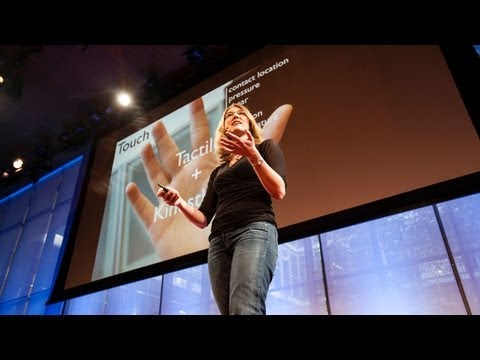
Haptography Digitizing Our Sense of Touch Katherine Kuchenbecker
Is it possible to incorporate the sense of touch into the digital world? Katherine Kuchenbecker thinks so. At TEDYouth 2012, Katherine shares her work in the field of haptics, while discussing its potential to change fields such as gaming, museums, dentistry and stroke rehabilitation.

What s the Fastest Way to Alphabetize Your Bookshelf Chand John
You work at the college library. You’re in the middle of a quiet afternoon when suddenly, a shipment of 1,280 books arrives. The books are in a straight line, but they're all out of order, and the automatic sorting system is broken. How can you sort the books quickly? Chand John shows how, shedding light on how algorithms help librarians and search engines speedily sort information.

What Really Happened to the Library of Alexandria Elizabeth Cox
2,300 years ago, the rulers of Alexandria set out to fulfill a very audacious goal: to collect all the knowledge in the world under one roof. In its prime, the Library of Alexandria housed an unprecedented number of scrolls and attracted some of the Greek world’s greatest minds. But by the end of the 5th century CE, it had vanished. Elizabeth Cox details the rise and fall of this great building.

Everything You Need to Know to Read the Canterbury Tales Iseult Gillespie
A portly Miller, barely able to sit on his horse, rambles on about the flighty wife of a crotchety old carpenter and the scholar she takes as her lover. This might sound like a bawdy joke, but it’s part of one of the most esteemed works of English literature ever created: The Canterbury Tales. Iseult Gillespie shares everything you need to know to read Geoffrey Chaucer’s classic collection.
Are There Universal Expressions of Emotion Sophie Zadeh
The 40 or so muscles in the human face can be activated in different combinations to create thousands of expressions. But do these expressions look the same and communicate the same meaning around the world regardless of culture? Is one person’s smile another’s grimace? Sophie Zadeh investigates.
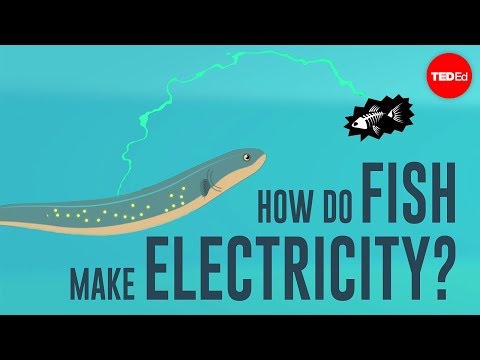
How Do Fish Make Electricity Eleanor Nelsen
Nearly 350 species of fish have specialized anatomical structures that generate and detect electrical signals. Underwater, where light is scarce, electrical signals offer ways to communicate, navigate, find, and sometimes stun prey. But how do these fish produce electricity? And why? Eleanor Nelsen illuminates the science behind electric fish.
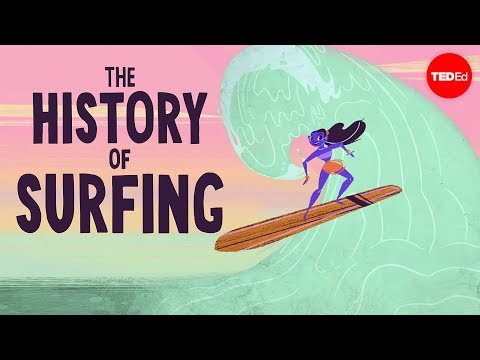
The Complicated History of Surfing Scott Laderman
Today, surfing is a multi-billion-dollar global industry, with tens of millions of enthusiasts worldwide. For some it’s a serious sport; for others, just a way to let loose. But despite its casual association with fun and sun, surfing has a richer and deeper history than many realize. Scott Laderman shares the hidden history of surfing.

One of the Most Banned Books of All Time Mollie Godfrey
In 1998, a school district removed one of American literature’s most acclaimed works from its curriculum. Parents pushing for the ban said the book was both “sexually explicit” and “anti-white.” The book at the center of this debate was Maya Angelou’s “I Know Why The Caged Bird Sings.” Why was the memoir so controversial? Mollie Godfrey digs into one of the most banned books of all time.

How Coffee Got Quicker Moments of Vision 2 Jessica Oreck
For the 64% of Americans that drink coffee daily, an expedient cup is practically essential. But preparing coffee hasn’t always been easy. In the second installment of our ‘Moments of Vision’ series, Jessica Oreck shares the ingenuity of one coffee mill worker who made it considerably quicker for you to get your fix of caffeine.

Making Sense of Spelling Gina Cooke
What can spelling tell us about relationships between words? While spelling may sometimes seem random or unexpected, this lesson illuminates how peeling back the layers of spelling helps us understand the complex history and meaningful structure of words.

History vs Sigmund Freud Todd Dufresne
Working in Vienna at the turn of the 20th century, he began his career as a neurologist before pioneering the discipline of psychoanalysis, and his influence towers above that of all other psychologists in the public eye. But was Sigmund Freud right about human nature? And were his methods scientific? Todd Dufresne puts this controversial figure on trial in History vs. Sigmund Freud.
What Makes Muscles Grow Jeffrey Siegel
We have over 600 muscles in our bodies that help bind us together, hold us up, and help us move. Your muscles also need your constant attention, because the way you treat them on a daily basis determines whether they will wither or grow. Jeffrey Siegel illustrates how a good mix of sleep, nutrition and exercise keep your muscles as big and strong as possible.
Why Do We Dream Amy Adkins
In the 3rd millennium BCE, Mesopotamian kings recorded and interpreted their dreams on wax tablets. In the years since, we haven't paused in our quest to understand why we dream. And while we still don’t have any definitive answers, we have some theories. Amy Adkins reveals the top seven reasons why we might dream.