Discover Resources
Browse curated homeschool resources from the community

TED-Ed: History vs. Che Guevara
His face is recognized all over the world – the young medical student who became a revolutionary icon. But was Che Guevara a heroic champion of the poor, or a ruthless warlord who left a legacy of repression? Alex Gendler puts this controversial figure on trial in History vs. Che Guevara.

TED-Ed: Four Sisters in Ancient Rome
How did the young, wealthy women of Ancient Rome spend their days? Meet Domitia and her sister Domitia and her sister Domitia and her sister Domitia. Ray Laurence sketches the domestic life of leisure that these young girls lived, despite little recorded information on women from this otherwise well-documented era.
TED-Ed: How Does a Particle Accelerator Work?
An atom smasher, or particle accelerator, collides atomic nuclei together at extremely high energies, using engineering that exploits incredibly cold temperatures, very low air pressure, and hyperbolically fast speeds. Don Lincoln explains how scientists harness the power of both electric and magnetic fields to smash atoms, eventually leading to major discoveries about the matter in our universe.

TED-Ed: Can You Solve the Three Gods Riddle?
You and your team have crash-landed on an ancient planet. Can you appease the three alien overlords who rule it and get your team safely home? Created by logician Raymond Smullyan, and popularized by his colleague George Boolos, this riddle has been called the hardest logic puzzle ever. Alex Gendler shows how to solve it.
The beginning of the universe, for beginners - Tom Whyntie
Learn about the Big Bang and the origins of everything.

The Infinite Hotel Paradox - Jeff Dekofsky
Wrap your mind around the concept of infinity.

TED-Ed: What Is Entropy?
There’s a concept that’s crucial to chemistry and physics. It helps explain why physical processes go one way and not the other: why ice melts, why cream spreads in coffee, why air leaks out of a punctured tire. It’s entropy, and it’s notoriously difficult to wrap our heads around. Jeff Phillips gives a crash course on entropy.

TED-Ed: The Psychology Behind Irrational Decisions
Often people make decisions that are not “rational” from a purely economical point of view — meaning that they don’t necessarily lead to the best result. Why is that? Are we just bad at dealing with numbers and odds? Or is there a psychological mechanism behind it? Sara Garofalo explains heuristics, problem-solving approaches based on previous experience and intuition rather than analysis.
Schrödinger's cat: A thought experiment in quantum mechanics - Chad Orzel
Explore quantum superposition through the famous cat paradox.

How do self-driving cars “see”? - Sajan Saini
Explore the sensors and AI behind autonomous vehicles.

TED-Ed: The City of Walls: Constantinople
The world owes much of its cultural legacy to Constantinople’s walls. When Constantinople was under siege by neighboring enemies, the Roman city’s elaborate system of moats, outer walls, and inner walls stood tall. Surviving numerous fire attacks, the walls were eventually brought down by more modern tools of warfare, but, thankfully, classical culture survived.

TED-Ed: The Myth of Icarus and Daedalus
In mythological ancient Greece, Icarus flew above Crete on wings made from wax and feathers, defying the laws of man and nature. To witnesses on the ground, he looked like a god, and he felt like one too. But, in his society, the line that separated god from man was absolute, and the punishment for mortals who attempted to cross it was severe. Amy Adkins explains the myth of Icarus and Daedalus.

TED-Ed: DNA: The Book of You
Your body is made of cells -- but how does a single cell know to become part of your nose, instead of your toes? The answer is in your body's instruction book: DNA. Joe Hanson compares DNA to a detailed manual for building a person out of cells -- with 46 chapters (chromosomes) and hundreds of thousands of pages covering every part of you.

What is the Heisenberg Uncertainty Principle? - Chad Orzel
Dive into one of quantum mechanics' most famous concepts.

TED-Ed: How Atoms Bond
Atoms can (and do) bond constantly; it's how they form molecules. Sometimes, in an atomic tug-of-war, one atom pulls electrons from another, forming an ionic bond. Atoms can also play nicely and share electrons in a covalent bond. From simple oxygen to complex human chromosome 13, George Zaidan and Charles Morton break down the humble chemical bond.

TED-Ed: The Paradox of Value
Imagine you’re on a game show and you can choose between two prizes: a diamond … or a bottle of water. It’s an easy choice – the diamonds are more valuable. But if given the same choice when you were dehydrated in the desert, after wandering for days, would you choose differently? Why? Aren’t diamonds still more valuable? Akshita Agarwal explains the paradox of value.

TED-Ed: A Brief History of Banned Numbers
They say the pen is mightier than the sword, and authorities have often agreed. From outlawed religious tracts and revolutionary manifestos to censored and burned books, we know the potential power of words to overturn the social order. But as strange as it may seem, some numbers have also been considered dangerous enough to ban. Alessandra King details the history behind illegal numbers.

TED-Ed: What Caused the French Revolution?
What rights do people have, and where do they come from? Who gets to make decisions for others, and on what authority? And how can we organize society to meet people’s needs? Tom Mullaney shows how these questions challenged an entire nation during the upheaval of the French Revolution.
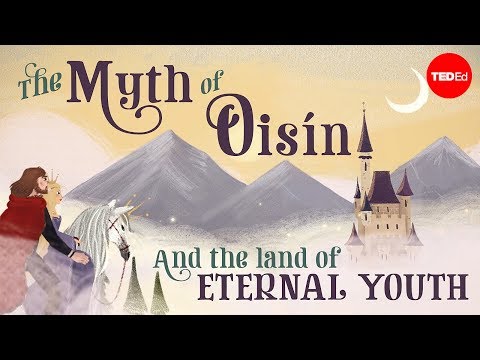
TED-Ed: The Myth of Oisín and the Land of Eternal Youth
In a typical hero’s journey, the protagonist sets out on an adventure, undergoes great change and returns in triumph to their point of origin. But in the Irish genre of myth known as echtraí, the journey to the otherworld ends in a point of no return. Iseult Gillespie shares the myth of Oisín and the land of eternal youth.
TED-Ed: What Is the World Wide Web?
The World Wide Web is used every day by millions of people for everything from checking the weather to sharing cat videos. But what is it exactly? Twila Camp describes this interconnected information system as a virtual city that everyone owns and explains how it’s organized in a way that mimics our brain’s natural way of thinking.