Discover Resources
Browse curated homeschool resources from the community

How Whales Breathe Communicate and Fart with Their Faces Joy Reidenberg
Comparative anatomist Joy Reidenberg studies the body structure of many different animals in the hope of adapting their unique qualities for human applications. Her favorite? Whales. In this TEDYouth Talk, Reidenberg explains how these majestic, awe-inspiring mammals "fart with their face" (a process more formally known as echolocation) to send their unique sounds through the water.
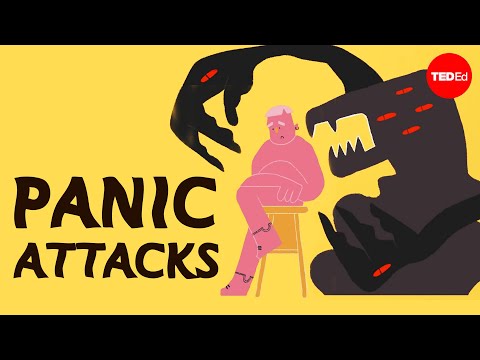
What Causes Panic Attacks and How Can You Prevent Them Cindy J Aaronson
Countless poets and writers have tried to put words to the experience of a panic attack— a sensation so overwhelming, many people mistake it for a heart attack, stroke, or other life-threatening crisis. Studies suggest that almost a third of us will experience at least one panic attack in our lives. So what exactly is a panic attack, and can we prevent them? Cindy J. Aaronson investigates.

Why Should You Read Toni Morrison s Beloved Yen Pham
Two tiny handprints stamped into a cake. A mirror that shatters without warning. A trail of cracker crumbs strewn along the floor. Everyone at 124 Bluestone Road knows their home is haunted— but there’s no mystery about the spirit tormenting them. So begins “Beloved,” Toni Morrison’s Pulitzer Prize-winning drama. Yen Pham digs into the novel's exploration of the dehumanizing effects of slavery.
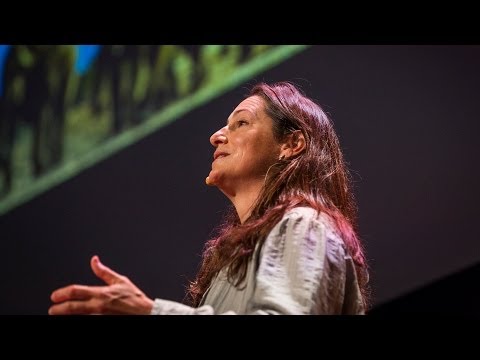
The Family Structure of Elephants Caitlin O Connell Rodwell
Biologist Caitlin O'Connell-Rodwell has come to one big conclusion from her last twenty years studying elephants -- they're just like us. In this TEDYouth Talk, O'Connell-Rodwell details her work observing these incredible, social animals, examining several individual (and very familiar) characters that play, bond and argue in tight-knit extended families eerily similar to our own.

Can You Outsmart the Fallacy That Started a Witch Hunt Elizabeth Cox
It’s 1950. Anti-communist sentiment in the United States is at an all-time high. Senator Joseph McCarthy claims he has a list of communists who are influencing government policy. He makes his first accusation without providing any legitimate evidence, yet the senate committee still schedules a hearing. Can you spot the problem with this hearing? Elizabeth Cox explores the burden of proof fallacy.

Why Do We Hiccup John Cameron
The longest recorded case of hiccups lasted for 68 years … and was caused by a falling hog. While that level of severity is extremely uncommon, most of us are no stranger to an occasional case of the hiccups. But what causes these ‘hics’ in the first place? John Cameron takes us into the diaphragm to find out.

Real Life Sunken Cities Peter Campbell
Though people are most familiar with Plato’s fictional Atlantis, many real underwater cities actually exist. Peter Campbell explains how sunken cities are studied by scientists to help us understand the lives of our ancestors, the dynamic nature of our planet, and the impact of each on the other.

Could We Harness the Power of a Black Hole Fabio Pacucci
Imagine a distant future when humans reach beyond Earth, forge cities on planets thousands of light-years away, and maintain a galactic web of trade and transport. What would it take to make that leap? And where would we get enough energy to power that civilization? Fabio Pacucci explores the possibility of harnessing energy from a black hole to power a galactic civilization.

How the World s Tallest Skyscraper Was Built Alex Gendler
In 2004, construction began on a new building in Dubai, promising a revolutionary design that would dwarf the rest of the world’s skyscrapers. Five years later, the 828-meter Burj Khalifa was complete, surpassing the previous record-holder by over 60%. What innovations allowed for such a huge leap in height? Alex Gendler digs into the architecture of this unprecedented project.
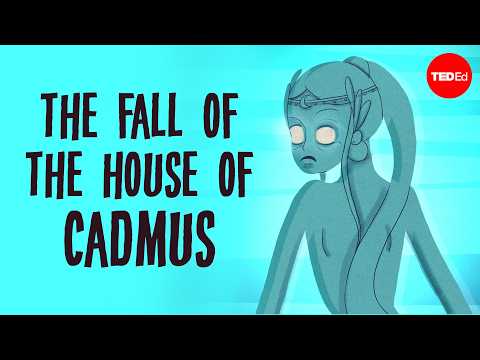
The Myth of the Serpent s Curse Iseult Gillespie
When Cadmus walked the Earth, just a few generations separated him from his divine ancestors. From atop Mount Olympus, they scrutinized and meddled with mortals like himself. Cadmus was a skilled warrior and heir to the Phoenician throne, but he wouldn’t stay in the gods’ favor for long— a critical mistake would seal his tragic fate. Iseult Gillespie details the Greek myth of the serpent’s curse.
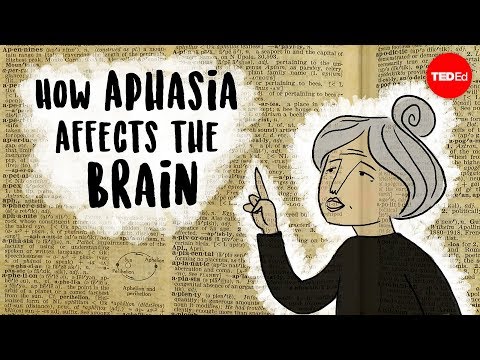
Aphasia the Disorder That Makes You Lose Your Words Susan Wortman Jutt
Language is an essential part of our lives that we often take for granted. But, if the delicate web of language networks in your brain became disrupted by stroke, illness, or trauma, you could find yourself truly at a loss for words. Susan Wortman-Jutt details a disorder called aphasia, which can impair all aspects of communication.

The Cancer Gene We All Have Michael Windelspecht
Within every cell in our body, two copies of a tumor suppressor gene called BRCA1 are tasked with regulating the speed at which cells divide. Michael Windelspecht explains how these genes can sometimes mutate, making those cells less specialized and more likely to develop into cancer.

What happens when you remove the hippocampus? - Sam Kean
Explore the famous case of H.M. and learn about memory and the brain.
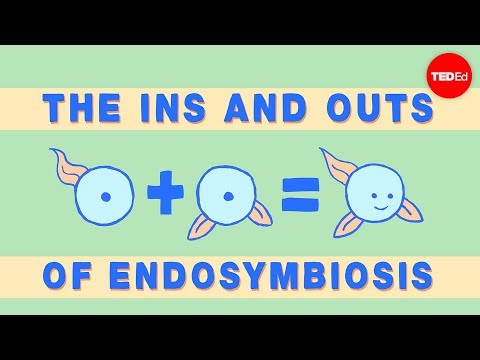
How We Think Complex Cells Evolved Adam Jacobson
Imagine you swallowed a small bird and suddenly gained the ability to fly … or you ate a cobra and were able to spit poisonous venom! Well, throughout the history of life (and specifically during the evolution of complex eukaryotic cells) things like this happened all the time. Adam Jacobson explains endosymbiosis, a type of symbiosis in which one symbiotic organism lives inside another.

Why Do Honeybees Love Hexagons Zack Patterson and Andy Peterson
Honeybees are some of nature’s finest mathematicians. Not only can they calculate angles and comprehend the roundness of the earth, these smart insects build and live in one of the most mathematically efficient architectural designs around: the beehive. Zack Patterson and Andy Peterson delve into the very smart geometry behind the honeybee’s home.

How Optical Illusions Trick Your Brain Nathan s Jacobs
Optical illusions are images that seem to trick our minds into seeing something different from what they actually are. But how do they work? Nathan S. Jacobs walks us through a few common optical illusions and explains what these tricks of the eye can tell us about how our brains assemble visual information into the 3D world we see around us.