Discover Resources
Browse curated homeschool resources from the community

What it s Like to Be a Muslim in America Dalia Mogahed
Muslims make up a fifth of the world’s population and there’s never been an America without Islam. Yet most Americans say they don’t know a Muslim personally. In this personal, powerful talk, Dalia Mogahed shares what it’s like to be Muslim in America, shedding light on the need for greater understanding and connection for a better world.

The Bug That Poops Candy George Zaidan
Aphids can reproduce incredibly fast: they can make 20 new generations within a single season. And that means lots of poop. Some aphid populations can produce hundreds of kilograms of poop per acre— making them some of the most prolific poopers on the planet. We know this poop as the sweet, syrupy liquid called honeydew. George Zaidan explores the wonderfully weird life of an aphid.

Why Our Brains See Faces Everywhere Susan G Wardle
Imagine opening a bag of chips, only to find Santa Claus looking back at you. Or turning a corner to see a building smiling at you. Humans see faces in all kinds of mundane objects, but these faces aren’t real— they're illusions due to a phenomenon known as face pareidolia. So why exactly does this happen, and how far does this distortion go? Susan G. Wardle explores why we see illusory faces.
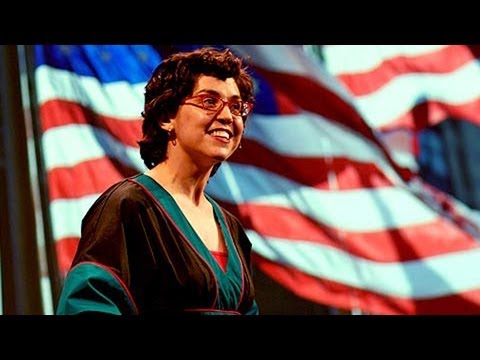
Erin Mckean Redefines the Dictionary
Is the beloved paper dictionary doomed to extinction? In this infectiously exuberant talk, leading lexicographer Erin McKean looks at the many ways today's print dictionary is poised for transformation. As the CEO and co-founder of new online dictionary Wordnik, Erin McKean is reshaping not just dictionaries but how we interact with language itself.
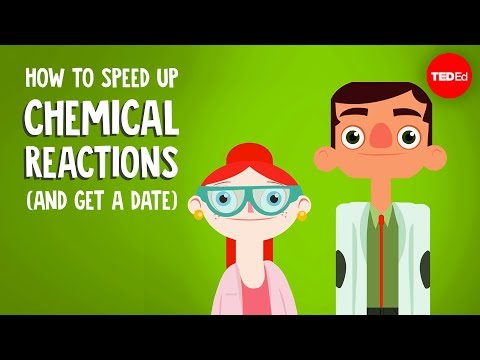
How to Speed Up Chemical Reactions and Get a Date
The complex systems of high school dating and chemical reactions may have more in common than you think. Explore five rules for speeding up chemical reactions in the lab that might just land you a date to a dance!
Ethical Dilemma Should We Get Rid of Mosquitoes Talya Hackett
Mosquitoes are responsible for more human deaths every year than any other animal, but very few of the 3,500 mosquito species actually transmit deadly diseases to humans. Scientists have been conducting experiments using engineered technologies called gene drives that could theoretically get rid of the most lethal mosquitoes. So, should we eradicate these pesky insects? Talya Hackett investigates.

Can You Spot the Problem with These Headlines Level 1 Jeff Leek and Lucy Mcgowan
In medicine, there’s often a disconnect between news headlines and the scientific research they cover. While headlines are designed to catch attention, many studies produce meaningful results when they focus on a narrow, specific question. So how can you figure out what’s a genuine health concern and what’s less conclusive? Jeff Leek and Lucy McGowan explain how to read past the headline.

Mysteries of Vernacular Hearse Jessica Oreck
Today, we recognize the word hearse as a vehicle that carries a coffin to a funeral. Jessica Oreck explains how this word has, at various times, described a wolf, a rake, and a frame, eventually landing at its meaning today.

What s the Best Way to Treat the Common Cold
From incantations in ancient Egypt, bloodletting in 18th century Europe, to President Coolidge inhaling poisonous chlorine gas in 1924, the common cold has inspired a variety of creative treatments. Today pharmacies are filled with an endless assortment of cold remedies. But how do these products work? And are they effective? Explore the most common categories of cold medicines and their purposes.

What Happens If You Cut Down All of a City s Trees Stefan Al
By 2050, it’s estimated that over 65% of the world will be living in cities. We may think of nature as being unconnected to our urban spaces, but trees have always been an essential part of successful cities. Humanity has been uncovering these arboreal benefits since the creation of our first cities thousands of years ago. So what makes trees so important to a city’s survival? Stefan Al explains.

3 Ways to Measure Your Adaptability and How to Improve it Natalie Fratto
When venture investor Natalie Fratto is determining which start-up founder to support, she doesn't just look for intelligence or charisma; she looks for adaptability. In this insightful talk, Fratto shares three ways to measure your "adaptability quotient" -- and shows why your ability to respond to change really matters.

How Do Virus Tests Actually Work Cella Wright
A new virus emerges and spreads like wildfire. In order to contain it, researchers must first collect data about who’s been infected. Two main viral testing techniques are critical: one tells you if you have the virus and the other shows if you’ve already had it. So, how exactly do these tests work? Cella Wright explores the science of PCR tests and immunoassays.
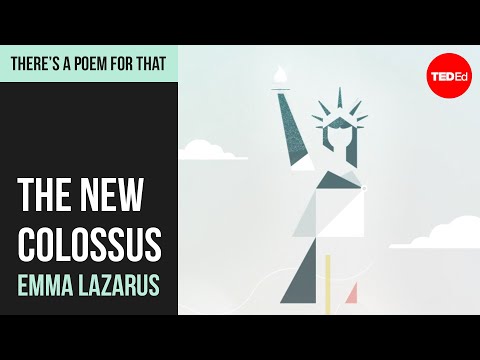
New Colossus by Emma Lazarus
This animation is part of our series, "There's a Poem for That," which features animated interpretations of poems both old and new that give language to some of life's biggest feelings. Check out the full series here: http://bit.ly/TEDEdTheresAPoemForThat
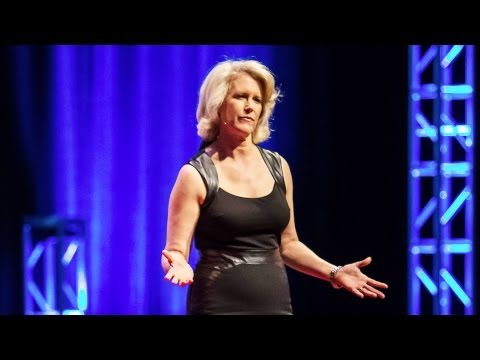
Why Domestic Violence Victims Don T Leave Leslie Morgan Steiner
Leslie Morgan Steiner was in "crazy love"— that is, madly in love with a man who routinely abused her and threatened her life. Steiner tells the story of her relationship, correcting misconceptions many people hold about victims of domestic violence, and explaining how we can all help break the silence.

Hacking Bacteria to Fight Cancer Tal Danino
In 1884, an unlucky patient who had a rapidly growing cancer in his neck came down with an unrelated bacterial skin infection. As he recovered from the infection, the cancer surprisingly began to recede. The infection had stimulated the patient’s immune system. Today, synthetic biologists program bacteria to safely deliver drugs directly to tumors. How is this possible? Tal Danino investigates.

Mating Frenzies Sperm Hoards and Brood Raids the Life of a Fire Ant Queen Walter R Tschinkel
In the spring, just after a heavy rainfall, male and female fire ants swarm the skies for a day of romance, known as the nuptial flight. Thousands of reproduction-capable ants take part in a mating frenzy, and for one successfully mated female, her work is only beginning. Walter R. Tschinkel details how the new queen builds a colony and protects it from neighboring ant armies.