Discover Resources
Browse curated homeschool resources from the community

Why Do Beavers Build Dams Glynnis Hood
Nestled in the forests of Canada sits the world’s longest beaver dam. This 850-meter-long structure is large enough to be seen in satellite imagery and has dramatically transformed the region, creating a pond containing 70 million liters of water. But dams of any size can have huge impacts on their environment. So how exactly do beavers build these impressive structures? Glynnis Hood investigates.
Why Do You Want to Squeeze Cute Things Joshua Paul Dale
Watching a kitten fumbling around, it might feel as if you’ve never encountered anything so devastatingly adorable in your mortal life. You may want to pet its soft fur and kiss its tiny head. But you may also feel the conflicting urge… to squeeze or smush the kitten, maybe even stuff it in your mouth. What is this peculiar phenomenon? Joshua Paul Dale explores the urge known as cute aggression.

What Does the World s Largest Machine Do Henry Richardson
In 1967, Homer Loutzenheuser flipped a switch and connected the power grids of the United States, forming one interconnected machine. Today, the US power grid is the world’s largest machine, containing more than 7,300 electricity-generating plants. So how exactly do these power plants work? Henry Richardson digs into the delicate balancing act of how power grids supply us energy.
Why Plague Doctors Wore Beaked Masks
The year is 1656. Your body is wracked by violent chills. Your head pounds and you're too weak to sit up. In your feverish state, you see a strange-looking man wearing a beak-like mask, his body covered from head to toe. Without seeing his face, you know: you have the plague. So, where did these iconic outfits come from? Stephanie Honchell Smith explores the history of plague doctors.

From Pacifist to Spy Wwii s Surprising Secret Agent Shrabani Basu
In May 1940, with the German army ready to occupy Paris, Noor Inayat Khan was faced with a difficult choice: stand on the sidelines or join the Allied forces fighting the Nazis. After witnessing the devastation across Europe, she travelled to England to learn the art of espionage. Shrabani Basu details how a pacifist turned spy helped build the resistance that toppled a fascist regime.
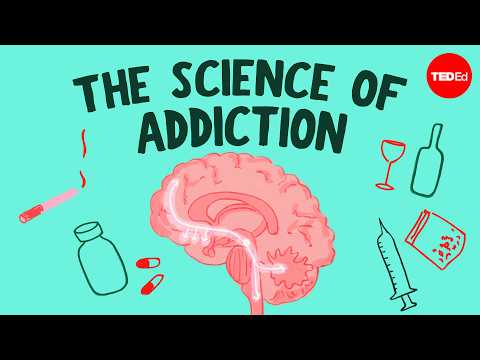
What Causes Addiction and Why is it so Hard to Treat Judy Grisel
As of 2021, more than 36 million people were estimated to be experiencing substance use disorder. This condition spans a spectrum of patterned drug use that causes issues in a person’s life, with substance addiction at the more severe end. Why are some people more susceptible to addiction, and why can it be so difficult to treat? Judy Grisel takes a look at how addictive drugs affect the body.

The Neuroscience of Imagination Andrey Vyshedskiy
Imagine, for a second, a duck teaching a French class. A ping-pong match in orbit around a black hole. A dolphin balancing a pineapple. You probably haven’t actually seen any of these things. But you could imagine them instantly. How does your brain produce an image of something you’ve never seen? Andrey Vyshedskiy details the neuroscience of imagination.

Why Didn T This 2 000 Year Old Body Decompose Carolyn Marshall
It may not appear very lively six feet underground, but a single teaspoon of soil contains more organisms than there are human beings on the planet. From bacteria and algae to fungi and protozoa, soils are home to one quarter of Earth’s biodiversity. And perhaps soil’s most important inhabitants are its microbes. Carolyn Marshall digs into how soil’s invisible helpers support all life on Earth.
How Do We Determine the Value of a Life Rebecca L Walker
To protect against a possible resurgence of smallpox, the US government is funding research to improve treatments and vaccines. And since it’s unethical to expose people to a highly lethal virus, labs are using monkeys as research subjects. But is it right to harm these animals to protect humanity from a potential threat? Rebecca L. Walker takes a look at this classic ethical dilemma.
Why Do Humans Have a Third Eyelid Dorsa Amin
You know that little pink thing nestled in the corner of your eye? It’s actually the remnant of a third eyelid. In humans, it’s vestigial, meaning it no longer serves its original purpose. There are several other vestigial structures in the human body, quietly riding along from one of our ancestor species to the next. But why have they stuck around for so long? Dorsa Amir investigates.

Could You Survive the Real Twilight Zone Philip Renaud and Kenneth Kostel
You’re traveling deep beneath the ocean’s surface, where faint lights flicker and toothy grins flash. Your mission is to survive these depths and journey to the surface after sundown to feed. And as a hatchetfish, almost every other deep-sea creature is trying to eat you. Can you complete the quest? Philip Renaud and Kenneth Kostel share how to survive the ocean's Twilight Zone.

Iceland s Superpowered Underground Volcanoes Jean Baptiste P Koehl
While the weather in Iceland is often cold, wet, and windy, a nearly endless supply of heat bubbles away below the surface. In fact, almost every building in the country is heated by geothermal energy in a process with virtually no carbon emissions. So how exactly does this renewable energy work? Jean-Baptiste P. Koehl explores the two primary models for harnessing the planet's natural heat.

What the Fossil Fuel Industry Doesn T Want You to Know Al Gore
In a blistering talk, Nobel Laureate Al Gore looks at the two main obstacles to climate solutions and gives his view of how we might actually solve the environmental crisis in time. You won't want to miss his searing indictment of fossil fuel companies for walking back their climate commitments — and his call for a global rethink of the roles of polluting industries in politics and finance.

How Could so Many People Support Hitler Joseph Lacey
Philosopher Hannah Arendt was a German Jew who dedicated herself to understanding how the Nazi regime came to power, and more specifically, how it inspired so many atrocities. She believed the true conditions behind the unprecedented rise of totalitarianism weren’t specific to Germany, and developed theories on how to best combat such threats. Joseph Lacey explores the work of Hannah Arendt.