Discover Resources
Browse curated homeschool resources from the community

The World s Most Painful Insect Sting Justin Schmidt
One of these three creatures is thought to possess the world’s most painful insect sting: there’s an ant that forages in rainforest canopies, a bee that protects a hive of delectable honey, and a wasp that paralyzes tarantulas. So which has the nastiest sting? Justin Schmidt describes and ranks the pain inflicted by each insect.

How Super Glue Was Invented Moments of Vision 8 Jessica Oreck
Today, super glue is a nearly indispensable household item — but its incredibly sticky nature almost caused it to be abandoned in the development phase... twice. In the eighth installment of our ‘Moments of Vision’ series, Jessica Oreck shares the wartime origins of this sticky substance.
A Brief History of Dumplings Miranda Brown
As archaeologists pored over ancient tombs in western China, they discovered some surprisingly well-preserved and familiar relics. Though hardened over 1,000 years, there sat little crescent-shaped dumplings. So who invented these plump pockets of perfection, and how did they spread across the world? Miranda Brown traces the tangled, mysterious historical web of dumplings.

The Meaning of Love According to Rumi Stephanie Honchell Smith
According to legend, the renowned scholar Jalaluddin Muhammad Rumi was giving a lecture when a disheveled man approached and asked him the meaning of his academic books. Rumi didn’t know it yet, but this question and this man would change his life. So, who was this mysterious figure, and how did he influence Rumi’s worldview? Stephanie Honchell Smith details the life of the celebrated poet.

How Much Land Does it Take to Power the World
No matter how we make electricity, it takes up space. Coal requires mines, and plants to convert it into electricity. Nuclear power takes uranium mines, facilities to refine it, a reactor, and a place to store the spent fuel safely. Renewable energy needs wind turbines or solar panels. So how much space would it take to power the whole world? Explore the sustainability of different power sources.
The Wild Sex Lives of Marine Creatures Luka Seamus Wright
On a reef in the Pacific Ocean, 17,000 camouflage groupers dart about in the cloudy water. It is, in fact, an underwater orgy— turned feeding frenzy. An orgy might seem like a rather flamboyant way to breed, but sex in the sea is a surprisingly inventive affair. So what other sneaky escapades are happening under the sea? Luka Seamus Wright offers a peek beneath the ocean’s covers.
Do Mosquitos Actually Bite Some People More Than Others Maria Elena De Obaldia
Some swear they’re cursed to be hunted by mosquitos while their close-by companions are regularly left unscathed. Are mosquitos really attracted to some people more than others? And if so, is there anything we can do about it? Maria Elena De Obaldia digs into what factors make people tasty targets for these pesky insects.

This One Weird Trick Will Help You Spot Clickbait Jeff Leek and Lucy Mcgowan
Health headlines are published every day, sometimes making opposite claims from each other. There can be a disconnect between broad, attention-grabbing headlines and the often specific, incremental results of the medical research they cover. So how can you avoid being misled by grabby headlines? Jeff Leek and Lucy McGowan explain how to read past the clickbait.

Why Doesn T the Leaning Tower of Pisa Fall Over Alex Gendler
In 1990, the Italian government enlisted top engineers to stabilize Pisa’s famous Leaning Tower. There’d been many attempts during its 800 year history, but computer models revealed the urgency of their situation. The tower would topple if it reached an angle of 5.44 degrees— and it was currently leaning at 5.5. What gives the tower its infamous tilt? Alex Gendler explores the monument's history.
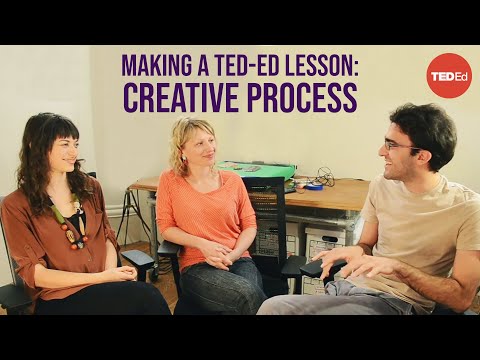
Making a Ted Ed Lesson Creative Process
Ever wondered how a TED-Ed animation is made? Go behind-the-scenes of “How do cancer cells behave differently from healthy ones” with educator George Zaidan, animation director Biljana Labovic, and animator Lisa LaBracio.

The Real Tale of the Monkey King in Heaven Ji Hao
While his disciples loved their roguish leader, Sun Wukong’s misadventures had spread chaos throughout the land. The Jade Emperor, watching from his throne in Heaven, decided he would no longer stand by as this monkey wreaked havoc across his domain. The Emperor decided the best way to maintain order was to keep a close eye on Sun Wukong. Ji Hao follows the Monkey King's exploits in Heaven.

Why Some People Are More Altruistic Than Others Abigail Marsh
Why do some people do selfless things, helping other people even at risk to their own well-being? Psychology researcher Abigail Marsh studies the motivations of people who do extremely altruistic acts, like donating a kidney to a complete stranger. Are their brains just different?
4 Things All Great Listeners Know
It’s easy to tell when someone’s not paying attention, but it can be surprisingly tricky to know what good listening looks like. Good listening is one of the most important things we can do to improve our relationships, develop our worldview, and potentially change people’s minds. So what can we do to become better listeners? Dig into different strategies that can improve your listening skills.

What Really Happened During the Attica Prison Rebellion Orisanmi Burton
On September 9th 1971, a spontaneous uprising began in a New York State prison. A group of prisoners overpowered guards, broke windows, started fires, and captured supplies, sparking the Attica Rebellion. Soon, over 1,200 prisoners had assembled with 42 hostages to demand better treatment and better living conditions. Orisanmi Burton details the revolt and deadly retaking of Attica prison.

What is Phantom Traffic and Why is it Ruining Your Life Benjamin Seibold
You’re cruising down the highway when all of a sudden endless rows of brake lights appear ahead. There’s no accident, no stoplight, no change in speed limit, or narrowing of the road. So why is there so much traffic? It's due to a phenomenon called a phantom traffic jam. Benjamin Seibold explains why it happens and how we might prevent it in the future.

What Do All Languages Have in Common Cameron Morin
Language is endlessly variable. Each of us can come up with an infinite number of sentences in our native language, and we’re able to do so from an early age— almost as soon as we start to communicate in sentences. How is this possible? In the early 1950s, Noam Chomsky proposed a theory that the key to this versatility was grammar. Cameron Morin details Chomsky's theory of universal grammar.

The Myth of Pegasus and the Chimera Iseult Gillespie
Shielded from the gorgon’s stone gaze, Perseus crept through Medusa’s cave. When he reached her, he drew his sickle and brought it down on her neck. From Medusa's neck sprung two children. One was a giant wielding a golden sword; the other was the magnificent, winged horse, Pegasus. No bridle could contain him— until one fateful day. Iseult Gillespie details the myth of the hero Bellerophon.

History s Most Dangerous Myth Anneliese Mehnert
From the 1650s through the late 1800’s, European colonists descended on South Africa. They sought to claim the region, becoming even more aggressive after discovering the area’s abundant natural resources. To support their claims to the land, the colonizers asserted they were settling in empty land devoid of local people. Was this argument true? Anneliese Mehnert debunks the Empty Land Theory.