Discover Resources
Browse curated homeschool resources from the community

Mysteries of Vernacular Robot Jessica Oreck and Rachael Teel
In 1920, Czech writer Karel Čapek wrote a play about human-like machines, thereby inventing the term robot from the Central European word for forced labor. Jessica Oreck and Rachael Teel explain how the science fiction staple earned its name.
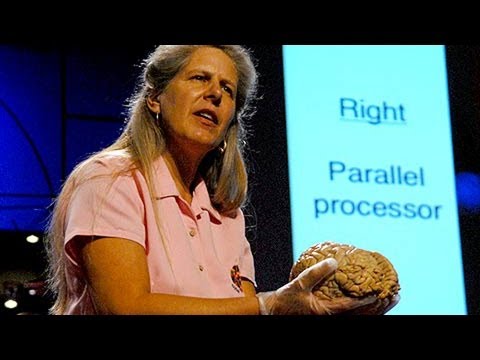
Stroke of Insight Jill Bolte Taylor
Brain researcher Jill Bolte Taylor studied her own stroke as it happened -- and has become a powerful voice for brain recovery.

Mysteries of Vernacular Bewilder Jessica Oreck and Rachael Teel
The history of the word bewilder is more straightforward than you might think. Roots can be traced back to the Old English words wilde (undomesticated) and deor (untamed animals), eventually combined into the word wilderness. Jessica Oreck and Rachael Teel track bewilder's etymological path from meaning natural states to complete confusion.
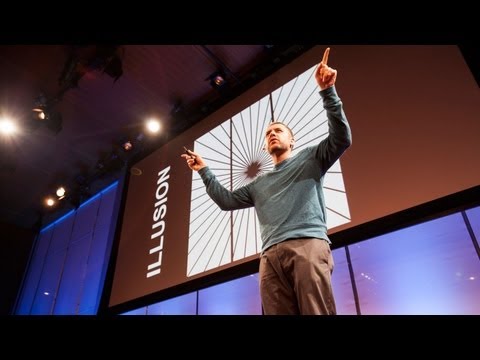
Why Do We See Illusions Mark Changizi
Why can’t our extremely complex eyes render simple optical illusions? Surprise, surprise -- it comes back to the brain, which has only evolved to encounter natural stimuli. At TEDYouth 2012, Mark Changizi explains how the brain reckons with optical illusions.
Let s Use Video to Reinvent Education Salman Khan
Salman Khan talks about how and why he created the remarkable Khan Academy, a carefully structured series of educational videos offering complete curricula in math and, now, other subjects. He shows the power of interactive exercises and calls for teachers to consider flipping the traditional classroom script -- give students video lectures to watch at home and do "homework" in the classroom with the teacher available to help.

How Inventions Change History for Better and for Worse Kenneth C Davis
Invented in 1793, the cotton gin changed history for good and bad. By allowing one field hand to do the work of 10, it powered a new industry that brought wealth and power to the American South -- but, tragically, it also multiplied and prolonged the use of slave labor. Kenneth C. Davis lauds innovation, while warning us of unintended consequences.
Mysteries of Vernacular Quarantine Jessica Oreck and Rachael Teel
Stemming from the days of bubonic plague in Medieval Europe, quarantines were originally used to prevent potentially plague-infested ships from disembarking at a port city. Jessica Oreck and Rachael Teel explain how the length of the wait, often 40 days, came to be associated with the word we use today.
Your Brain is More Than a Bag of Chemicals David Anderson 2
Modern psychiatric drugs treat the chemistry of the whole brain, but neurobiologist David Anderson believes in a more nuanced view of how the brain functions. He illuminates new research that could lead to targeted psychiatric medications -- that work better and avoid side effects. How's he doing it? For a start, by making a bunch of fruit flies angry. (Filmed at TEDxCaltech.)

Should We Eat Bugs Emma Bryce
What's tasty, abundant and high in protein? Bugs! Although less common outside the tropics, entomophagy, the practice of eating bugs, was once extremely widespread throughout cultures. You may feel icky about munching on insects, but they feed about 2 billion people each day (Mmm, fried tarantulas). They also hold promise for food security and the environment. Emma Bryce makes a compelling case for dining on bugs.

What Causes Bad Breath Mel Rosenberg
Halitosis is a curse that has plagued humanity since ancient times. But what causes it, and why is it so universally terrifying? Mel Rosenberg outlines the basics of bad breath — and what you can do when it strikes you.

Can Love and Independence Coexist Tanya Boucicaut
Baritone thunder. Snarling winds. Consuming downpours. Okeechobee, the hurricane of 1928, forced many to flee their ruined communities. But for Janie Crawford, it inspired an unexpected homecoming. So begins Zora Neale Hurston’s acclaimed novel “Their Eyes Were Watching God,” about a Black woman’s quest for love and agency. Tanya Boucicaut dives into this classic of the Harlem Renaissance.

What Color is Tuesday Exploring Synesthesia Richard E Cytowic
How does one experience synesthesia -- the neurological trait that combines two or more senses? Synesthetes may taste the number 9 or attach a color to each day of the week. Richard E. Cytowic explains the fascinating world of entangled senses and why we may all have just a touch of synesthesia.

This Mushroom Will Kill You Before You Know What s Happening Michael Beug
Humans have known about the toxicity of death cap mushrooms for millennia. Yet they continue to pose a significant threat to unsuspecting foragers and mushroom hunters throughout the world. Today, death caps are responsible for more than 90% of all mushroom related deaths, killing upwards of 100 people each year. So, what makes this one species of mushroom so dangerous? Michael Beug investigates.
How to Lead a Conversation Between People Who Disagree Eve Pearlman
In a world deeply divided, how do we have hard conversations with nuance, curiosity, respect? Veteran reporter Eve Pearlman introduces "dialogue journalism": a project where journalists go to the heart of social and political divides to support discussions between people who disagree. See what happened when a group that would have never otherwise met gathered to talk about contentious issues.

What You Need to Know About Carbon Removal
Every carbon removal approach takes some combination of natural resources, human ingenuity and technology, says climate thinker Gabrielle Walker. If we get the mix right, we can clean up the environmental mess we've made, reverse the processes behind climate change and give nature a chance to heal. "What goes up must now come down."
Why it s so Hard to Cure Hiv Aids Janet Iwasa
In 2008, something incredible happened: a man was cured of HIV. In over 70 million HIV cases, this was a first, and, so far, a last, and we don’t yet understand exactly how he was cured. But if we can cure people of various diseases, like malaria and hepatitis C, why can’t we cure HIV? Janet Iwasa examines the specific traits of the HIV virus that make it so difficult to cure.

Learning from Smallpox How to Eradicate a Disease Julie Garon and Walter a Orenstein
For most of human history, we have sought to treat and cure diseases. But only in recent decades did it become possible to ensure that a particular disease never threatens humanity again. Julie Garon and Walter A. Orenstein detail how the story of smallpox – the first and only disease to be permanently eliminated – shows how disease eradication can happen, and why it is so difficult to achieve.

How Does Cancer Spread Through the Body Ivan Seah Yu Jun
Cancer usually begins with one tumor in a specific area of the body. But if the tumor is not removed, cancer has the ability to spread to nearby organs as well as places far away from the origin, like the brain. How does cancer move to these new areas and why are some organs more likely to get infected than others? Ivan Seah Yu Jun explains the three common routes of metastasis.
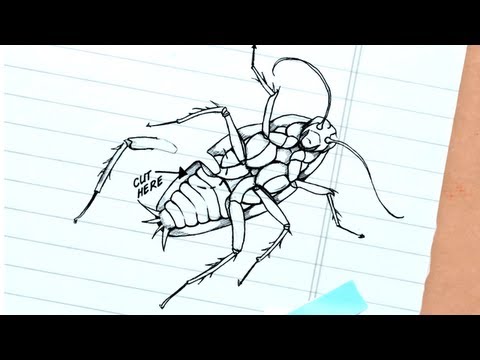
The Cockroach Beatbox
By dissecting a cockroach ... yes, live on stage ... TED Fellow and neuroscientist Greg Gage shows how brains receive and deliver electric impulses -- and how legs can respond. (Launching a series on Awesome Nature) "The Cockroach Beatbox" was animated by the TED-Ed Animation Team (Jeremiah Dickey, Biljana Labovic, Celeste Lai, Kari Mulholland and Franz Palomares)

When Ai Can Fake Reality Who Can You Trust Sam Gregory
We're fast approaching a world where widespread, hyper-realistic deepfakes lead us to dismiss reality, says technologist and human rights advocate Sam Gregory. What happens to democracy when we can't trust what we see? Learn three key steps to protecting our ability to distinguish human from synthetic — and why fortifying our perception of truth is crucial to our AI-infused future.

The Simple but Fascinating Story of Photosynthesis and Food Amanda Ooten
Photosynthesis is an essential part of the exchange between humans and plants. Amanda Ooten walks us through the process of photosynthesis, also discussing the relationship between photosynthesis and carbohydrates, starch, and fiber -- and how the air we breathe is related to the food we ingest.

Scientists Still Dont Know the Answer to This Infamous Question Charles Wallace Dan Kwartler
In 1980, philosopher John Searle developed a thought experiment in response to AI advancement at the time. His aim was to interrogate whether a programmed computer has cognitive states, and asked: if a computer looks like it understands something, does that mean it actually understands the way a human does? Charles Wallace and Dan Kwartler explore whether or not AI could have a mind like ours.
How Can Groups Make Good Decisions Mariano Sigman and Dan Ariely
We all know that when we make decisions in groups, they don't always go right. How can groups make good decisions? Dan Ariely and neuroscientist Mariano Sigman have been inquiring into how we interact to reach decisions by performing experiments with live crowds around the world. In this fun, fact-filled explainer, they share some intriguing results.

3 Easy Steps to Build a Real Utopia Joseph Lacey
A group of strangers have gathered to design a just society. To ensure none of them rig the system, they’ve been placed under a veil of ignorance. Under this veil, they’re blind to information about age, sex, profession, wealth, religion, and so on. Can they build a fair society where everyone has the resources they need? Joseph Lacey details John Rawls' classic thought experiment.