Discover Resources
Browse curated homeschool resources from the community

Why Should You Read James Joyce s Ulysses Sam Slote
James Joyce's “Ulysses” is widely considered to be both a literary masterpiece and one of the hardest works of literature to read. It inspires such devotion that once a year, thousands of people all over the world dress up like the characters, take to the streets, and read the book aloud. So what is it about this novel that inspires so many people? Sam Slote uncovers the allure of this epic tome.

Why Should You Read the Joy Luck Club by Amy Tan Sheila Marie Orfano
In her Auntie An-mei’s home, Jing-Mei reluctantly takes her seat at the eastern corner of the mahjong table. At the north, south and west corners are her aunties, long-time members of the Joy Luck Club. This gathering is the point of departure for a series of interconnected vignettes in Amy Tan’s debut novel. Sheila Marie Orfano explores why the novel still captivates readers worldwide.

What Happens When You Share an Idea
This is episode 1 of the animated series, “Public Speaking 101.” Ideas change everything — and since language lets us share our ideas, learning how to use it well gives speakers the power to inspire people and even change how they think. This 11-episode course will teach you how to identify, develop, and share your best ideas, while mastering essential communication skills along the way.

The Taino Myth of the Cursed Creator Bill Keegan
Before the world of humans began, there was the world of the gods. Four brothers wandered this celestial realm. One day, the brothers snuck into a spirit’s house and spotted a giant gourd hanging in the corner. But as they tried to look inside the gourd, they dropped it. It broke apart, releasing a deluge that formed a new world. Bill Keegan details the Taino myth of Deminan and the sea.

Greek Mythology s Greatest Warrior Iseult Gillespie
Born to a sea nymph and a king, and trained by the legendary centaur Chiron, Achilles was a demigod destined for greatness. When Greece declared war on Troy, Achilles knew the war was written into his destiny. With horses born from the west wind and a spear wrought from a mountain peak, he readied himself for battle. Iseult Gillespie tells the tale of the infamous warrior and his heel.

What Few People Know About the Program That Saved America Meg Jacobs
In 1932, one in four Americans was unemployed, marking the highest unemployment rate in the country’s history. The Democratic presidential candidate Franklin D. Roosevelt promised a New Deal— a comprehensive set of legislation to support struggling citizens and put the country back to work. Meg Jacobs digs into the policies of this bold campaign and how it didn’t fully live up to its promises.

The Dark History of the Overthrow of Hawaii Sydney Iaukea
On January 16th, 1895, two men arrived at Liliʻuokalani’s door, arrested her, and imprisoned her. The Missionary Party had recently seized power and now confiscated her diaries, ransacked her house, and claimed her lands. Liliʻuokalani was Hawaii’s queen and she ruled through one of the most turbulent periods of its history. Sydney Iaukea shares how the ruler fought the annexation of Hawaii.
Why Incompetent People Think They Re Amazing David Dunning
How good are you with money? What about reading people’s emotions? How healthy are you, compared to other people you know? Knowing how our skills stack up against others is useful in many ways. But psychological research suggests that we’re not very good at evaluating ourselves accurately. In fact, we frequently overestimate our own abilities. David Dunning describes the Dunning-Kruger effect.

Could Human Civilization Spread Across the Whole Galaxy Roey Tzezana
Could human civilization eventually spread across the whole Milky Way galaxy? Could we move beyond our small, blue planet to establish colonies in the multitude of star systems out there? These questions are pretty daunting, but their (theoretical) answers were actually put forth decades ago. Roey Tzezana describes the conceptual von Neumann machine.
How the World s First Subway System Was Built Christian Wolmar
It was the dawn of 1863, and London's not-yet-opened subway system — the first of its kind in the world — had the city in an uproar. Most people thought the project, which cost more than 100 million dollars in today's money, would never work. So how did they do it? Christian Wolmar explains how the London Underground was built at a time when no one had built a railway under a city before.
The Hidden Life of Rosa Parks Riche D Richardson
Throughout her life, Rosa Parks repeatedly challenged racial violence and the prejudiced systems protecting its perpetrators. Her refusal to move to the back of a segregated bus ignited a boycott that lasted 381 days and helped transform civil rights activism into a national movement. But this work came at an enormous risk— and a personal price. Riché D. Richardson details the life of Rosa Parks.

First Person vs Second Person vs Third Person Rebekah Bergman
Who is telling a story, and from what perspective, are some of the most important choices an author makes. Told from a different point of view, a story can transform completely. Third person, first person, and second person perspectives each have unique possibilities and constraints. So how do you choose a point of view for your story? Rebekah Bergman explores the different ways to focus a story.

Music and Creativity in Ancient Greece Tim Hansen
You think you love music? You have nothing on the Ancient Greek obsession. Every aspect of Greek life was punctuated by song: history, poetry, theater, sports and even astronomy. In fact, music was so important to Greek philosopher Plato that he claimed the music we listen to directly affects our ethics. Tim Hansen wonders what Plato might have to say about the music we listen to today.
The Rise of Modern Populism Takis s Pappas
In many democratic countries, charismatic leaders vilify political opponents, disparage institutions, and claim to be for the people. Some critics label this approach as authoritarian or fascist, while others argue that these leaders are manipulating voters. This style of politics goes by the name of populism. Takis S. Pappas explores the phenomenon and the lasting impact it can have on a country.
How Magellan Circumnavigated the Globe Ewandro Magalhaes
On September 6, 1522, the "Victoria" sailed into harbor in southern Spain. The battered vessel and its 18 sailors were all that remained of a fleet that had departed three years before. Yet her voyage was considered a success, for the "Victoria" had achieved something unprecedented – the first circumnavigation of the globe. Ewandro Magalhaes shares the story of Magellan’s journey.
Toy Tiles That Talk to Each Other David Merrill
MIT grad student David Merrill demos Siftables -- cookie-sized, computerized tiles you can stack and shuffle in your hands. These future-toys can do math, play music, and talk to their friends, too. Is this the next thing in hands-on learning?
Why I M a Weekday Vegetarian Graham Hill
We all know the arguments that being vegetarian is better for the environment and for the animals -- but in a carnivorous culture, it can be hard to make the change. Graham Hill has a powerful, pragmatic suggestion: Be a weekday veg.

Nature s Smallest Factory the Calvin Cycle Cathy Symington
A hearty bowl of cereal gives you the energy to start your day, but how exactly did that energy make its way into your bowl? It all begins with photosynthesis, the process that converts the air we breathe into energizing glucose. Cathy Symington details the highly efficient second phase of photosynthesis -- called the Calvin cycle -- which converts carbon dioxide into sugar with some clever mix-and-match math.

Why Should You Read Sylvia Plath Iseult Gillespie
Under her shrewd eye and pen, Sylvia Plath turned everyday objects into haunting images: a “new statue in a drafty museum,” a shadow in a mirror, a slab of soap. Her breathtaking perspectives and unflinching language made her a touchstone for readers seeking to break the silence around issues of trauma, frustration and sexuality. Iseult Gillespie shares why Plath's writing continues to captivate.
The 3 a s of Awesome Neil Pasricha
Neil Pasricha's blog 1000 Awesome Things savors life's simple pleasures, from free refills to clean sheets. In this heartfelt talk, he reveals the 3 secrets (all starting with A) to leading a life that's truly awesome. (Filmed at TEDxToronto.)

Why is the Us Constitution so Hard to Amend Peter Paccone
When it was ratified in 1789, the US Constitution didn’t just institute a government by the people – it provided a way for the people to alter the Constitution itself. And yet, of the nearly 11,000 amendments proposed in the centuries since, only 27 have succeeded as of 2016. Peter Paccone explains why the US Constitution is so hard to change.
Equality Sports and Title Ix Erin Buzuvis and Kristine Newhall
In 1972, U.S. Congress passed Title IX, a law which prohibited discrimination against women in schools, colleges, and universities -- including school-sponsored sports. Before this law, female athletes were few and far between, and funding was even scarcer. Erin Buzuvis and Kristine Newhall explore the significance and complexity of Title IX.
Why Should You Read the Handmaid s Tale Naomi R Mercer
Margaret Atwood's speculative fiction masterpiece The Handmaid's Tale explores the consequences of complacency and how power can be wielded unfairly. Atwood’s chilling vision of a dystopian regime has captured readers' imaginations since its publication in 1985. How does this book maintain such staying power? Naomi R. Mercer investigates.
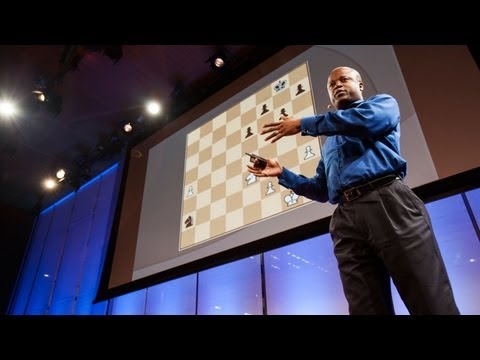
Working Backward to Solve Problems Maurice Ashley
Imagine where you want to be someday. Now, how did you get there? Retrograde analysis is a style of problem solving where you work backwards from the endgame you want. It can help you win at chess -- or solve a problem in real life. At TEDYouth 2012, chess grandmaster Maurice Ashley delves into his favorite strategy.