Discover Resources
Browse curated homeschool resources from the community

Why Don T Tough and Dough Rhyme Arika Okrent
Spelling reformers have been advocating for changes to make English spelling more intuitive and less irregular. One example of its messiness: take the “g-h” sound from “enough,” the “o” sound from “women” and the “t-i” sound from “action,” and you could argue that “g-h-o-t-i” spells “fish.” So, how did English get like this? Arika Okrent explores the complexity of English spelling conventions.

Encyclopedic Entry: Photosynthesis
Photosynthesis is the process by which plants use sunlight, water, and carbon dioxide to create oxygen and energy in the form of sugar.
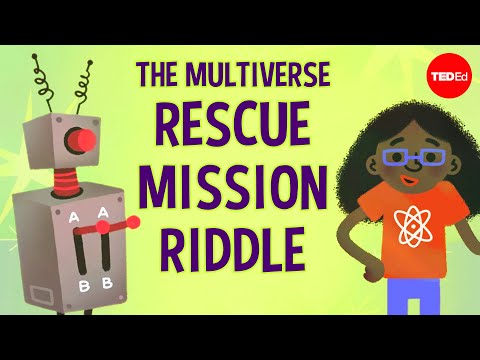
Can You Solve the Multiverse Rescue Mission Riddle Daniel Finkel
It was a normal Tuesday at the superconductor, until a bug in the system caused your team to be trapped in 11 separate dimensions. Fortunately, there’s a half-finished experimental teleportation robot that may be able to get you all home... if you can figure out how to work it. Can you work out the robot’s design quirks and get your team back home safely? Dan Finkel shows how.
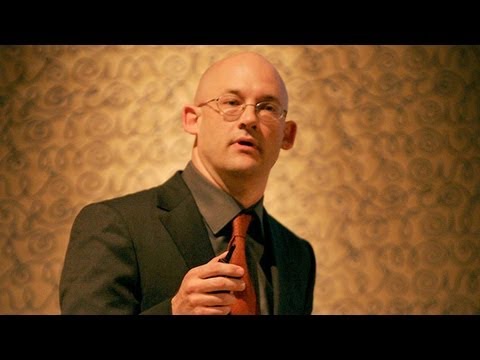
Clay Shirky How Social Media Can Make History
While news from Iran streams to the world, Clay Shirky shows how Facebook, Twitter, and TXTs help citizens in repressive regimes report on real news, bypassing censors (however briefly). The end of top-down control of news is changing the nature of politics.
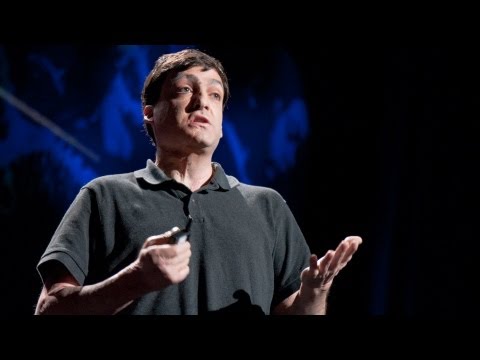
Our Buggy Moral Code Dan Ariely
Behavioral economist Dan Ariely studies the bugs in our moral code: the hidden reasons we think it's OK to cheat or steal (sometimes). Clever studies help make his point that we're predictably irrational -- and can be influenced in ways we can't grasp.

The Magic of Vedic Math Gaurav Tekriwal
There is more than one way to reach a correct answer in mathematics. Vedic math, an ancient Indian method, sidesteps traditional computations in a manner that provides a shortcut, while being fun to use and to learn. At TEDYouth 2012, to ooh’s and aah’s from the amazed crowd, Gaurav Tekriwal demonstrates the magic of Vedic math.

What Light Can Teach Us About the Universe Pete Edwards
Humanity has long been looking at the universe and asking the big questions: How did it begin? How will it end? Cosmologists are searching hard for the answers, but where do they even start? The answer is light. Pete Edwards outlines the six unique messages that light carries which, when put together, disclose a stunning amount of information to astronomers.
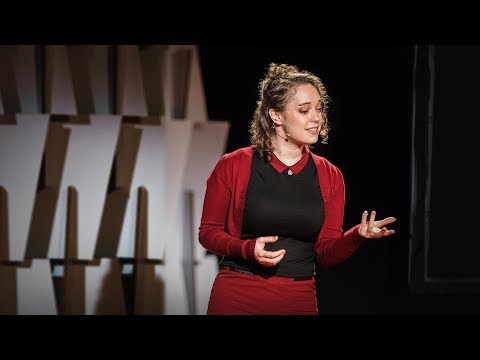
Why You Don T Like the Sound of Your Own Voice Rebecca Kleinberger
Your voice is indistinguishable from how other people see you, but your relationship with it is far from obvious. Rébecca Kleinberger studies how we use and understand our voices and the voices of others. She explains why you may not like the sound of your own voice on recordings and the extraordinary things you communicate without being aware of it.
The Infamous and Ingenious Ho Chi Minh Trail Cameron Paterson
The Ho Chi Minh Trail not only connected North and South Vietnam during a brutal war but also aided Vietnamese soldiers. The trail shaved nearly five months of time off of the trip and was used as a secret weapon of sorts. Cameron Paterson describes the history and usage of the infamous trail.

TED-Ed: What Is the Tragedy of the Commons?
Is it possible that overfishing, super germs, and global warming are all caused by the same thing? In 1968, a man named Garrett Hardin sat down to write an essay about overpopulation. Within it, he discovered a pattern of human behavior that explains some of history’s biggest problems. Nicholas Amendolare describes the tragedy of the commons.

Jackie Jenkins Greeting the World in Peace
Conflict and cultural clashes are a part of our global reality, but so is the universal desire for peace. From Bangladesh to Myanmar to Lesotho, discover this inspiring common sentiment in traditional greetings of peace.
Vs Ramachandran the Neurons That Shaped Civilization
Neuroscientist Vilayanur Ramachandran outlines the fascinating functions of mirror neurons. Only recently discovered, these neurons allow us to learn complex social behaviors, some of which formed the foundations of human civilization as we know it.