Discover Resources
Browse curated homeschool resources from the community
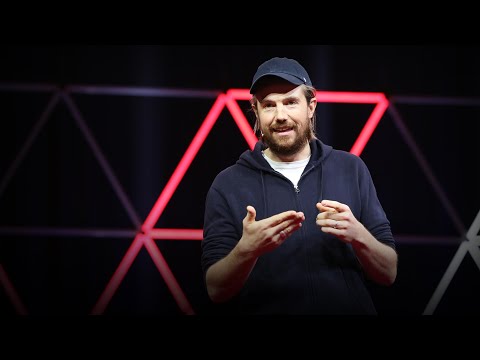
How You Can Use Impostor Syndrome to Your Benefit Mike Cannon Brookes
Have you ever doubted your abilities, feared you were going to be discovered as a "fraud"? That's called "impostor syndrome," and you're definitely not alone in feeling it, says entrepreneur and CEO Mike Cannon-Brookes. In this funny, relatable talk, he shares how his own experiences of impostor syndrome helped pave the way to his success— and shows how you can use it to your advantage, too.
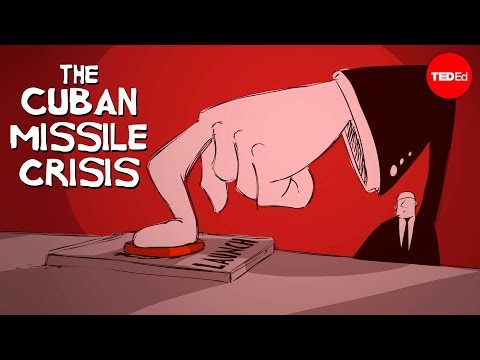
The History of the Cuban Missile Crisis Matthew a Jordan
Imagine going about your life knowing that, at any given moment, you and everyone you know could be wiped out without warning at the push of a button. This was the reality for millions of people during the forty-five year period after World War II now known as the Cold War. Matthew A. Jordan explains the history behind the peak of all this panic — the thirteen days of the Cuban Missile Crisis.

Why Does Ice Float in Water George Zaidan and Charles Morton
Water is a special substance for several reasons, and you may have noticed an important one right in your cold drink: ice. Solid ice floats in liquid water, which isn't true for most substances. But why? George Zaidan and Charles Morton explain the science behind how how hydrogen bonds keep the ice in your glass (and the polar ice caps) afloat.

Planning for the End of Oil Richard Sears
As the world's attention focuses on the perils of oil exploration, we present Richard Sears' talk from early February 2010. Sears, an expert in developing new energy resources, talks about our inevitable and necessary move away from oil. Toward ... what?

The Hidden Power of Smiling Ron Gutman
Ron Gutman reviews a raft of studies about smiling, and reveals some surprising results. Did you know your smile can be a predictor of how long you'll live -- and that a simple smile has a measurable effect on your overall well-being? Prepare to flex a few facial muscles as you learn more about this evolutionarily contagious behavior.

What We Can Learn from Galaxies Far Far Away Henry Lin
In a fun, excited talk, teenager Henry Lin looks at something unexpected in the sky: galaxy clusters. By studying the properties of the universe's largest pieces, says the Intel Science Fair winner, we can learn quite a lot about our own world and galaxy.
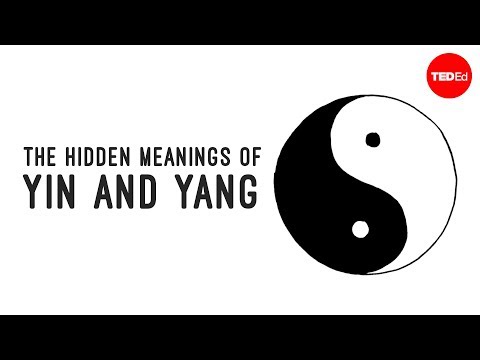
The Hidden Meanings of Yin and Yang John Bellaimey
The ubiquitous yin-yang symbol holds its roots in Taoism/Daoism, a Chinese religion and philosophy. The yin, the dark swirl, is associated with shadows, femininity, and the trough of a wave; the yang, the light swirl, represents brightness, passion and growth. John Bellaimey explains why we all contain the spirit of yin and of yang -- and how we can achieve a balance of both in our lives.

I M Batman Amy Wray
What flies through the night, silently guarding and protecting our world from evil? Batman? Try...a bat. Like Batman, bats are widely misunderstood and vilified. Amy Wray disproves the myth that bats are dangerous villains and explains why they, instead, deserve a hero's welcome -- and our protection.
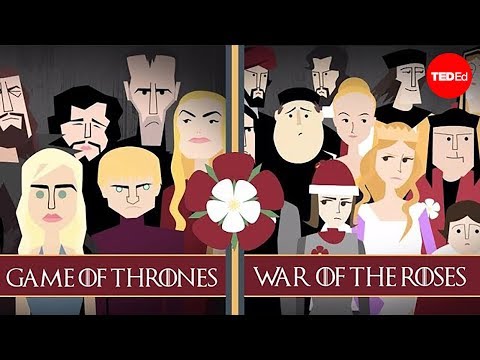
The Wars That Inspired Game of Thrones Alex Gendler
Beginning around 1377, medieval England was shaken by a power struggle between two noble families, which spanned generations and involved a massive cast of characters, complex motives and shifting loyalties. Sound familiar? Alex Gendler illustrates how the historical conflict known as the Wars of the Roses served as the basis for much of the drama in Game of Thrones.

Tycho Brahe the Scandalous Astronomer Dan Wenkel
If you think scientists lead boring, monotonous lives, you must not know about Tycho Brahe. The 16th century astronomer who accurately predicted planetary motion led quite a dramatic life -- complete with a kidnapping, a sword duel and even a clairvoyant dwarf. Dan Wenkel dives into the history behind this sensational scientist, explaining how he continued to inspire intrigue even after his death.
What s the Big Deal with Gluten William D Chey
If you've been to a restaurant in the last few years, you’ve likely seen the words gluten-free written somewhere on the menu. But what exactly is gluten, and why can’t some people process it? And why does it only seem to be a problem recently? William D. Chey unravels the facts behind celiac disease, wheat allergies and non-celiac gluten sensitivity.
What Happens to Our Bodies After We Die Farnaz Khatibi Jafari
Since the dawn of humanity, an estimated 100.8 billion people have lived and died, a number that increases by about 0.8% of the world’s population each year. What happens to all of those peoples’ bodies after they die? And will the planet eventually run out of burial space? Farnaz Khatibi Jafari traces the evolution of how humanity has treated bodies and burials.
Why Do We Kiss Under Mistletoe Carlos Reif
The sight of mistletoe may either send you scurrying or, if you have your eye on someone, awaiting an opportunity beneath its snow-white berries. But how did the festive tradition of kissing under mistletoe come about? Carlos Reif explains how this long-lived custom intertwines the mythology and biology of this intriguing plant.

The Language of Lying Noah Zandan
We hear anywhere from 10 to 200 lies a day. And although we’ve spent much of our history coming up with ways to detect these lies by tracking physiological changes in their tellers, these methods have proved unreliable. Is there a more direct approach? Noah Zandan uses some famous examples of lying to illustrate how we might use communications science to analyze the lies themselves.
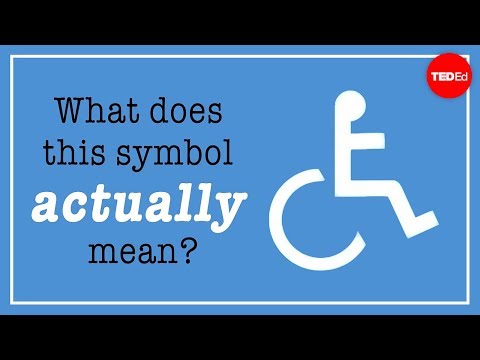
What Does This Symbol Actually Mean Adrian Treharne
Some of the world’s most recognizable symbols exist to sell products. Others, to steer traffic or advance political causes. But there’s one whose main purpose is to help people. You may know it as the wheelchair symbol, but its formal title is the International Symbol of Access. But what does the symbol actually mean? And what is its purpose? Adrian Treharne explains.

The Infamous Overpopulation Bet Simon vs Ehrlich Soraya Field Fiorio
In 1980, Paul Ehrlich and Julian Simon bet $1,000 on a question with stakes that couldn’t be higher: would the earth run out of resources to sustain a growing human population? They bet $200 on the price of five metals. If the price of a metal decreased or held steady over the next decade, Simon won. If the price increased, Ehrlich won. So, what happened? Soraya Field Fiorio investigates.
How to Practice Effectively for Just About Anything Annie Bosler and Don Greene
Mastering any physical skill takes practice. Practice is the repetition of an action with the goal of improvement, and it helps us perform with more ease, speed, and confidence. But what does practice actually do to make us better at things? Annie Bosler and Don Greene explain how practice affects the inner workings of our brains.

Why Are Sloths so Slow Kenny Coogan
Sloths spend most of their time eating, resting, or sleeping; in fact, they descend from their treetops canopies just once a week, for a bathroom break. How are these creatures so low energy? Kenny Coogan describes the physical and behavioral adaptations that allow sloths to be so slow.

How to Spot a Pyramid Scheme Stacie Bosley
In 2004, a nutrition company offered a life-changing opportunity to earn a full-time income for part-time work. There were only two steps to get started: purchase a $500 kit and recruit two more members. By 2013, the company was making $200 million. There was just one problem -- the vast majority of members earned less than they paid in. Stacie Bosley explains what a pyramid scheme is and how to spot one.

For Estefani Third Grade Who Made Me a Card by Aracelis Girmay
This animation is part of our series, "There's a Poem for That," which features animated interpretations of poems both old and new that give language to some of life's biggest feelings. Check out the full series here: http://bit.ly/TEDEdTheresAPoemForThat

Why Should You Read Macbeth Brendan Pelsue
There’s a play so powerful that an old superstition says its name should never be uttered in a theater. A play that begins with witchcraft and ends with a bloody, severed head. A play filled with riddles, prophecies, nightmare visions, and lots of brutal murder. But is it really all that good? Brendan Pelsue explains why you should read (or revisit) "Macbeth."

Why Should You Read a Midsummer Night s Dream Iseult Gillespie
By the light of the moon, a group sneaks into the woods, where they take mind-altering substances, switch it up romantically and brush up against creatures from another dimension. “A Midsummer Night’s Dream” sees Shakespeare play with the boundary between illusion and reality - and dramatize the possibility that life is but a dream. Iseult Gillespie shares what makes this play a timeless classic.

Why Germs Thrive on Planes and How to Stop Them Raymond Wang
Raymond Wang is only 17 years old, but he's already helping to build a healthier future. Using fluid dynamics, he created computational simulations of how air moves on airplanes, and what he found is disturbing. Wang shares an unforgettable animation of how a sneeze travels inside a plane cabin as well as his prize-winning solution: a device that increases fresh airflow in airplanes and redirects pathogen-laden air out of circulation.

Why is Aristophanes Called the Father of Comedy Mark Robinson
Aristophanes, often referred to as the Father of Comedy, wrote the world’s earliest surviving comic dramas. They're stuffed full of parodies, songs, sexual jokes and surreal fantasy -- and they’ve shaped how comedy’s been written and performed ever since. Mark Robinson shares a brief history of Aristophanes.