Discover Resources
Browse curated homeschool resources from the community

Are All of Your Memories Real Daniel L Schacter
In a 1990’s study, participants recalled getting lost in a shopping mall as children. Some shared these memories in vivid detail, but there was one problem: none of these people had actually gotten lost in a mall. They produced these false memories after psychologists told them they’d gotten lost and parents confirmed it. So what’s going on? Daniel Schacter explores the fallibility of our memory.
The Road Not Taken by Robert Frost
This animation is part of our series, "There's a Poem for That," which features animated interpretations of poems both old and new that give language to some of life's biggest feelings. Check out the full series here: http://bit.ly/TEDEdTheresAPoemForThat

Ode to the Only Black Kid in the Class by Clint Smith
This animation is part of our series, "There's a Poem for That," which features animated interpretations of poems both old and new that give language to some of life's biggest feelings. Check out the full series here: http://bit.ly/TEDEdTheresAPoemForThat

The Resistance Think Like a Coder Ep 2
This is episode 2 of our animated series “Think Like A Coder.” This 10-episode narrative follows a girl, Ethic, and her robot companion, Hedge, as they attempt to save the world. The two embark on a quest to collect three artifacts and must solve their way through a series of programming puzzles.
Why is Cotton in Everything Michael R Stiff
Centuries ago, the Inca developed ingenuous suits of armor that could protect warriors from even the fiercest physical attacks. These hardy structures were made not from iron or steel, but rather something unexpectedly soft: cotton. Today cotton is used to make everything from fabric, to currency, diapers and fishing nets. Michael R. Stiff explores the science of what makes cotton so versatile.
Why should you read Edgar Allan Poe? - Scott Peeples
The genius behind gothic horror and detective fiction.
Why Should You Read Waiting for Godot Iseult Gillespie
Two men, Estragon and Vladimir, meet by a tree at dusk to wait for someone named “Godot.” So begins a vexing cycle where the two debate when Godot will come, why they’re waiting and whether they’re even at the right tree. The play offers a simple but stirring question- what should the characters do? Iseult Gillespie shares everything you need to know to read the tragicomedy.

Meet the Microscopic Life in Your Home and on Your Face Anne Madden
We live in homes with over 100,000 microscopic species, each with its own set of unique traits and capabilities. While a few of these species cause disease, most do not. Can humans harness these microbial capabilities to create beneficial applications and new technology? According to microbiologist Anne Madden, these microscopic alchemists aren't gross— they're the future.
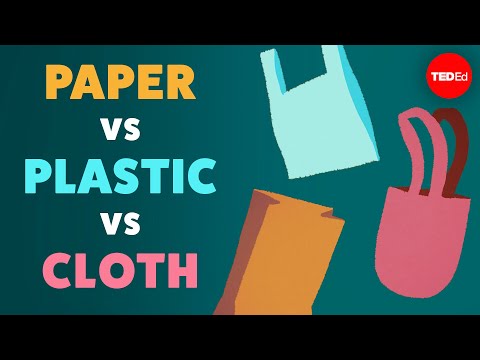
Which Bag Should You Use Luka Seamus Wright and Imogen Ellen Napper
You’ve filled up your cart and made it to the front of the grocery line when you’re confronted with yet another choice: what kind of bag should you use? It might seem obvious that plastic is bad for the environment, and that a paper bag or a cotton tote would be the better option. But is that really true? Luka Seamus Wright and Imogen Ellen Napper explore the environmental impact of each material.
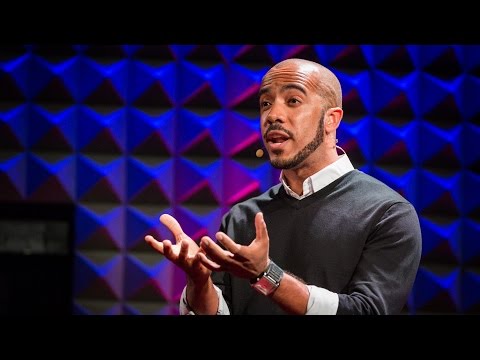
The Danger of Silence Clint Smith
"We spend so much time listening to the things people are saying that we rarely pay attention to the things they don't," says poet and teacher Clint Smith. A short, powerful piece from the heart, about finding the courage to speak up against ignorance and injustice.

What s the Best Fuel for Your Car
Historically, most cars have run on gasoline, but that doesn’t have to be the case in the future: other liquid fuels and electricity can also power cars. So what are the differences between these options? And which one’s best? Dig into which fuel— gasoline, electric, biofuels, or electrofuels— is both affordable for consumers and sustainable for the planet.
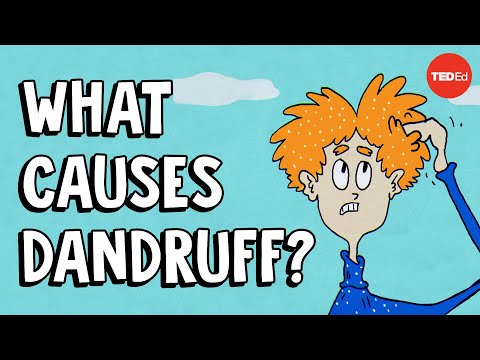
What Causes Dandruff and How Do You Get Rid of it Thomas L Dawson
On top of our heads, there is a type of yeast that lives and dines on all of our scalps. Feasting constantly, it’s in paradise. And in about half of the human population, its activity causes dandruff. So, why do some people have more dandruff than others? And how can it be treated? Thomas L. Dawson explores this head-scratching problem.

Where Will You Be Able to Live in 20 Years Carol Farbotko and Ingrid Boas
Humanity has always adapted to changing weather and moved to regions that best support cultural lifestyles and livelihoods. However, the rise in extreme weather is endangering coastal communities, and even for those with the resources to take action, the pace and nature of climate change has made it difficult to adapt. Carol Farbotko and Ingrid Boas dig into the challenges of climate mobility.

What Happened When We All Stopped Narrated by Jane Goodall
As millions around the world shelter at home, the smog melts away, the birds sing, and the waters run clear. What if we used this moment in our lives and in history as an opportunity to jumpstart the rebirth and rewilding of our planet when we go back to work and school? This moment can lead us to a healthier, cleaner, greener future, if only we grasp it. Tom Rivett-Carnac tells the story of what happened when we all stopped.

Why Are Cockroaches so Hard to Kill Ameya Gondhalekar
In ancient Egypt, there was a spell that declared, “Be far from me, O vile cockroach.” Thousands of years later, we’re still trying to oust these insects. But from poison traps to brandished slippers, cockroaches seem to weather just about everything we throw at them. So, what makes cockroaches so hard to kill? Ameya Gondhalekar digs into the genetic wonders of this troublingly tenacious creature.

You Can Only Save One Who Do You Choose Doug Mackay
You are the captain of an interstellar cargo transport headed to port when you receive two distress calls. The first is from a labor ship, whose passengers are running out of oxygen. The other from a luxury space cruiser which has lost a thruster, sending them careening into danger. With only enough time to save one ship, which should you choose? Doug MacKay explores this classic ethical dilemma.

The Untapped Genius That Could Change Science for the Better Jedidah Isler
Jedidah Isler dreamt of becoming an astrophysicist since she was a young girl, but the odds were against her: at that time, only 18 black women in the US had ever earned a PhD in a physics-related field. In this personal talk, she shares the story of how she became the first black woman to earn a PhD in astrophysics from Yale — and her deep belief in the value of diversity to science and STEM.

The World Machine Think Like a Coder Ep 10
This is episode 10 of our animated series “Think Like A Coder.” This 10-episode narrative follows a girl, Ethic, and her robot companion, Hedge, as they attempt to save the world. The two embark on a quest to collect three artifacts and must solve their way through a series of programming puzzles.
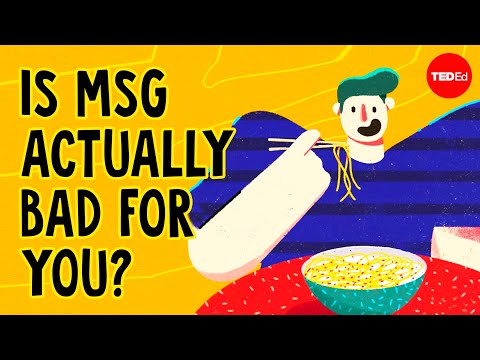
What is Msg and is it Actually Bad for You Sarah E Tracy
In 1968, Dr. Robert Ho Man Kwok felt ill after dinner at a Chinese restaurant and wrote a letter to a medical journal connecting his symptoms to MSG. His letter would change the world’s relationship with MSG, inspiring international panic, biased science, and sensationalist journalism for the next 40 years. So what is this seasoning, and is it actually bad for you? Sarah E. Tracy investigates.

These Salamanders Snack on Each Other but Don T Die Luis Zambrano
Axolotls are one of science’s most studied animals. Why, you ask? These extraordinary salamanders are masters of regeneration: they can flawlessly regenerate body parts ranging from amputated limbs and crushed spines to parts of their eyes and brains. So, how do they do it? And what other secrets are they keeping? Luis Zambrano explores the baffling biology of the axolotl.

How Would You Finish the Sentence Imagine If Sir Ken Robinson
Sir Ken Robinson believed that humans have an inexhaustible power: our imaginations. We don't just live in the world as we find it— we use our creativity to mold and reimagine our world with art, scientific theories, and technology. So, how would you choose to reimagine the world? What do we take for granted? What would you change? Remember, the only limit is your own imagination...

Why Can T We Talk About Periods Jen Gunter
In this revelatory talk, gynecologist and author Jen Gunter explains how menstrual shame silences and represses — and leads to the spread of harmful misinformation and the mismanagement of pain. Declaring the era of the menstrual taboos over, she delivers a clear, much-needed lesson on the once-mysterious mechanics of the uterus.

What Makes a Language a Language Martin Hilpert
Outside of China, Mandarin and Cantonese are often referred to as Chinese dialects, despite being even more dissimilar than Spanish and Italian. On the other hand, speakers of Danish, Norwegian, and Swedish, which are three distinct languages, can usually communicate with each other in their native tongues. So, when is speech considered a dialect versus a language? Martin Hilpert investigates.

What Would Happen If You Lost Your Sense of Touch Antonio Cataldo
We don’t often think of touch as being a vital part of movement, but touch is one part of a network that oversees all the sensations arising from the surface and interior of our bodies. Touch, pain, temperature, and our spatial awareness are regulated by this system. So, how exactly do our brains process these sensations? And what happens when something goes wrong? Antonio Cataldo investigates.