general
Resources
View all
The Material That Could Change the World for a Third Time
Today roads, sidewalks, bridges, and skyscrapers are made of a material called concrete (aka cement). There’s three tons of it for every person on Earth. It’s also played a surprisingly large role in rising global temperatures over the last century. What exactly makes concrete problematic, and what can we do to fix it? Explore how scientists are working to create a more sustainable concrete.

TED-Ed: Do You Really Need 10,000 Steps a Day?
For years, Jean Béliveau walked from country to country, with the goal of circumnavigating the globe on foot. While few people have the time or desire to walk such extreme lengths, research shows that adding even a modest amount of walking to your daily routine can dramatically improve your health. So, what exactly happens to your body when you increase your step count? Shannon Odell investigates.

TED-Ed: What Is a Gig Economy?
A 2016 survey of freelancers in six countries found that those who freelance by choice– 70% of respondents– were happier than people in traditional jobs, specifically when it came to things like independence and flexibility in terms of where and when they work. So what does it take to be a successful freelancer? Explore the benefits and drawbacks of the gig economy.
TED-Ed: How Will AI Change the World?
In the coming years, artificial intelligence is probably going to change your life— and likely the entire world. But people have a hard time agreeing on exactly how AI will affect our society. Can we build AI systems that help us fix the world? Or are we doomed to a robotic takeover? Explore the limitations of artificial intelligence and the possibility of creating human-compatible technology.

TED-Ed: A Day in the Life of the Oracle of Delphi
As the sun rises over Delphi in 500 BCE, Aristonike hurries to the temple of Apollo where a single oracle known as the Pythia communicates Apollo’s will. Reserved only for women, this is the most important job in the city— and one that Aristonike will soon have to take on if city council officials decide she meets their standards. Mark Robinson outlines a day in the life of an Oracle-in-training.
TED-Ed: What Causes Insomnia?
What keeps you up at night? Pondering deep questions? Excitement about a big trip? Stress about unfinished work? What if the very thing keeping you awake was stress about losing sleep? This seemingly unsolvable loop is at the heart of insomnia, the world’s most common sleep disorder. So what is insomnia? And is there any way to break the cycle? Dan Kwartler details the science of insomnia.

TED-Ed: Would You Sacrifice One Person to Save Five?
Imagine you’re watching a runaway trolley barreling down the tracks, straight towards five workers. You happen to be standing next to a switch that will divert the trolley onto a second track. Here’s the problem: that track has a worker on it, too — but just one. What do you do? Do you sacrifice one person to save five? Eleanor Nelsen details the ethical dilemma that is the trolley problem.

TED-Ed: Making Sense of How Life Fits Together
From something as miniscule as a cell to the biosphere we all call home, living things fit together in numerous interesting ways. Bobbi Seleski catalogs biology from our body and beyond, tracking how unicellular organisms, tissues, organs, organ systems, organisms, populations, communities, ecosystems, and our biosphere build off of each other and work together.
TED-Ed: These Companies with No CEO Are Thriving
Co-ops are a big part of the global economy: they employ 10% of the world’s workforce and over two trillion dollars flow through their doors every year. At a co-op, there’s no single person with overarching, top-down power over everyone else, like a CEO at a traditional company. So what exactly is a co-op and how does it work? Explore the different types of cooperatives and how they operate.
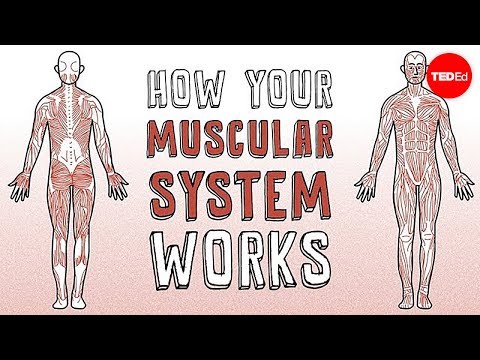
TED-Ed: How Your Muscular System Works
Each time you take a step, 200 muscles work in unison to lift your foot, propel it forward, and set it down. It’s just one of the many thousands of tasks performed by the muscular system: this network of over 650 muscles covers the body and is the reason we can blink, smile, run, jump, and stand upright. So how does it work? Emma Bryce takes you into the body to find out.

TED-Ed: How Memories Form and How We Lose Them
Think back to a really vivid memory. Got it? Now try to remember what you had for lunch three weeks ago. That second memory probably isn’t as strong—but why not? Why do we remember some things, and not others? And why do memories eventually fade? Catharine Young gives the basics on memory and memory loss.
TED-Ed: What Causes Cavities?
When a team of archeologists recently came across some 15,000-year-old human remains, they made an interesting discovery: the teeth of those ancient humans were riddled with holes. So what causes cavities, and how can we avoid them? Mel Rosenberg takes us inside our teeth to find out.

TED-Ed: What Would Happen If You Didn't Drink Water?
Water is essentially everywhere in our world, and the average human is composed of between 55 and 60% water. So what role does water play in our bodies, and how much do we actually need to drink to stay healthy? Mia Nacamulli details the health benefits of hydration.

TED-Ed: How Do Hard Drives Work?
The modern hard drive is an object that can likely hold more information than your local library. But how does it store so much information in such a small space? Kanawat Senanan details the generations of engineers, material scientists, and quantum physicists who influenced the creation of this incredibly powerful and precise tool.

TED-Ed: Where Does Gold Come From?
Did you know that gold is extraterrestrial? Instead of arising from our planet’s rocky crust, it was actually cooked up in space and is present on Earth because of cataclysmic stellar explosions called supernovae. CERN Scientist David Lunney outlines the incredible journey of gold from space to Earth.

TED-Ed: What Happens to Plastic You Throw Away?
We’ve all been told that we should recycle plastic bottles and containers. But what actually happens to the plastic if we just throw it away? Emma Bryce traces the life cycles of three different plastic bottles, shedding light on the dangers these disposables present to our world.

Why Does Ice Float in Water George Zaidan and Charles Morton
Water is a special substance for several reasons, and you may have noticed an important one right in your cold drink: ice. Solid ice floats in liquid water, which isn't true for most substances. But why? George Zaidan and Charles Morton explain the science behind how how hydrogen bonds keep the ice in your glass (and the polar ice caps) afloat.

Planning for the End of Oil Richard Sears
As the world's attention focuses on the perils of oil exploration, we present Richard Sears' talk from early February 2010. Sears, an expert in developing new energy resources, talks about our inevitable and necessary move away from oil. Toward ... what?

The Hidden Power of Smiling Ron Gutman
Ron Gutman reviews a raft of studies about smiling, and reveals some surprising results. Did you know your smile can be a predictor of how long you'll live -- and that a simple smile has a measurable effect on your overall well-being? Prepare to flex a few facial muscles as you learn more about this evolutionarily contagious behavior.

What We Can Learn from Galaxies Far Far Away Henry Lin
In a fun, excited talk, teenager Henry Lin looks at something unexpected in the sky: galaxy clusters. By studying the properties of the universe's largest pieces, says the Intel Science Fair winner, we can learn quite a lot about our own world and galaxy.