earth-science
Resources
View all
TED-Ed: A Climate Change Solution Under Our Feet
There's two times more carbon in the Earth's soil than in all of its vegetation and the atmosphere — combined. Biogeochemist Asmeret Asefaw Berhe dives into the science of soil and shares how we could use its awesome carbon-trapping power to offset climate change.

TED-Ed: Why Is Biodiversity So Important?
Our planet’s diverse, thriving ecosystems may seem like permanent fixtures, but they’re actually vulnerable to collapse. Jungles can become deserts, and reefs can become lifeless rocks. What makes one ecosystem strong and another weak in the face of change? Kim Preshoff details why the answer, to a large extent, is biodiversity.
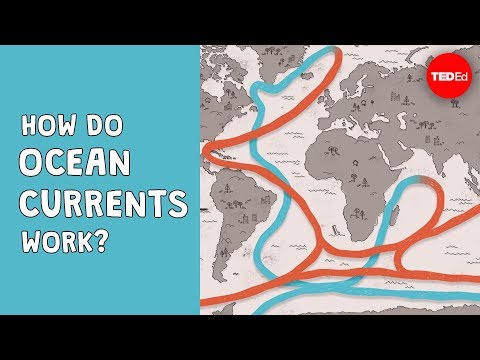
TED-Ed: How Do Ocean Currents Work?
In 1992, a cargo ship carrying bath toys got caught in a storm. Shipping containers washed overboard, and the waves swept 28,000 rubber ducks and other toys into the North Pacific. But they didn’t stick together -- the ducks have since washed up all over the world. How did this happen? Jennifer Verduin dives into the science of ocean currents.

TED-Ed: The Carbon Cycle
What exactly is the carbon cycle? Nathaniel Manning provides a basic look into the cyclical relationship of carbon, humans and the environment.
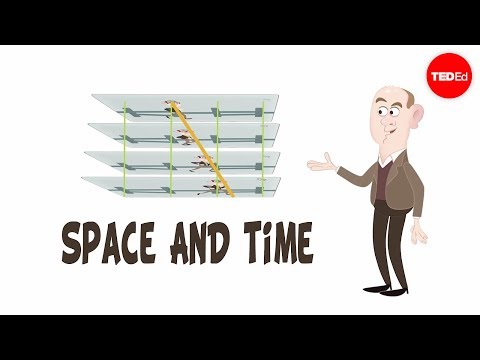
TED-Ed: The Fundamentals of Space-Time
Space is where things happen. Time is when things happen. And sometimes, in order to really look at the universe, you need to take those two concepts and mash them together. In this first lesson of a three-part series on space-time, hilarious hosts Andrew Pontzen and Tom Whyntie go through the basics of space and time individually, and use a flip book to illustrate how we can begin to look at them together.

TED-Ed: Where Does Gold Come From?
Did you know that gold is extraterrestrial? Instead of arising from our planet’s rocky crust, it was actually cooked up in space and is present on Earth because of cataclysmic stellar explosions called supernovae. CERN Scientist David Lunney outlines the incredible journey of gold from space to Earth.

TED-Ed: What Happens to Plastic You Throw Away?
We’ve all been told that we should recycle plastic bottles and containers. But what actually happens to the plastic if we just throw it away? Emma Bryce traces the life cycles of three different plastic bottles, shedding light on the dangers these disposables present to our world.

TED-Ed: How Do Tornadoes Form?
Tornadoes are the most violent storms on Earth, with wind velocities that can exceed 200 miles per hour. How do these terrifying cyclones form? Meteorologist James Spann sheds light on the lifespan of tornadoes as they go from supercell thunderstorms to terrible twisters before eventually dissolving back into thin air.

Could we survive prolonged space travel? - Lisa Nip
The biological challenges of long-distance space exploration.
The beginning of the universe, for beginners - Tom Whyntie
Learn about the Big Bang and the origins of everything.

TED-Ed: Could We Actually Live on Mars?
There's a lot of talk these days about when and how we might all move to Mars. But what would it actually be like to live there? Mari Foroutan details the features of Mars that are remarkably similar to those of Earth — and those that can only be found on the red planet.

TED-Ed: What Is the Universe Made Of?
The atoms around you have existed for billions of years -- and most originated in the flaming, gaseous core of a star. Dennis Wildfogel tells the captivating tale of these atoms' long journeys from the Big Bang to the molecules they form today.
The Tragic Myth of the Sun God s Son Iseult Gillespie
Every morning, Helios unleashed his golden chariot, and set out across the sky. As the Sun God transformed dawn into day, he thought of his son, Phaethon, below. To prove to Phaethon that he was truly his father, Helios decided to grant him anything he wanted. Unfortunately, what Phaethon wanted was to drive Helios’ chariot for a day. Iseult Gillespie shares the tragic myth of the charioteer.

The Myth of the Original Star Crossed Lovers Shannon Zhao
In the court of the Jade Emperor, a young princess had a special skill: she could pluck clouds from the sky and spin them into the softest robes. But her craft was the same day after day, and she longed for new inspiration. So the Queen Mother granted her permission to visit Earth. The weaver soon fell in love with the land— and a cowherd. Shannon Zhao details the myth of the star-crossed lovers.

The Princess Who Conquered Magic Mountain Malay Bera
Inspired by a king’s visit, a trio of siblings began building a palace, traveling far and wide to collect rare jewels, seeds, and marble. A holy man stopped by and told them of a Magic Mountain, east of north and north of east, where they’d find their most meaningful treasures. But, he said, only a true hero could complete the journey. Malay Bera shares the Bengali tale of Kiranmala's quest.

The City That Wasted Nothing Roman Krznaric
400 years ago, Edo was on the verge of ecological collapse. Years of intense logging had led to massive deforestation and the city faced timber shortages, severe erosion, and frequent flooding. But over just a few decades, Edo became one of the most sustainable and efficient cities in history. So, how did this come about? Roman Krznaric explores Edo's transformation into a circular economy.

5 Signs Youre a Good Driver Iseult Gillespie
As one of the agency’s best employees, you’ve been selected as a finalist to take on a new top-secret mission. You’ve already shown your aptitude for surveillance and disguise, but the agency’s looking to test one last critical skill: how well you can drive. Can you prove that you're a good driver? Iseult Gillespie shares tips on how to best tackle the challenges of driving and build confidence.

What Earth in 2125 Could Look Like Iseult Gillespie
Faced with the realities of current crises, it’s easy to assume our world is headed in a bleak direction. But there’s good reason to be hopeful— with developments in science and technology, a positive future is more viable than ever before. So, what if the future was awesome? Iseult Gillespie explores what three cities could look like in 100 years if we harness the tools we have at our disposal.
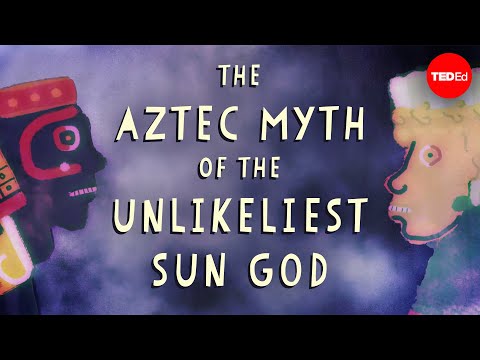
The Aztec Myth of the Unlikeliest Sun God Kay Almere Read
Nanahuatl, weakest of the Aztec gods, sickly and covered in pimples, had been chosen to form a new world. There had already been four worlds, each set in motion by its own “Lord Sun,” and each had been destroyed. For a new world to be created, another god had to leap into the great bonfire and become the fifth sun. Will Nanahuatl complete the sacrifice? Kay A. Read recounts the myth of the sun.

The Cambodian Myth of Lightning Thunder and Rain Prumsodum Ok
"Moni Mekhala Ream Eyso" is the most sacred dance drama in Cambodia. It is performed every year in the buong suong ceremony, and explains the origins of lightning, thunder and rain according to the Khmer people. Prumsodun Ok tells this empowering tale that still enlightens our world today.