Discover Resources
Browse curated homeschool resources from the community
Eye vs Camera Michael Mauser
Your eyes don’t always capture the world exactly as a video camera would. But the eyes are remarkably efficient organs, the result of hundreds of millions of years of coevolution with our brains. Michael Mauser outlines the similarities and differences between your eye and a video camera.
Is This the Most Successful Animal Ever Nigel Hughes
Prevailing for around 270 million years and encompassing more than 20,000 distinct species, trilobites are some of the most successful lifeforms in Earth’s history. When they sprung into existence, they were among the most diverse and sophisticated organisms on the planet and so had a unique perspective on the ancient world. Nigel Hughes details the rise and fall of these hardy creatures.
Should You Trust Your First Impression Peter Mende Siedlecki
You can’t help it; sometimes, you just get a bad feeling about someone that’s hard to shake. So, what's happening in your brain when you make that critical (and often lasting) first judgment? Peter Mende-Siedlecki shares the social psychology of first impressions -- and why they may indicate that, deep down, people are basically good.

How Do Cold Packs Get Cold so Fast John Pollard
If you stick water in the freezer, it will take a few hours to freeze into ice. How is it, then, that cold packs go from room temperature to near freezing in mere seconds? John Pollard details the chemistry of the cold pack, shedding light on the concepts of energetics and entropy along the way.

Ugly History Witch Hunts Brian a Pavlac
In the German town of Nördlingen in 1593, innkeeper Maria Höll found herself accused of witchcraft. She was arrested for questioning, and denied the charges. She insisted she wasn’t a witch through 62 rounds of torture before her accusers finally released her. Other accused witches weren’t so “lucky." Why did these witch hunts occur? Brian A. Pavlac digs into this horrific chapter in human history.
Nina Jablonski Breaks the Illusion of Skin Color
Nina Jablonski says that differing skin colors are simply our bodies' adaptation to varied climates and levels of UV exposure. Charles Darwin disagreed with this theory, however, as Jablonski explains, Darwin did not have access to NASA. Nina Jablonski is author of Skin: A Natural History, a close look at human skin's many remarkable traits: its colors, its sweatiness, the fact that we decorate it.
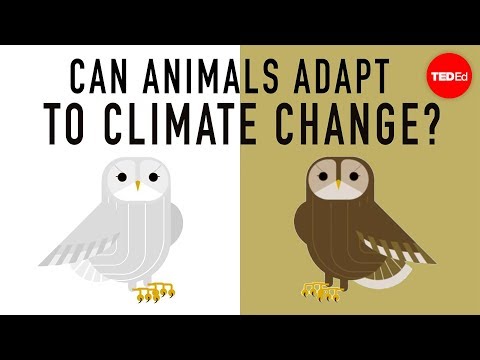
Can Wildlife Adapt to Climate Change Erin Eastwood
With rising temperatures and seas, massive droughts, and changing landscapes, successfully adapting to climate change is increasingly important. For humans, this can mean using technology to find solutions. But for some plants and animals, adapting to these changes involves the most ancient solution of all: evolution. Erin Eastwood explains how animals are adapting to climate change.

Want to Know If You Re Pregnant Use This Frog Carly Anne York
In the early 20th century, pregnancy testing required a slippery piece of equipment: a female African clawed frog. For decades, hospitals and research labs had a trusted supply of these handy creatures, employing their help in testing for pregnancy and in numerous other scientific endeavors. So what makes these frogs so special? Carly Anne York shares the secrets of these remarkable amphibians.

Jellyfish Predate Dinosaurs How Have They Survived so Long David Gruber
Some are longer than a blue whale. Others are barely larger than a grain of sand. One species unleashes one of the most deadly venoms on earth; another holds a secret that’s behind some of the greatest breakthroughs in biology. They’ve inhabited the ocean for at least half a billion years, and they’re still flourishing. David Gruber investigates the secret powers of jellyfish.
Birds Aren T Real How a Conspiracy Takes Flight Peter Mcindoe
Peter McIndoe isn't a fan of birds. In fact, he has a theory about them that might shock you. Listen along to this eye-opening talk as it takes a turn and makes a larger point about conspiracies, truth and belonging in divisive times.

The Most Dangerous Elements on the Periodic Table Shannon Odell
Within the periodic table loom many potential hazardous elements. Some elements are dangerous due to their toxicity. Others are dangerous because of how they respond, react, or even explode in the outside environment. And perhaps the most threatening elements are those that silently emit energy. So, which substances on the periodic table are the most dangerous? Shannon Odell investigates.
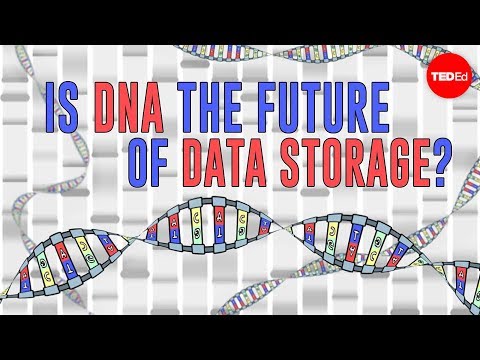
Is Dna the Future of Data Storage Leo Bear Mcguinness
In the event of a nuclear fallout, every piece of digital and written information could all be lost. Luckily, there is a way that all of human history could be recorded and safely stored beyond the civilization’s end. And the key ingredient is inside all of us: our DNA. Leo Bear-McGuinness explains.

Why Do Buildings Fall in Earthquakes Vicki V May
Earthquakes have always been a terrifying phenomenon, and they’ve become more deadly as our cities have grown — with collapsing buildings posing one of the largest risks. But why do buildings collapse in an earthquake? And how can it be prevented? Vicki V. May explains the physics of why it is not the sturdiest buildings, but the smartest, that will remain standing.

The Global Movement to Restore Nature s Biodiversity
Biodiversity is the key to life on Earth and reviving our damaged planet, says ecologist Thomas Crowther. Sharing the inside story of his headline-making research on reforestation, which led to the UN's viral Trillion Trees Campaign, Crowther introduces Restor: an expansive, informative platform built to enable anyone, anywhere to help restore the biodiversity of Earth's ecosystems.

Climate Change Will Displace Millions Here s How We Prepare Colette Pichon Battle
Scientists predict climate change will displace more than 180 million people by 2100 -- a crisis of "climate migration" the world isn't ready for, says disaster recovery lawyer and Louisiana native Colette Pichon Battle. In this passionate, lyrical talk, she urges us to radically restructure the economic and social systems that are driving climate migration.

The Neuroscience of Imagination Andrey Vyshedskiy
Imagine, for a second, a duck teaching a French class. A ping-pong match in orbit around a black hole. A dolphin balancing a pineapple. You probably haven’t actually seen any of these things. But you could imagine them instantly. How does your brain produce an image of something you’ve never seen? Andrey Vyshedskiy details the neuroscience of imagination.

Can You Survive a Komodo Dragon Bite Achmad Ariefiandy
Clambering through the bush on one of Indonesia’s Lesser Sunda Islands, suddenly you spy a Komodo dragon in the clearing ahead. Forked tongue flickering; sharp, saw-like teeth glimmering; and strong, scaly body stretching up to 3 meters, Komodo dragons are formidable. So, what should you do? Are you doomed? Achmad Ariefiandy shares what we know about the world's largest lizards.

Encyclopedic Entry: Erosion
Erosion is the geological process in which earthen materials are worn away and transported by natural forces such as wind or water.
Could One Vaccine Protect Against Everything
There’s a vaccine being developed now that would protect you against every strain of the flu— even ones that don’t exist yet. But influenza is constantly mutating, so is a universal vaccine even possible? And how do you design a vaccine that will be effective against future strains? Explore how scientists are developing new ways to help our immune systems fight viruses.

Dead Stuff the Secret Ingredient in Our Food Chain John C Moore
When you picture the lowest levels of the food chain, you might imagine herbivores happily munching on lush, living green plants. But this idyllic image leaves out a huge (and slightly less appetizing) source of nourishment: dead stuff. John C. Moore details the "brown food chain," explaining how such unlikely delicacies as pond scum and animal poop contribute enormous amounts of energy to our ecosystems.
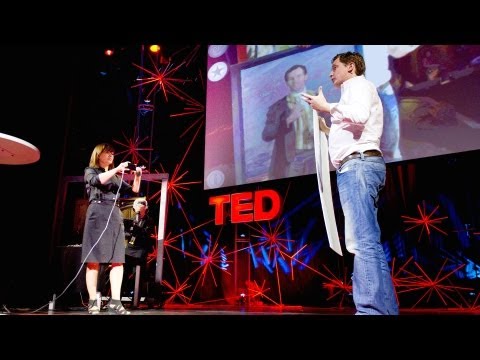
Image Recognition That Triggers Augmented Reality Matt Mills
Matt Mills and Tamara Roukaerts demonstrate Aurasma, a new augmented reality tool that can seamlessly animate the world as seen through a smartphone. Going beyond previous augmented reality, their "auras" can do everything from making a painting talk to overlaying live news onto a printed newspaper.