Discover Resources
Browse curated homeschool resources from the community

TED-Ed: Environmental Science Lessons
TED-Ed celebrates the ideas of teachers and students around the world. Discover hundreds of animated lessons, create customized lessons, and share your big ideas.

AmblesideOnline Nature Study Rotation & Resources
Charlotte Mason homeschool curriculum
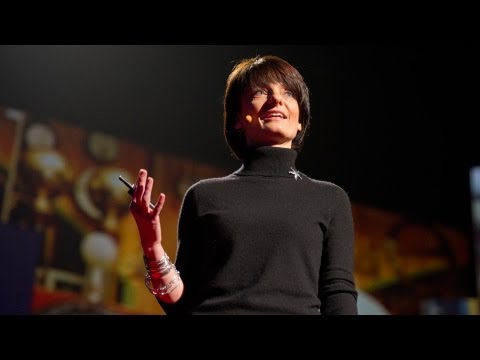
From Mach 20 Glider to Humming Bird Drone Regina Dugan
"What would you attempt to do if you knew you could not fail?" asks Regina Dugan, then director of DARPA, the Defense Advanced Research Projects Agency. In this breathtaking talk she describes some of the extraordinary projects -- a robotic hummingbird, a prosthetic arm controlled by thought, and, well, the internet -- that her agency has created by not worrying that they might fail. (Followed by a Q&A with TED's Chris Anderson)
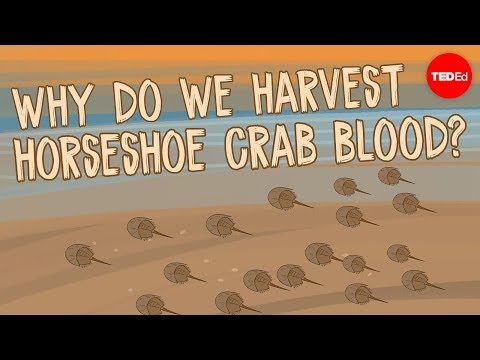
Why Do We Harvest Horseshoe Crab Blood Elizabeth Cox
During the warmer months, especially at night during the full moon, horseshoe crabs emerge from the sea to spawn. Waiting for them are teams of lab workers, who capture the horseshoe crabs by the hundreds of thousands, take them to labs, harvest their cerulean blood, then return them to the sea. Why? Elizabeth Cox illuminates the incredible properties of horseshoe crab blood.

How Bones Make Blood Melody Smith
Bones might seem rock-solid, but they’re actually quite porous inside. Most of the large bones of your skeleton have a hollow core filled with soft bone marrow. Marrow's most essential elements are blood stem cells and for patients with advanced blood cancers like leukemia and lymphoma, the best chance for a cure is often a bone marrow transplant. How does this procedure work? Melody Smith explains.

The Colossal Consequences of Supervolcanoes Alex Gendler
In 1816, Europe and North America were plagued by heavy rains, odd-colored snow, famines, strange fogs and very cold weather well into June. Though many people believed it to be the apocalypse, this “year without a summer” was actually the result of a supervolcano eruption that happened one year earlier over 1,000 miles away. Alex Gendler describes the history and science of these epic eruptions.

The Good and the Beautiful Marine Biology (Free)
Dive into learning using this free homeschool science curriculum! Don't miss our free science videos for kids and other free resources!

How Cosmic Rays Help Us Understand the Universe Veronica Bindi
We only know 4% of what the universe is made up of. Can we also know what lies beyond our galaxy ... and if there are undiscovered forms of matter? Luckily, we have space messengers — cosmic rays — that bring us physical data from parts of the cosmos beyond our reach. Veronica Bindi explains what cosmic rays are, and how they transmit information about our universe from the great beyond.
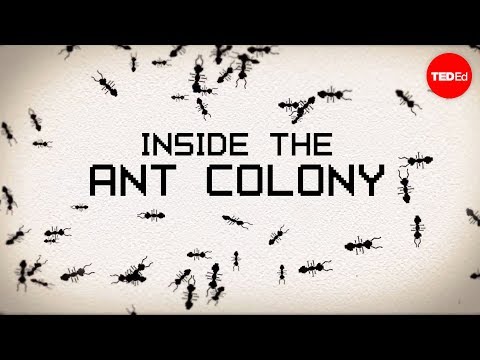
Inside the Ant Colony Deborah M Gordon
Ants have one of the most complex social organizations in the animal kingdom; they live in structured colonies that contain different types of members who perform specific roles. Sound familiar? Deborah M. Gordon explains the way these incredible creatures mate, communicate and source food, shedding light on how their actions can mimic and inform our own behavior.
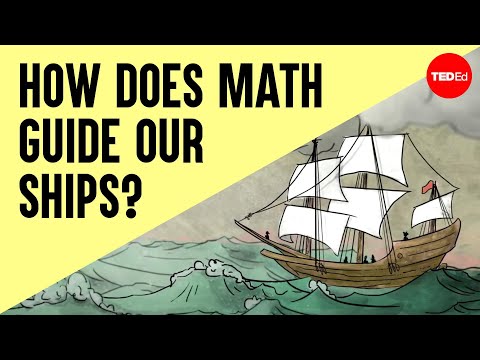
How Does Math Guide Our Ships at Sea George Christoph
Without math, would our seafaring ancestors ever have seen the world? Great mathematical thinkers and their revolutionary discoveries have an incredible story. Explore the beginnings of logarithms through the history of navigation, adventure and new worlds.
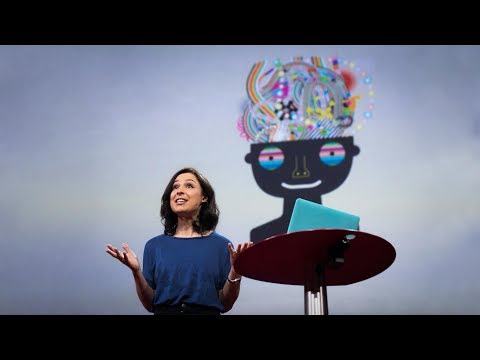
How Boredom Can Lead to Your Most Brilliant Ideas Manoush Zomorodi
Do you sometimes have your most creative ideas while folding laundry, washing dishes or doing nothing in particular? It's because when your body goes on autopilot, your brain gets busy forming new neural connections that connect ideas and solve problems. Manoush Zomorodi explains the connection between spacing out and creativity. Disclaimer: This video contains a curse word which may be unsuitable for younger audiences.

What is the Universe Expanding Into Sajan Saini
The universe began in a Big Bang nearly fourteen billion years ago, and has been expanding ever since. But how does the universe expand and what is it expanding into? Sajan Saini explains the existing theories around the Big Bang and what, if anything, lies beyond our universe.

Are We Ready for Neo Evolution Harvey Fineberg
Medical ethicist Harvey Fineberg shows us three paths forward for the ever-evolving human species: to stop evolving completely, to evolve naturally -- or to control the next steps of human evolution, using genetic modification, to make ourselves smarter, faster, better. Neo-evolution is within our grasp. What will we do with it?