Discover Resources
Browse curated homeschool resources from the community
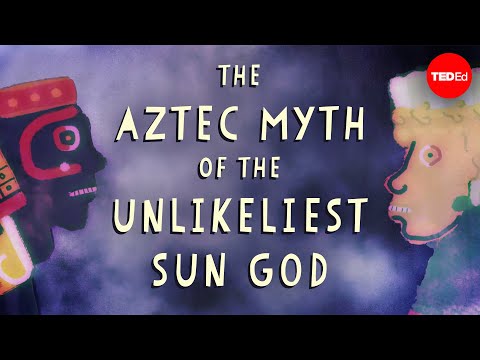
The Aztec Myth of the Unlikeliest Sun God Kay Almere Read
Nanahuatl, weakest of the Aztec gods, sickly and covered in pimples, had been chosen to form a new world. There had already been four worlds, each set in motion by its own “Lord Sun,” and each had been destroyed. For a new world to be created, another god had to leap into the great bonfire and become the fifth sun. Will Nanahuatl complete the sacrifice? Kay A. Read recounts the myth of the sun.
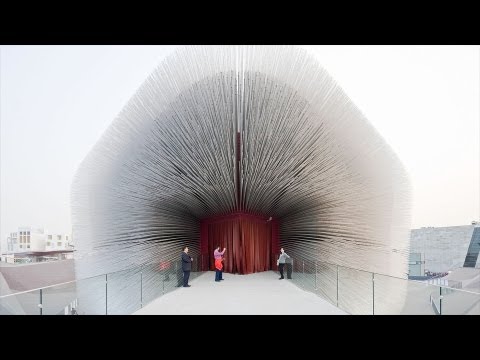
Building the Seed Cathedral Thomas Heatherwick
A future more beautiful? Architect Thomas Heatherwick shows five recent projects featuring ingenious bio-inspired designs. Some are remakes of the ordinary: a bus, a bridge, a power station ... And one is an extraordinary pavilion, the Seed Cathedral, a celebration of growth and light.

Pavlovian Reactions Aren T Just for Dogs Benjamin N Witts
Dr. Ivan Pavlov’s groundbreaking work revealed that a dog will respond to neutral stimuli, such as a bell, in the same way that it will respond to, say, mouth-watering food. This research is widely applicable beyond a dog’s salivation. Benjamin N. Witts sketches a few situations in which people are conditioned to react in a Pavlovian way, from dating to parenting.


3 Bizarre and Delightful Ancient Theories About Bird Migration Lucy Cooke
In 1822, Count von Bothmer shot down a stork in Germany. However, the bird had already been impaled by a yard-long wooden spear. The stork had been speared in Africa and then flew over 2,500 km. This astonishing flight proved to be an essential clue in a mystery that had plagued scientists for centuries: the seasonal disappearance of birds. Lucy Cooke digs into the discovery of bird migration.

Licking Bees and Pulping Trees the Reign of a Wasp Queen Kenny Coogan
As the sun rises, something royal stirs inside a pile of firewood. It's the wasp queen; one of thousands who mated in late autumn and hibernated through the winter. Now she must emerge into the spring air to begin her reign. This queen is the lone survivor of her old hive, and now, she must become the foundress of a new one. Kenny Coogan details a year in the life of a wasp queen.

Why Do Snakes Have Forked Tongues Cella Wright
An alligator snapping turtle lures its prey using a blood-engorged tongue that resembles a wriggling worm. And it’s far from the only animal doing tongue trickery. Tongues in the animal kingdom vary widely — from texture and length, to shape and dexterity. So, what's the point of having so many different kinds of tongues? Cella Wright explores how different species use the appendage to survive.
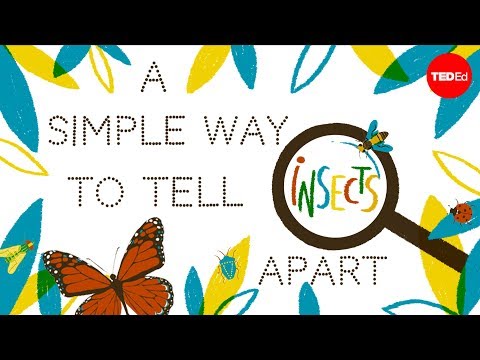
A Simple Way to Tell Insects Apart Anika Hazra
There are nearly a million known insect species in the world, but most have one of just five common types of mouthparts. Why is this information useful to scientists? Anika Hazra explains how the features of an insect’s mouthparts can help identify which order it belongs to, while also providing clues about how it evolved and what it feeds on.

How Farming Planted Seeds for the Internet Patricia Russac
What does farming have to do with invention and innovation? Permanent residences, division of labor, central government, and complex technologies--all essential for advancing civilizations--could not have been developed without the move from hunting-gathering to farming. Patricia Russac explores how farming was a major innovation leading to the civilization we know today.

The Oddities of the First American Election Kenneth C Davis
How did George Washington become the first president of the United States in 1789? Who got to decide--or vote--who would become president, and how did they decide the winner? Kenneth C. Davis unveils the surprising story behind America’s first presidential election.
How One Scientist Took on the Chemical Industry Mark Lytle
In 1958, after receiving a letter describing the deaths of songbirds due to the pesticide known as DDT, Rachel Carson began an investigation into the misuse of chemicals and their toll on nature. In 1962, she published her findings in “Silent Spring,” which immediately drew both applause and impassioned dissent. How did this biologist and writer ignite such controversy? Mark Lytle investigates.

Parasite Tales the Jewel Wasp s Zombie Slave Carl Zimmer
This is stranger than science fiction. The jewel wasp and the cockroach have a disgusting and fascinating parasitic relationship. The jewel wasp stuns the cockroach, and months later, a jewel wasp hatches out of the cockroach. At TEDYouth 2012, Carl Zimmer walks us through how this happens and why it personally fascinates him.

Is Marijuana Bad for Your Brain Anees Bahji
In 1970, marijuana was classified as a schedule 1 drug in the United States: the strictest designation possible, meaning it was completely illegal and had no recognized medical uses. Today, marijuana’s therapeutic benefits are widely acknowledged, but a growing recognition for its medical value doesn’t answer the question: is recreational marijuana use bad for your brain? Anees Bahji investigates.
Insights Into Cell Membranes Via Dish Detergent Ethan Perlstein
The cell membrane, like a good jacket, protects the cell from everything outside of it. How is it simultaneously sturdy, flexible, and capable of allowing the right things to pass through? Ethan Perlstein rediscovers the scientists and their research that have changed the way we study the membrane and the cell as a whole.

Why Did it Take so Long to Find Giant Squid Anna Rothschild
In 1873, fishermen glimpsed what they thought was a shipwreck. But when they probed the mass, it moved— and huge, serpentine appendages soon besieged their boat. One fisherman took an axe to the animal, and it disappeared in a cloud of ink, leaving behind definitive evidence that giant squids were more than mythical monsters. So, what do we know about these creatures? Anna Rothschild investigates.
How do viruses jump from animals to humans? - Ben Longdon
Learn how viruses make the leap from one species to another.
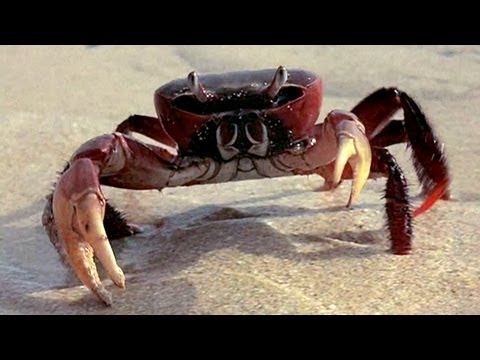
How Life Came to Land Tierney Thys
Spiders and crustaceans, also known as arthropods, led the charge from water to land--now outnumbering all terrestrial animals. But what about arthropods makes them so adaptable to life on land? Marine biologist Tierney Thys, and Noé Sardet and Sharif Mirshak of the Plankton Chronicles Project, shows us a world of fascinating animals and their habitats.