Discover Resources
Browse curated homeschool resources from the community
The Ferocious Predatory Dinosaurs of Cretaceous Sahara Nizar Ibrahim
In Cretaceous times (around 100 million years ago), North Africa was home to a huge river system and a bizarre menagerie of giant prehistoric predators -- including the Spinosaurus, a dinosaur even more fearsome than the Tyrannosaurus rex. Nizar Ibrahim uses paleontological and geological data to reconstruct this “River of Giants” in surprising detail.
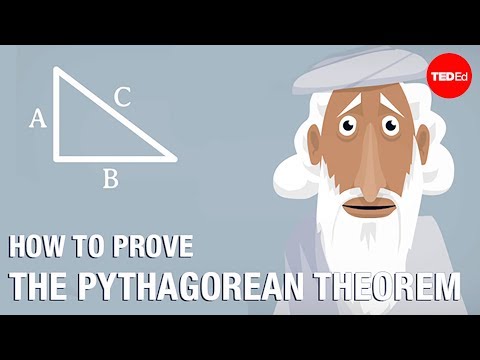
How Many Ways Are There to Prove the Pythagorean Theorem Betty Fei
What do Euclid, 12-year-old Einstein, and American President James Garfield have in common? They all came up with elegant proofs for the famous Pythagorean theorem, one of the most fundamental rules of geometry and the basis for practical applications like constructing stable buildings and triangulating GPS coordinates. Betty Fei details these three famous proofs.
CK-12 Chemistry Simulations
Discover a new way of learning Chemistry using Real World Simulations

Einstein s Twin Paradox Explained Amber L Stuver
On their 20th birthday, identical twin astronauts volunteer for an experiment. Terra will remain on Earth, while Stella will board a spaceship. Stella’s ship will travel to visit a star that is 10 light-years away, then return to Earth. As they prepare to part ways, the twins wonder what will happen when they’re reunited. Who will be older? Amber Stuver investigates the “Twin Paradox.”

How Much Does a Video Weigh Michael Stevens
What color is a mirror? How much does a video weigh? Michael Stevens, creator of the popular educational YouTube channel Vsauce, spends his day asking quirky questions like these. In this talk he shows how asking the right -- seemingly silly -- questions can make incredibly effective lessons.
Meet the Tardigrade the Toughest Animal on Earth Thomas Boothby
Without water, a human can only survive for about 100 hours. But there’s a creature so resilient that it can go without it for decades. This 1-millimeter animal can survive both the hottest and coldest environments on earth, and can even withstand high levels of radiation. Thomas Boothby introduces us to the tardigrade, one of the toughest creatures on Earth.

How Does Laser Eye Surgery Work Dan Reinstein
In 1948, Spanish ophthalmologist Jose Ignacio Barraquer Moner was fed up with glasses. He wanted a solution for blurry vision that fixed the eye itself, without relying on external aids. The surgery he eventually devised was called “keratomileusis,” and his technique focused on reshaping the cornea— what we now know as LASIK. So how does laser eye surgery actually work? Dan Reinstein explains.
Rachel Pike the Science Behind a Climate Headline
In 4 minutes, atmospheric chemist Rachel Pike provides a glimpse of the massive scientific effort behind the bold headlines on climate change, with her team -- one of thousands who contributed -- taking a risky flight over the rainforest in pursuit of data on a key molecule.
A Light Switch for Neurons Ed Boyden
Ed Boyden shows how, by inserting genes for light-sensitive proteins into brain cells, he can selectively activate or de-activate specific neurons with fiber-optic implants. With this unprecedented level of control, he's managed to cure mice of analogs of PTSD and certain forms of blindness. On the horizon: neural prosthetics. Session host Juan Enriquez leads a brief post-talk Q&A.

Animation Basics the Optical Illusion of Motion Ted Ed
How do animators make still images come to life? Are the images really moving, or are they merely an optical illusion? TED-Ed takes you behind the scenes to reveal the secret of motion in movies.

The Life Cycle of a Cup of Coffee a J Jacobs
How many people does it take to make a cup of coffee? For many of us, all it takes is a short walk and a quick pour. But this simple staple is the result of a globe-spanning process whose cost and complexity are far greater than you might imagine. AJ Jacobs traces the journey of this caffeinated elixir from seed to cup.

Gary Wolf the Quantified Self
At TED@Cannes, Gary Wolf gives a 5-min intro to an intriguing new pastime: using mobile apps and always-on gadgets to track and analyze your body, mood, diet, spending -- just about everything in daily life you can measure -- in gloriously geeky detail. Journalist Gary Wolf spends his days in pursuit of the most fascinating things. As a contributing editor at Wired, he's written about technology, mushroom hunters, venture capitalists
Smithsonian STEM Games: Shutterbugs and Tami's Tower
We offer free Smithsonian STEM games online or for download! Our games are designed with clear learning objectives, vetted by our team of curriculum experts, and are used by students around the world! Shutterbugs: Wiggle and Stomp Kindergarten | Physical Science Lions! Pandas! Naked mole rats? Come visit them all at Smithsonian’s National Zoo. We are on the lookout for animals that are swimming, running, wiggling, and stomping. Grab a camera and take some pictures of animals on the move! Shutterbugs teaches students how to describe movement and motion while visiting rare animals at the Smithsonian National Zoological Park. Each animal has coloring-page printouts, so you can print and color your favorite critter.

Mysteries of Vernacular Pants Jessica Oreck
From 4th Century Roman Saint Pantaleon to the trousers we wear on our legs, Jessica Oreck details the story of the word ‘pants.'
2 Questions to Uncover Your Passion and Turn it Into a Career Noeline Kirabo
What's your passion? Social entrepreneur Noeline Kirabo reflects on her work helping out-of-school young people in Uganda turn their passions into profitable businesses — and shares the two questions you can ask yourself to begin doing the same.

The Dust Bunnies That Built Our Planet Lorin Swint Matthews
Consider the spot where you’re sitting. Travel backwards in time and it might’ve been submerged at the bottom of a shallow sea, buried under miles of rock or floating through a molten landscape. But go back about 4.6 billion years, and you’d be in the middle of an enormous cloud of dust and gas orbiting a newborn star. What exactly is this cosmic dust? Lorin Matthews investigates.

Einstein s Miracle Year Larry Lagerstrom
As the year 1905 began, Albert Einstein faced life as a “failed” academic. Yet within the next twelve months, he would publish four extraordinary papers, each on a different topic, that were destined to radically transform our understanding of the universe. Larry Lagerstrom details these four groundbreaking papers.