Discover Resources
Browse curated homeschool resources from the community

Could You Survive the Real Twilight Zone Philip Renaud and Kenneth Kostel
You’re traveling deep beneath the ocean’s surface, where faint lights flicker and toothy grins flash. Your mission is to survive these depths and journey to the surface after sundown to feed. And as a hatchetfish, almost every other deep-sea creature is trying to eat you. Can you complete the quest? Philip Renaud and Kenneth Kostel share how to survive the ocean's Twilight Zone.

The End of History Illusion Bence Nanay
Time and time again, we’ve failed to predict that the technologies of the present will change the future. Recently, a similar pattern was discovered in our individual lives: we’re unable to predict change in ourselves. But is there anything wrong with assuming that who we are now is who we will continue to be? Bence Nanay details the consequences of seeing ourselves as finished products.
Give Yourself Permission to Be Creative Ethan Hawke
Reflecting on moments that shaped his life, actor Ethan Hawke examines how courageous expression promotes healing and connection with one another — and invites you to discover your own unabashed creativity.
The Good and the Beautiful Nature Notebook
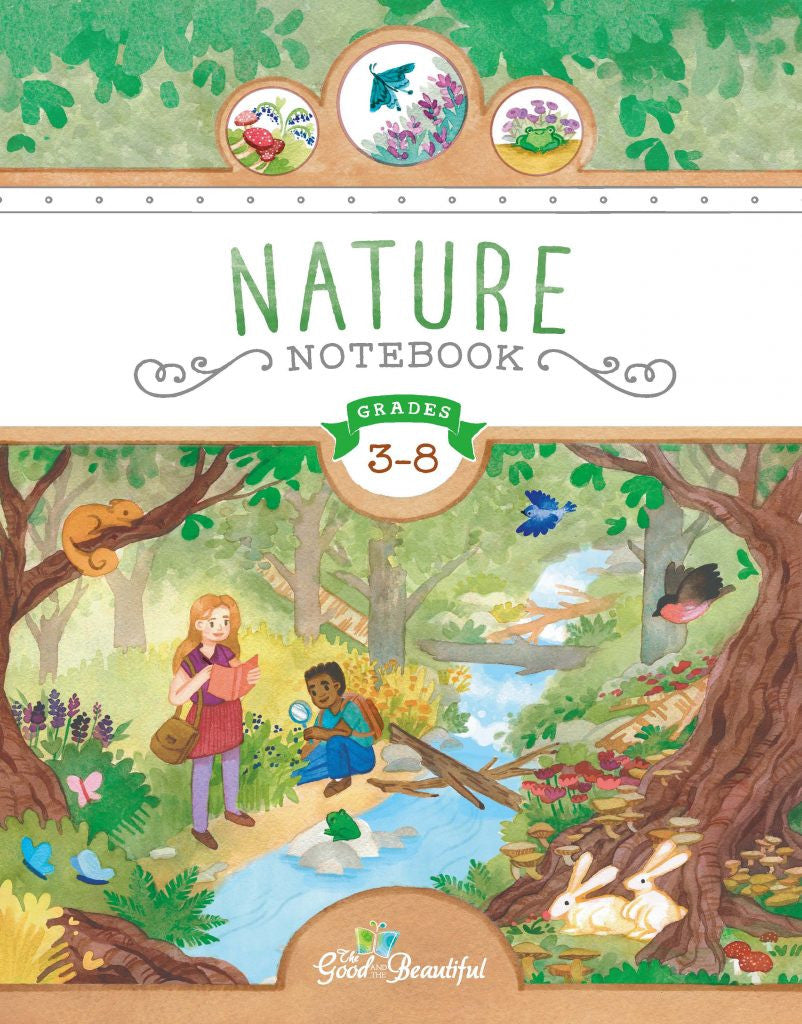
The goal of our Nature Notebook is to help your children explore nature and enjoy writing through journal prompts and activities that encourage exploration, imagination, love of nature, and appreciation for God and His wonderful creations. This 117-page notebook is beautifully designed and carefully planned to help chi
3 Questions to Ask Yourself About Everything You Do Stacey Abrams
How you respond to setbacks is what defines your character, says Stacey Abrams, the first black woman in the history of the United States to be nominated by a major party for governor. In an electrifying talk, she shares the lessons she learned from her campaign for governor of Georgia -- and some advice on how to change the world.
Ainissa Ramirez Magical Metals How Shape Memory Alloys Work
From robots to braces to the Mars Rover, see how a special kind of metal called shape memory alloys advance technology in everyday ways that we don’t always realize.

Mysteries of Vernacular Noise Jessica Oreck
The words noise, nausea, and naval all stem from the same Latin root. Jessica Oreck divulges how their spellings and meanings diverged from the original naus.

The Life Cycle of a Cup of Coffee a J Jacobs
How many people does it take to make a cup of coffee? For many of us, all it takes is a short walk and a quick pour. But this simple staple is the result of a globe-spanning process whose cost and complexity are far greater than you might imagine. AJ Jacobs traces the journey of this caffeinated elixir from seed to cup.

Is Space Trying to Kill Us Ron Shaneyfelt
How likely is it that a massive asteroid will do major damage to Earth and its inhabitants? What about the sun -- is it dying out anytime soon? And the supermassive black hole at the center of the Milky Way -- should we be worried about that? Ron Shaneyfelt assesses the dangers of space.
Should We Get Rid of Standardized Testing Arlo Kempf
Although standardized testing is a particularly hot topic in education right now, this approach to measurement has been in use for two millennia. And while the results of standardized testing can help us understand some things, they can also be misleading if used incorrectly. So what do these tests actually measure? And are they worthwhile? Arlo Kempf investigates.

The Immortal Cells of Henrietta Lacks Robin Bulleri
Imagine something small enough to float on a particle of dust that holds the keys to understanding cancer, virology, and genetics. Luckily for us, such a thing exists in the form of trillions upon trillions of human, lab-grown cells called HeLa. But where did we get these cells? Robin Bulleri tells the story of Henrietta Lacks, a woman whose DNA led to countless cures, patents, and discoveries.

Captain Charles Moore on the Seas of Plastic
Capt. Charles Moore of the Algalita Marine Research Foundation first discovered the Great Pacific Garbage Patch — an endless floating waste of plastic trash. Now he's drawing attention to the growing, choking problem of plastic debris in our seas.
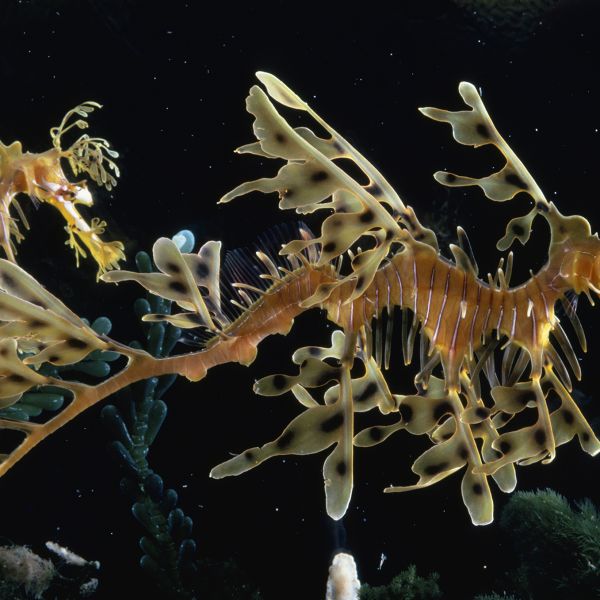
Encyclopedic Entry: Adaptation
Evolutionary adaptation, or simply adaptation, is the adjustment of organisms to their environment in order to improve their chances at survival in that environment.

Why is the Us Constitution so Hard to Amend Peter Paccone
When it was ratified in 1789, the US Constitution didn’t just institute a government by the people – it provided a way for the people to alter the Constitution itself. And yet, of the nearly 11,000 amendments proposed in the centuries since, only 27 have succeeded as of 2016. Peter Paccone explains why the US Constitution is so hard to change.
How playing an instrument benefits your brain - Anita Collins
The cognitive benefits of musical training.

How Folding Paper Can Get You to the Moon
Can folding a piece of paper 45 times get you to the moon? By seeing what happens when folding just one piece of paper, we see the unbelievable potential of exponential growth. This lesson will leave you wanting to grab a piece of paper to see how many times you can fold it! Lesson by Adrian Paenza, animation by TED-Ed.

Gary Wolf the Quantified Self
At TED@Cannes, Gary Wolf gives a 5-min intro to an intriguing new pastime: using mobile apps and always-on gadgets to track and analyze your body, mood, diet, spending -- just about everything in daily life you can measure -- in gloriously geeky detail. Journalist Gary Wolf spends his days in pursuit of the most fascinating things. As a contributing editor at Wired, he's written about technology, mushroom hunters, venture capitalists