Discover Resources
Browse curated homeschool resources from the community

All of the Energy in the Universe is George Zaidan and Charles Morton
The energy in the universe never increases or decreases -- but it does move around a lot. Energy can be potential (like a stretched-out rubber band waiting to snap) or kinetic (like the molecules that vibrate within any substance). And though we can't exactly see it, every time we cook dinner or shiver on a cold night, we know it's there. George Zaidan and Charles Morton get excited about energy.

How Can We Solve the Antibiotic Resistance Crisis Gerry Wright
Antibiotics: behind the scenes, they enable much of modern medicine. We use them to cure infectious diseases, and to safely facilitate everything from surgery to chemotherapy to organ transplants. But we’ve stopped discovering new ones and we’re at risk of losing them forever. How did we get into this situation? Gerry Wright shares what we can do about antibiotic resistance.

Easy Peasy Physics with Lab
Honors Physics Found a problem? Check here. Credits: 1 Prerequisite: At the very least, you need to have taken algebra and know basic trigonometry, which can be found at Khan Academy. Recommended: …

Mysteries of Vernacular Odd Jessica Oreck and Rachael Teel
Whether we’re talking all things unusual or mathematical, the origins of the word odd point to the Indo-European root uzdho, which means pointing upwards. Jessica Oreck and Rachael Teel explain the evolution from the term for a triangle to a number indivisible by two and, eventually, to the peculiar.

Is This the Most Valuable Thing in the Ocean David Biello
Whales frequently surface to take in air and let out massive plumes of waste. And while this slurry might seem disgusting, whale poop is much more desirable than it may seem. In fact, it may be one of the most important substances in the ocean — and the world. So, what makes whale poop so vital to our ecosystems? David Biello shares the surprising benefits of whale excrement.
The Tale of the Boy Who Tricked a Tyrant Paschal Kyiiripuo Kyoore
Shock seized the West African Dagara village as word travelled of a new decree. Completely disregarding time-honored naming rituals, the tyrannical chief declared that he alone would name the village’s children. But soon an unlikely challenger appeared: Yagangnaa, the boy who named himself. Paschal Kyiiripuo Kyoore shares the tale of the defiant boy and his battle of wits with the chief.

How Tall Can a Tree Grow Valentin Hammoudi
Reaching heights of over 100 meters, Californian sequoias tower over Earth’s other 60,000 tree species. But even these behemoths seem to have their limits: no sequoia on record has been able to grow taller than 130 meters. So what exactly is stopping these trees from growing taller, forever? Valentin Hammoudi investigates why trees have limited heights.
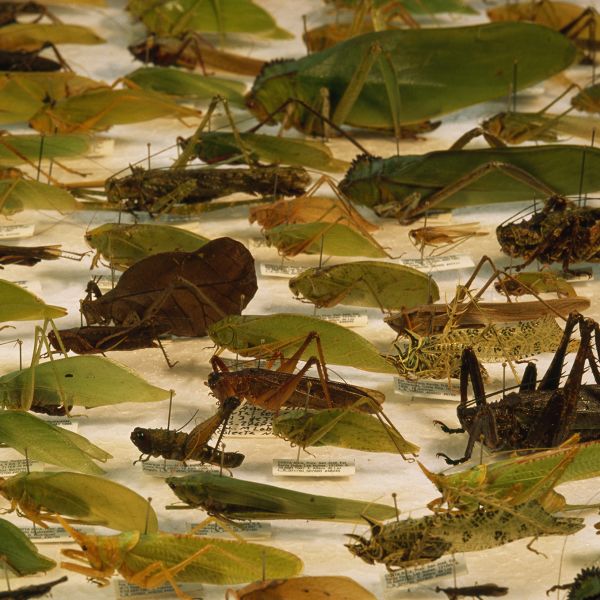
Encyclopedic Entry: Biodiversity
Biodiversity refers to the variety of living species on Earth, including plants, animals, bacteria and fungi. While Earth’s biodiversity is so rich that many species have yet to be discovered, many species are being threatened with extinction due to human activities, putting the Earth’s magnificent biodiversity at risk.

Why I Invited a Million People Beneath a Disappearing Glacier Joe Hanson
A couple of years ago, Joe Hanson took his camera beneath a disappearing glacier. What started as a lesson about physics turned into a discovery about how wonder itself can motivate us to save the world's wonders.


Why Do Some People Snore so Loudly Alayna Vaughan
A leather mask that clamps the mouth shut. A cannonball sewn into a soldier’s uniform. A machine that delivers sudden electrical pulses. These were all treatments for a problem that has haunted humanity for millennia: snoring. It might seem harmless, but snoring can be a sign of something more dangerous. So, what exactly causes snoring? Alayna Vaughan digs into the troublesome sleep disorder.
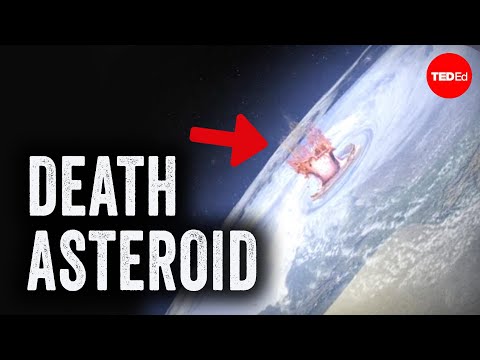
What Really Killed the Dinosaurs it Wasn T Just the Asteroid Sean P s Gulick
Sixty-six million years ago, near what’s now the Yucatán Peninsula, a juvenile sauropod feasted on horsetail plants on a riverbank. Earth was a tropical planet. Behemoth and tiny dinosaurs alike soared its skies and roamed its lands while reptiles and tentacled ammonites swept its seas. But, in an instant, everything would change. Sean P. S. Gulick details one of Earth's most devastating periods.

What Staying Up All Night Does to Your Brain Anna Rothschild
You’re just one history final away from a relaxing spring break. But you still have so much to study! You decide to follow in the footsteps of many students before you, and pull an all-nighter. So, what happens to your brain when you stay up all night? And does cramming like this actually help you prepare for a test? Anna Rothschild explores how a sleepless night impacts your cognitive function.

Is Fire a Solid a Liquid or a Gas Elizabeth Cox
Sitting around a campfire, you can feel its heat, smell the woody smoke, and hear it crackle. If you get too close, it burns your eyes and stings your nostrils. You could stare at the bright flames forever as they twist and flicker in endless incarnations… But what exactly are you looking at? Elizabeth Cox illuminates the science behind fire.
The Chinese Legend of the Butterfly Lovers Lijun Zhang
Although only boys were allowed at the Confucius Academy, what Zhu Yingtai wanted was to go to school. She begged her parents to let her attend dressed as a boy and, seeing her determination and clever disguises, they finally agreed— as long as she kept her identity a secret and later returned to the traditional path they’d set for her. Lijun Zhang shares the Chinese myth of the butterfly lovers.
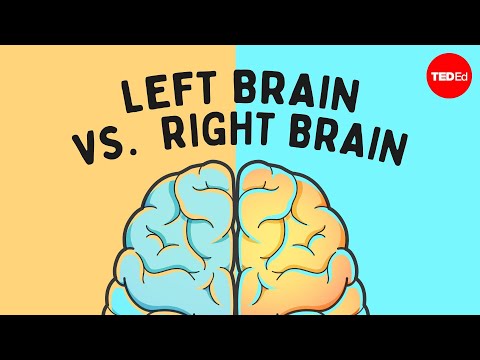
The Left Brain vs Right Brain Myth Elizabeth Waters
The human brain is visibly split into a left and right side. This structure has inspired one of the most pervasive ideas about the brain: that the left side controls logic and the right side controls creativity. And yet, this is a myth, unsupported by scientific evidence. So how did this idea come about, and what does it get wrong? Elizabeth Waters looks into this long held misconception.

Why the Insect Brain is so Incredible Anna Stockl
The human brain is one of the most sophisticated organs in the world, a supercomputer made of billions of neurons that control all of our senses, thoughts, and actions. But there was something Charles Darwin found even more impressive: the brain of an ant, which he called “one of the most marvelous atoms of matter in the world.” Anna Stöckl takes us inside the tiny but mighty insect brain.
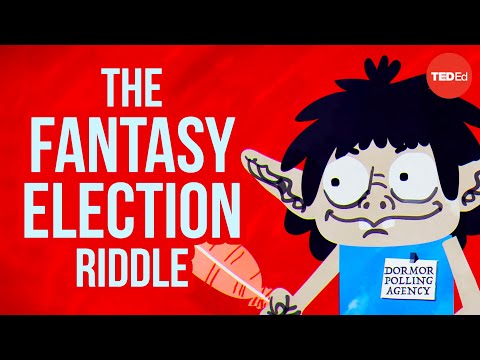
Can You Solve the Fantasy Election Riddle Dennis E Shasha
After much debate, the realm has decided dragon jousting may not be the best way to choose its leaders, and has begun transitioning to democracy. Your company was hired to survey the citizens of the land and predict which candidate will win. There’s a lot riding on this: if you get it wrong, heads— well, your head— will quite literally roll. Can you predict the winner? Dennis Shasha shows how.

Noreena Hertz How to Use Experts and When Not to
We make important decisions every day -- and we often rely on experts to help us decide. But, says economist Noreena Hertz, relying too much on experts can be limiting and even dangerous. She calls for us to start democratizing expertise -- to listen not only to "surgeons and CEOs, but also to shop staff."