Discover Resources
Browse curated homeschool resources from the community
Making a Ted Ed Lesson Synesthesia and Playing Cards
How can a pack of playing cards accurately explain the complicated and nuanced neurological condition, synesthesia? TED-Ed animators explain the process of creating an original animation from planning (storyboard and animatic) to fruition, including the special secrets behind this animation (think playdough and green screens).

Whats the Best Way to Lift People Out of Poverty
In 2018, a nonprofit gave every adult in the Ahenyo village $500. Most families had lived in extreme poverty for generations, and this sum was roughly equivalent to their annual salaries. The money came with no strings attached to how it could be spent. Would this lift villagers out of poverty or be another failed philanthropic endeavor? Explore aid programs and how they address people's needs.
The Dark History of the Chinese Exclusion Act Robert Chang
In 1882, the United States Congress passed the Chinese Exclusion Act, the first federal law that restricted immigration based explicitly on nationality. In practice, the Act banned entry to all ethnically Chinese immigrants besides diplomats, and prohibited existing immigrants from obtaining citizenship. Robert Chang details the lasting impact the Act had on immigrant rights and freedoms.

The Search for Other Planets Olivier Guyon
Billions of stars. Billions of galaxies. A thousand years just to count all of the stars in our galaxy and then another thousand to count the galaxies in the universe. At TEDYouth 2012, Olivier Guyon examines the possibility of finding other planets within these astronomical numbers, some potentially rife with life.

The Moon Illusion Andrew Vanden Heuvel
Have you noticed how the full moon looks bigger on the horizon than high overhead? Actually, the two images are exactly the same size -- so why do we perceive them differently? Scientists aren't sure, but there are plenty of intriguing theories. Andrew Vanden Heuvel unravels the details of focus, distance and proportion that contribute to this mystifying optical illusion.
What Did People Do Before Anesthesia Sally Frampton
The quest for anesthetics that could induce unconsciousness and enable more meticulous surgeries began around the early 3rd century CE. Before anesthesia was widely used, patients had to consciously endure every moment of surgery. So, what methods did doctors use before modern medicine caught up? Sally Frampton traces the history of anesthetic drugs.
The Otherworldly Creatures in the Ocean s Deepest Depths Lidia Lins
About 60 percent of the ocean is a cold, dark region that spans down to 11,000 meters. This zone is known as the deep ocean, and though it seems like an inhospitable and remote corner of the planet, it is actually one of the greatest habitats on Earth. Lidia Lins explores how so many species thrive in this mysterious underwater world.

The World s Slimiest Animal Noah R Bressman and Douglas Fudge
In 2017, a truck screeched to a halt. One of its containers slid off, hit a car, and spilled its contents— thousands of kilograms of hagfish. The result of this accident was an absolute mess: the highway was coated in a thick slime that took the fire department 7 hours to clear. How did these creatures create this stupendous supply of slime? Noah R. Bressman and Douglas Fudge investigate.

How Comic Books Can Help You Learn Gene Luen Yang
In the 1940s, comic books became a mass medium, with millions of copies selling every month. Teachers even began experimenting by bringing comics into their classrooms. So, can comic books and graphic novels really help you learn? Gene Luen Yang explores the history of comics in American education, and reveals some unexpected insights about their potential for helping kids learn.

The Mysterious Origins of Life on Earth Luka Seamus Wright
Billions of years ago, simple organic compounds assembled into more complex coalitions that could grow and reproduce. At the time, Earth had widespread volcanic activity and a hostile atmosphere that made it almost devoid of a suitable environment for living things. So where did life begin? Luka Wright searches for the cradle of life that gave rise to the billions of species that inhabit our planet.
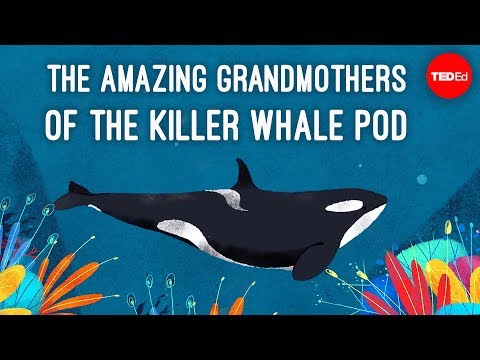
The Amazing Grandmothers of the Killer Whale Pod Darren Croft
Pods of killer whales inhabit the waters of every major ocean on Earth. Each family is able to survive thanks mainly to one member, its most knowledgeable hunter: the grandmother. These matriarchs can live 80 years or more and their expertise can mean the difference between life and death for their families. Darren Croft details the lives of killer whales and the dangers facing their survival.

What Happens If You Cut Down All of a City s Trees Stefan Al
By 2050, it’s estimated that over 65% of the world will be living in cities. We may think of nature as being unconnected to our urban spaces, but trees have always been an essential part of successful cities. Humanity has been uncovering these arboreal benefits since the creation of our first cities thousands of years ago. So what makes trees so important to a city’s survival? Stefan Al explains.

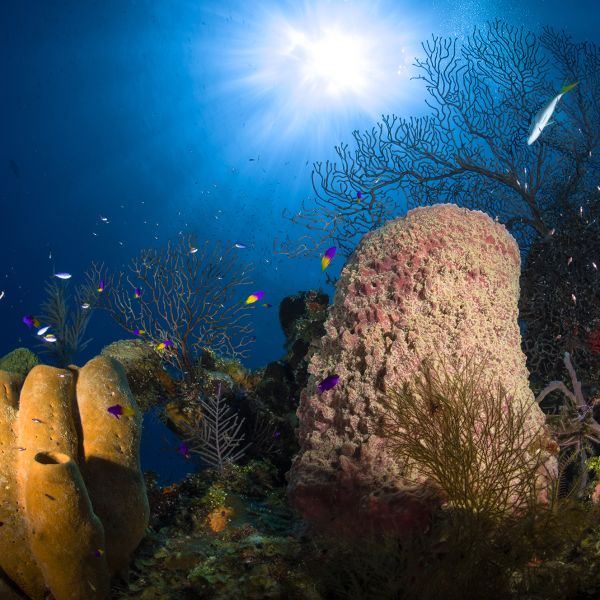
Encyclopedic Entry: Coral Reef
A reef is a ridge of material at or near the surface of the ocean. There are natural and artificial reefs.

The Imaginary King Who Changed the Real World Matteo Salvadore
In 1165, copies of a strange letter began to circulate throughout Europe. It spoke of a fantastical realm, containing the Tower of Babel and the Fountain of Youth— all ruled over by the letter’s mysterious author: Prester John. Who was this powerful ruler, and was he even real? Matteo Salvadore shares the legend of a mythical king who impacted the decisions of European leaders for 400 years.

Are Insect Brains the Secret to Great Ai Frances s Chance
Are insects the key to brain-inspired computing? Neuroscientist Frances S. Chance thinks so. In this Talk, she shares examples of the incredible capabilities of insects— like the dragonfly's deadly accurate hunting skills and the African dung beetle's super strength— and shows how untangling the mysterious web of neurons in their tiny brains could lead to breakthroughs in computers, AI and more.