Discover Resources
Browse curated homeschool resources from the community

Harvey Milk s Radical Vision of Equality Lillian Faderman
By 1973, Harvey Milk had already been many things: naval officer, high school teacher, bit-part actor and wandering hippie. Starting fresh in San Francisco, his belief in a more personal approach to local government led him to run for office in the heart of American gay culture, the Castro. Lillian Faderman details the tenacity and courage of California's first openly gay public official.

Under the Hood the Chemistry of Cars Cynthia Chubbuck
There are over one billion cars in the world right now, getting people from point A to point B. But cars aren’t just a mode of transportation; they also teach an excellent lesson in chemistry. Cynthia Chubbuck navigates the intricate chemistry performed in our car engines that keep them from getting too hot or too cold.

High Altitude Wind Energy from Kites Saul Griffith
In this brief talk, Saul Griffith unveils the invention his new company Makani Power has been working on: giant kite turbines that create surprising amounts of clean, renewable energy.

Will Laser Blasters Ever Be Possible Christopher Baird
A fleet of rebel spaceships is greeted by a frenzy of laser blasts – illuminating the sector with brilliant bursts of light. Science fiction has shown us scenes like this for decades, but the lasers in our daily lives seem far less dazzling and destructive. So, could sci-fi laser weaponry ever exist? And how do lasers even work in the first place? Christopher Baird investigates.
How to Master Your Sense of Smell Alexandra Horowitz
Some perfumers can distinguish individual odors in a fragrance made of hundreds of scents; tea-experts have been known to sniff out the exact location of a particular tea; and the NYC Transit Authority once had a employee responsible only for sniffing out gas leaks. But can anyone learn to smell with the sensitivity of those experts? Alexandra Horowitz shares three simple steps to a better nose.

The Popularity Plight and Poop of Penguins Dyan Denapoli
Penguins are odd birds. For one, they cannot fly (but they are amazing swimmers), and, contrary to popular belief, the majority of penguin populations live in warmer regions. But these beloved birds are in danger, with populations declining up to 90%. Dyan deNapoli explains the reasons behind the decline -- and why penguins are like the proverbial canary in the coal mine of our oceans.
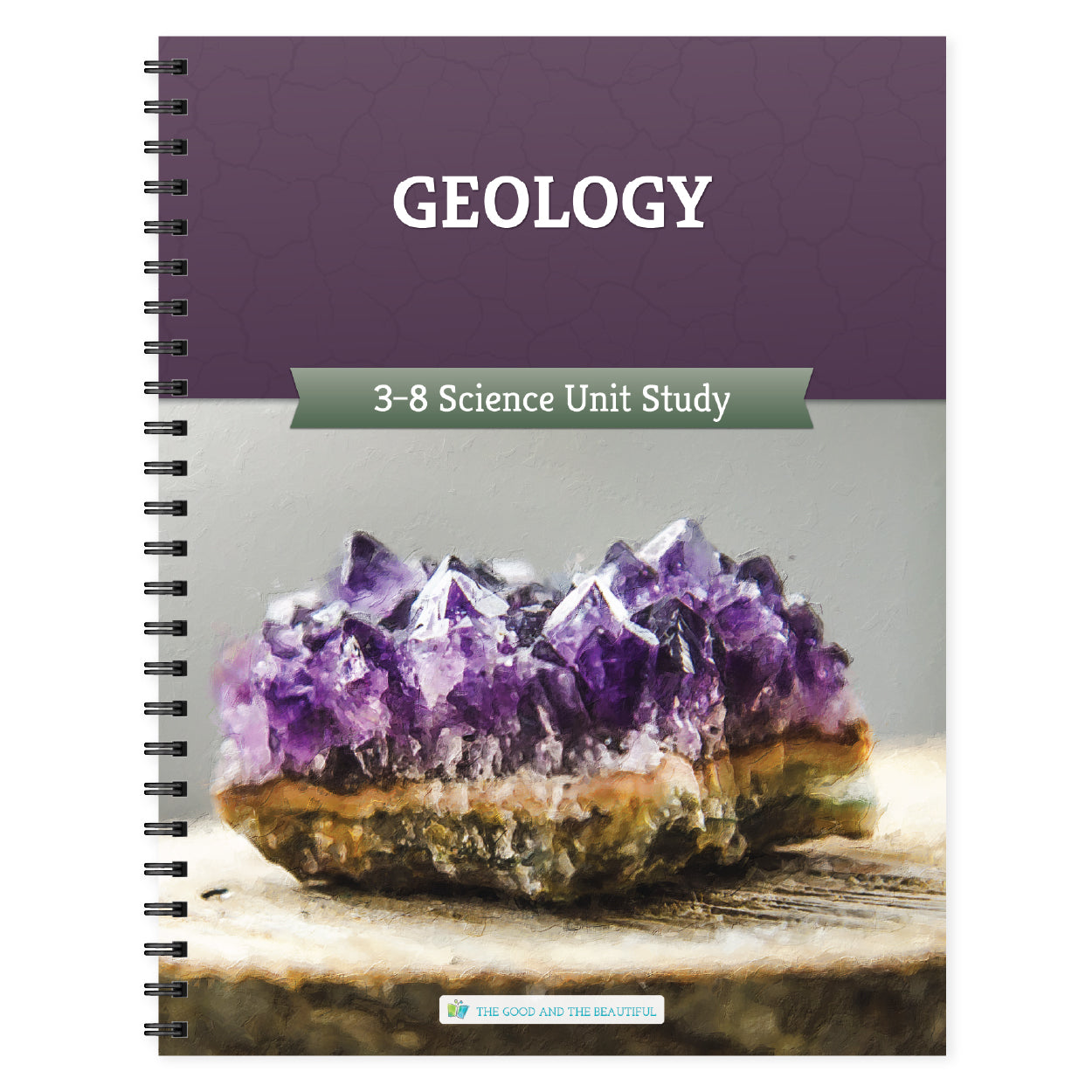
The Good and the Beautiful Geology
Discover geology with our full-color Course Book—packed with hands-on activities, videos, and illustrations for easy, family-style learning.

The Fundamentals of Space Time Part 2 Andrew Pontzen and Tom Whyntie
Light always travels at a speed of 299,792,458 meters per second. But if you're in motion too, you're going to perceive it as traveling even faster -- which isn't possible! In this second installment of a three-part series on space-time, CERN scientists Andrew Pontzen and Tom Whyntie use a space-time diagram to analyze the sometimes confounding motion of light.

The Train Heist Think Like a Coder Ep 4
This is episode 4 of our animated series “Think Like A Coder.” This 10-episode narrative follows a girl, Ethic, and her robot companion, Hedge, as they attempt to save the world. The two embark on a quest to collect three artifacts and must solve their way through a series of programming puzzles.
Can You Solve the Seven Planets Riddle Edwin F Meyer
Your interstellar police squad has tracked a group of criminals to a cluster of seven planets. Now you must apprehend them before their reinforcements arrive. Of course, the fugitives won’t just stay put – they’ll try to dodge you by moving from planet to planet. Can you devise a sequence for searching the planets that’s guaranteed to catch them in ten warps or less? Edwin F. Meyer shows how.

Hawking s Black Hole Paradox Explained Fabio Pacucci
Today, one of the biggest paradoxes in the universe threatens to unravel modern science: the black hole information paradox. Every object in the universe is composed of particles with unique quantum properties and even if an object is destroyed, its quantum information is never permanently deleted. But what happens to that information when an object enters a black hole? Fabio Pacucci investigates.

Time Travel and Einstein s Special Relativity Colin Stuart
Time travel is a staple of science fiction stories, but is it actually possible? It turns out nature does allow a way of bending time, an exciting possibility suggested by Albert Einstein when he discovered special relativity over one hundred years ago. Colin Stuart imagines where (or, when) this fascinating phenomenon, time dilation, may one day take us.

Why Were Graham Crackers Designed to Taste Bad Stephanie Honchell Smith
In the 1800s, minister Sylvester Graham believed Americans had a big problem— not just with their bodies, but their souls. He argued that overindulgence was fueling their baser desires, making them immoral and oversexed. To curb this corruption, puritanical reformers advocated for foods they thought curbed a variety of appetites. Stephanie Honchell Smith details the invention of Graham crackers.

Will Future Spaceships Fit in Our Pockets Dhonam Pemba
When you picture a rocket, you might imagine a giant ship carrying lots of fuel, people and supplies. But what if the next wave of spacecraft were small enough to fit into our pockets? Dhonam Pemba details the future of microspacecraft, and how scientists at NASA are hoping to use micropropulsion to launch these tiny vessels outside of Earth’s orbit.
A Plant s Eye View Michael Pollan
What if human consciousness isn't the end-all be-all of Darwinism? What if we are all just pawns in corn's clever strategy game to rule the Earth? Author Michael Pollan asks us to see the world from a plant's-eye view.