brain
Resources
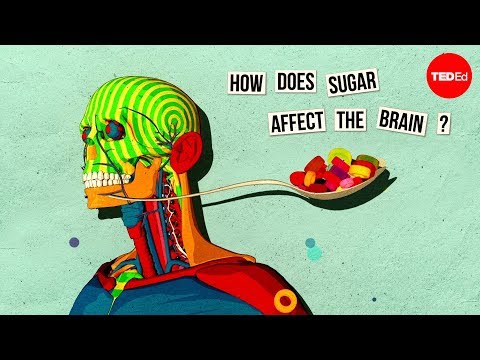
How sugar affects the brain - Nicole Avena
Understanding sugar's impact on your brain chemistry.

TED-Ed: What Is Consciousness?
Patient P.S. suffered a stroke that damaged the right side of her brain, leaving her unaware of everything on her left side. If someone threw a ball at her left side, she might duck. But she wouldn’t have awareness of the ball or know why she ducked. Where does consciousness come from? Michael Graziano explores the question that has vexed scientists and philosophers for centuries.

TED-Ed: How Memories Form and How We Lose Them
Think back to a really vivid memory. Got it? Now try to remember what you had for lunch three weeks ago. That second memory probably isn’t as strong—but why not? Why do we remember some things, and not others? And why do memories eventually fade? Catharine Young gives the basics on memory and memory loss.
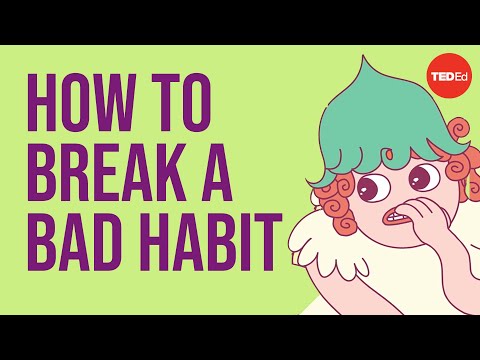
TED-Ed: Why Is It So Hard to Break a Bad Habit?
Many people deal with a nail-biting habit at some point in their lives. Some will go to great lengths to try to stop, employing strategies like dipping their hands in salt or wearing gloves. And while not all of us are nail-biters, most of us do have a habit we’d like to kick. So, what's the best way to break one? Explore how habits are formed, and discover tips on how to manage these behaviors.
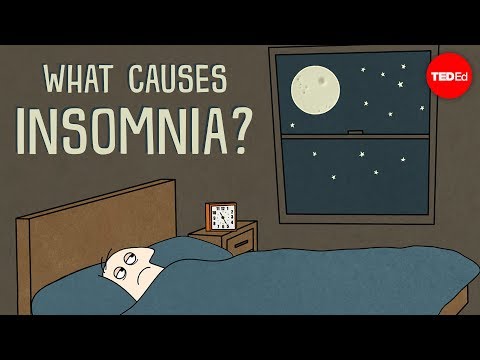
TED-Ed: What Causes Insomnia?
What keeps you up at night? Pondering deep questions? Excitement about a big trip? Stress about unfinished work? What if the very thing keeping you awake was stress about losing sleep? This seemingly unsolvable loop is at the heart of insomnia, the world’s most common sleep disorder. So what is insomnia? And is there any way to break the cycle? Dan Kwartler details the science of insomnia.
What would happen if you didn’t sleep? - Claudia Aguirre
The importance of sleep for health and cognition.
TED-Ed: How Does Caffeine Keep Us Awake?
Over 100,000 metric tons of caffeine are consumed around the world every year. That’s equivalent to the weight of 14 Eiffel Towers! Caffeine helps us feel alert, focused, and energetic, even if we haven’t had enough sleep — but it can also raise our blood pressure and make us feel anxious. So how does it keep us awake? Hanan Qasim shares the science behind the world’s most widely used drug.

TED-Ed: How Do We Study Living Brains?
As far as we know, there’s only one thing in our solar system sophisticated enough to study itself: the human brain. But this self-investigation is challenging because a living brain is shielded by skull, swaddled in tissue, and made up of billions of tiny cells. How do we study living brains without harming their owners? Elizabeth Waters and John Borghi explain how EEGs, fMRIs, and PETs work.

How stress affects your brain - Madhumita Murgia
The neuroscience of stress and its effects on your brain.

TED-Ed: The Way We Think
TED-Ed celebrates the ideas of teachers and students around the world. Discover hundreds of animated lessons, create customized lessons, and share your big ideas.
TED-Ed: Biological Psychology Lessons
TED-Ed celebrates the ideas of teachers and students around the world. Discover hundreds of animated lessons, create customized lessons, and share your big ideas.
TED-Ed: Memory Lessons
TED-Ed celebrates the ideas of teachers and students around the world. Discover hundreds of animated lessons, create customized lessons, and share your big ideas.