body
Resources
View all
TED-Ed: How Do We Create a Better Economy?
Can we call any economy “healthy” in the face of dwindling resources and growing inequality? What if we cut off our addiction to endless growth, and used a new compass for modern prosperity? One such compass is known as “doughnut economics,” which aims to meet the needs of people without overshooting Earth's ecological limits. Explore how this model reframes our economic systems.

TED-Ed: What's the Best Position to Sleep In?
Sleep positions go by countless creative names— the zombie, mountain climber, free faller, soldier, and more. Yet sleep experts typically simplify them into the basic types: side, stomach, or back. Individual sleep styles are highly personal, but how we spend the night affects our bodies and health in several ways. So, what’s the best position to sleep in? Rachel Marie E. Salas investigates.

TED-Ed: How to Make Your Stress Work for You
An upcoming project deadline, a fight with a family member, or even an embarrassing moment can easily trigger our body’s stress response. While we can’t always control what life throws at us, there are ways to better prepare for stressful events we may experience. So, how can we train our minds and bodies to manage our stress response? Shannon Odell shares best practices for dealing with stress.
TED-Ed: Can You Change Your Sleep Schedule?
An early bird rises with the sun, springing out of bed abuzz with energy. Meanwhile, a night owl groggily rises much later, not hitting their stride until late in the day. How many people are truly night owls or early birds? And are our sleep schedules predetermined at birth, or can we change them? Explore how our circadian systems act as internal clocks to keep our bodies functioning properly.
TED-Ed: Why Having Fun Is the Secret to a Healthier Life
Have you had your daily dose of fun? It's not just enjoyable, it's also essential for your health and happiness, says science journalist Catherine Price. She proposes a new definition of fun — what she calls "true fun" — and shares easy, evidence-backed ways to weave playfulness, flow and connection into your everyday life.
TED-Ed: How Does Caffeine Keep Us Awake?
Over 100,000 metric tons of caffeine are consumed around the world every year. That’s equivalent to the weight of 14 Eiffel Towers! Caffeine helps us feel alert, focused, and energetic, even if we haven’t had enough sleep — but it can also raise our blood pressure and make us feel anxious. So how does it keep us awake? Hanan Qasim shares the science behind the world’s most widely used drug.
What would happen if you didn’t sleep? - Claudia Aguirre
The importance of sleep for health and cognition.

The benefits of a good night's sleep - Shai Marcu
How sleep improves learning, memory, and health.
TED-Ed: What Is Depression?
Depression is the leading cause of disability in the world; in the United States, close to ten percent of adults struggle with the disease. But because it’s a mental illness, it can be a lot harder to understand than, say, high cholesterol. Helen M. Farrell examines the symptoms and treatments of depression, and gives some tips for how you might help a friend who is suffering.

TED-Ed: How Cancer Cells Behave Differently
How do cancer cells grow? How does chemotherapy fight cancer (and cause negative side effects)? The answers lie in cell division. George Zaidan explains how rapid cell division is cancer’s "strength" -- and also its weakness.

TED-Ed: How Food Affects Your Gut
The bacteria in our guts can break down food the body can’t digest, produce important nutrients, regulate the immune system, and protect against harmful germs. And while we can’t control all the factors that go into maintaining a healthy gut microbiome, we can manipulate the balance of our microbes by paying attention to what we eat. Shilpa Ravella shares the best foods for a healthy gut.

The Taino Myth of the Cursed Creator Bill Keegan
Before the world of humans began, there was the world of the gods. Four brothers wandered this celestial realm. One day, the brothers snuck into a spirit’s house and spotted a giant gourd hanging in the corner. But as they tried to look inside the gourd, they dropped it. It broke apart, releasing a deluge that formed a new world. Bill Keegan details the Taino myth of Deminan and the sea.

Greek Mythology s Greatest Warrior Iseult Gillespie
Born to a sea nymph and a king, and trained by the legendary centaur Chiron, Achilles was a demigod destined for greatness. When Greece declared war on Troy, Achilles knew the war was written into his destiny. With horses born from the west wind and a spear wrought from a mountain peak, he readied himself for battle. Iseult Gillespie tells the tale of the infamous warrior and his heel.

What is Alzheimer s Disease Ivan Seah Yu Jun
Alzheimer's disease is the most common cause of dementia, affecting over 40 million people worldwide. And though it was discovered over a century ago, scientists are still grappling for a cure. Ivan Seah Yu Jun describes how Alzheimer's affects the brain, shedding light on the different stages of this complicated, destructive disease.

Cheese Dogs and a Pill to Kill Mosquitoes and End Malaria Bart Knols
We can use a mosquito's own instincts against her. At TEDxMaastricht speaker Bart Knols demos the imaginative solutions his team is developing to fight malaria -- including limburger cheese and a deadly pill. (Filmed at TEDxMaastricht.)

There s No Dishonor in Having a Disability Steven Claunch
When faced with a bump in the road, sometimes we forget we have a choice: overcome the obstacle or let it overcome you. Steven Claunch, who was born without fingers on his right hand and with one leg shorter than the other and has excelled in basketball nonetheless, explains why obstacles can provide an opportunity to both inspire others and develop character.

A Trip Through Space to Calculate Distance Heather Tunnell
Imagine two aliens racing across outer space to their moon. Who can we deem the fastest alien? With DIRT -- or the equation Distance = Rate x Time -- we can calculate their rates, using the distance they traveled and the time they took. Heather Tunnell explains how to use this helpful equation to determine which of our alien friends is truly faster.

The Death of the Universe Renee Hlozek
The shape, contents and future of the universe are all intricately related. We know that it’s mostly flat; we know that it’s made up of baryonic matter (like stars and planets), but mostly dark matter and dark energy; and we know that it’s expanding constantly, so that all stars will eventually burn out into a cold nothingness. So is there any beauty of this dark ending?
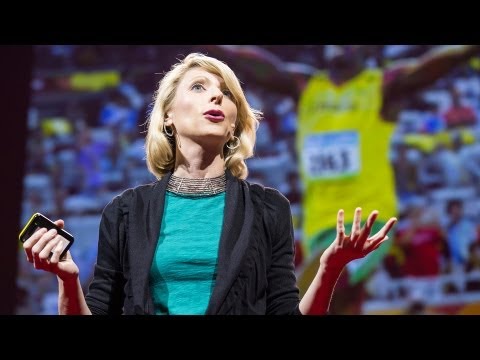
Your Body Language Shapes Who You Are Amy Cuddy
Body language affects how others see us, but it may also change how we see ourselves. Social psychologist Amy Cuddy shows how “power posing” -- standing in a posture of confidence, even when we don’t feel confident -- can affect testosterone and cortisol levels in the brain, and might even have an impact on our chances for success.

What Did Dogs Teach Humans About Diabetes Duncan C Ferguson
Diabetes has a history dating back to Ancient Greece. Our treatment of it, however, is more recent and was originally made possible with the help of man's best friend. Due to physiological traits shared with humans, dogs have saved countless lives through the discovery of insulin. Duncan C. Ferguson shares the story of the canine's great contribution to man -- and how we can all reap the medical benefits.