Discover Resources
Browse curated homeschool resources from the community
Pruney Fingers a Gripping Story Mark Changizi
Why do fingers become pruney when they get wet? Likely, for the same reasons that tires have treads. Mark Changizi examines the evolutionary reasons for pruney fingers, while exploring natural and manmade phenomena, like river networks, that operate similarly.

TED-Ed: Literature Lessons
TED-Ed celebrates the ideas of teachers and students around the world. Discover hundreds of animated lessons, create customized lessons, and share your big ideas.
TED-Ed: There's a Poem for That
TED-Ed celebrates the ideas of teachers and students around the world. Discover hundreds of animated lessons, create customized lessons, and share your big ideas.

Why Climate Change is a Threat to Human Rights Mary Robinson Ted Talks
Climate change is unfair. While rich countries can fight against rising oceans and dying farm fields, poor people around the world are already having their lives upended — and their human rights threatened — by killer storms, starvation and the loss of their own lands. Mary Robinson asks us to join the movement for worldwide climate justice.

Why Should You Read Sylvia Plath Iseult Gillespie
Under her shrewd eye and pen, Sylvia Plath turned everyday objects into haunting images: a “new statue in a drafty museum,” a shadow in a mirror, a slab of soap. Her breathtaking perspectives and unflinching language made her a touchstone for readers seeking to break the silence around issues of trauma, frustration and sexuality. Iseult Gillespie shares why Plath's writing continues to captivate.

Easy Peasy American Literature and Composition
This course was created by Rebecca Epperly Wire. You can contact her through the Facebook community group with questions. You can say thank you to her with a gift. Found a problem? Check here. Cred…

Shakespearean Dating Tips Anthony John Peters
Beyond giving the world dozens of English language masterpieces and inventing countless words (including the word countless), William Shakespeare, ever the overachieving bard, especially had a way with the romantic turn of phrase. Anthony John Peters explains why Shakespeare’s coy use of metaphor was so effective -- and may just help you get a date today.

What Really Happened to the Library of Alexandria Elizabeth Cox
2,300 years ago, the rulers of Alexandria set out to fulfill a very audacious goal: to collect all the knowledge in the world under one roof. In its prime, the Library of Alexandria housed an unprecedented number of scrolls and attracted some of the Greek world’s greatest minds. But by the end of the 5th century CE, it had vanished. Elizabeth Cox details the rise and fall of this great building.
Grammar s Great Divide the Oxford Comma Ted Ed
If you read "Bob, a DJ and a clown" on a guest list, are three people coming to the party, or only one? That depends on whether you're for or against the Oxford comma -- perhaps the most hotly contested punctuation mark of all time. When do we use one? Can it really be optional, or is there a universal rule? TED-Ed explores both sides of this comma conundrum.
Making a Ted Ed Lesson Two Ways to Animate Slam Poetry
Slam poetry packs an emotional punch by using powerful verbal metaphors; animation can do the same using visual tools. TED-Ed animators show how two separate techniques -- rotoscoping and more traditional hand-drawn animation -- bring to life the multilayered process of becoming a slam poet.

The Electrifying Speeches of Sojourner Truth Daina Ramey Berry
Isabella Baumfree was born into slavery in late 18th century New York. Fleeing bondage with her youngest daughter, she renamed herself Sojourner Truth and embarked on a legendary speaking tour. She became known as an electrifying orator and her speeches impacted thousands of people in communities across the United States. Daina Ramey Berry details the life of the outspoken activist.

How to Read Music Tim Hansen
Like an actor’s script, a sheet of music instructs a musician on what to play (the pitch) and when to play it (the rhythm). Sheet music may look complicated, but once you've gotten the hang of a few simple elements like notes, bars and clefs, you're ready to rock. Tim Hansen hits the instrumental basics you need to read music.
The Power of Simple Words
Long, fancy words designed to show off your intelligence and vocabulary are all very well, but they aren't always the best words. In this short, playful video Terin Izil explains why simple, punchy language is often the clearest way to convey a message.

Insults by Shakespeare
“You’re a fishmonger!” By taking a closer look at Shakespeare’s words--specifically his insults--we see why he is known as a master playwright whose works transcend time and appeal to audiences all over the world.
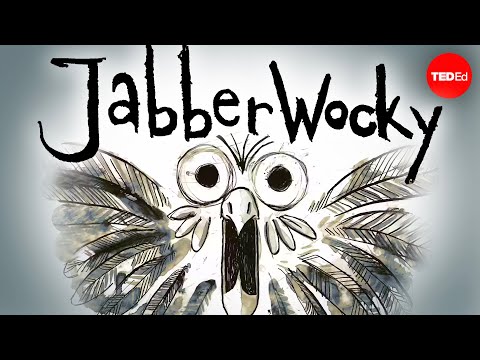
Jabberwocky One of Literature s Best Bits of Nonsense
As Alice wanders through the dreamscape of Looking-Glass Land in Lewis Carroll's "Through the Looking-Glass, and What Alice Found There," she happens across a book written in an unintelligible language. Inside, she discovers an epic poem filled with nonsense, fearsome creatures, and whimsical language. Dive into Carroll's legendary poem, "Jabberwocky" and see if you can make sense of the nonsense.

The Wicked Wit of Jane Austen Iseult Gillespie
Whether she’s describing bickering families, quiet declarations of love, or juicy gossip, Jane Austen’s writing often feels as though it was written just for you. Her dry wit and cheeky playfulness informs her heroines, whose conversational tone welcomes readers with a conspiratorial wink. Iseult Gillespie explores the sly societal satire and unique tongue-in-cheek humor of Jane Austen.

What Makes a Hero Matthew Winkler
What trials unite not only Harry Potter or Frodo Baggins but many of literature's most interesting heroes? And what do ordinary people have in common with these literary heroes? Matthew Winkler takes us step-by-step through the crucial events that make or break a hero.
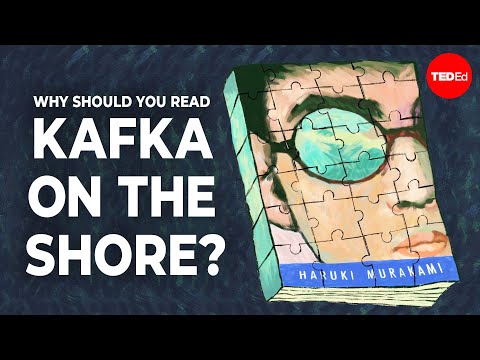
Why Should You Read Kafka on the Shore Iseult Gillespie
Desperate to escape his tyrannical father and the family curse he feels doomed to repeat, Haruki Murakami’s teenage protagonist renames himself “Kafka” after his favorite author and runs away from home. So begins “Kafka on the Shore”— an epic literary puzzle filled with time travel, hidden histories and magical underworlds. Iseult Gillespie dives into Murakami’s mind-bending and whimsical novel.

Why Should You Read Moby Dick Sascha Morrell
A mountain separating two lakes. A room papered floor to ceiling with bridal satins. The lid of an immense snuffbox. These seemingly unrelated images take us on a tour of a sperm whale’s head in Herman Melville’s "Moby Dick." Though the book features pirates, typhoons, high-speed chases, and giant squid, it’s anything but a conventional seafaring adventure. Sascha Morrell digs into the classic novel.

Making a Ted Ed Lesson Bringing a Pop Up Book to Life
In ‘The Pangaea Pop-up’ Lesson, animator Biljana Labovic decided the best way to illustrate moving, shifting tectonic plates was to use a physical object that could also move and shift. Here, Labovic explains how she and her team of animators created a pop-up book to visualize Pangaea -- and how you can make your own.
Write Your Story Change History Brad Meltzer
The idea that youth is wasted on the young? Wrong. Martin Luther King, Jr. and the creators of Superman were all under 30 when they wrote themselves into history. In this inspirational TEDYouth 2011 Talk, Brad Meltzer encourages us to dream big, work hard, and stay humble.
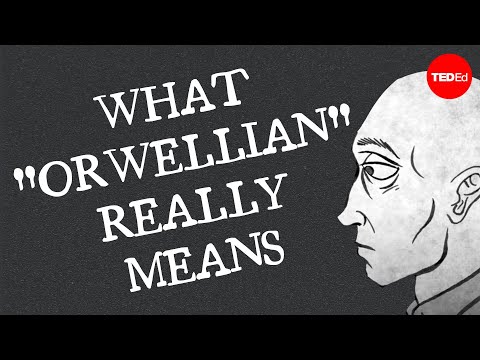
What Orwellian Really Means Noah Tavlin
If you’ve watched the news or followed politics, chances are you’ve heard the term Orwellian thrown around in one context or another. But have you ever stopped to think about what it really means, or why it’s used so often? Noah Tavlin dissects the term.