Discover Resources
Browse curated homeschool resources from the community

Education is a Fundamental Right for Every Child
For children growing up in refugee camps, education is a powerful tool of liberation. In this inspiring talk, Makhtoum Abdalla, displaced as a child in Sudan and now living with his family in the Otash camp in Darfur, shares his biggest dream: to ensure all children are educated and taught the skills needed to become "captains of their destiny."

A Call to Invention Diy Speaker Edition William Gurstelle
There's a pleasure in making things for yourself -- especially something unexpected. At TEDYouth 2012, William Gurstelle shows how to make your own speakers from objects probably already laying around your house, like copper wire and an empty yogurt cup.

Got Seeds Just Add Bleach Acid and Sandpaper Mary Koga
For a seed to start growing, its embryo must emerge from its hard coat. In nature the embryo is aided by frost and animal digestion -- but humans can help too. Nicking, filing, and soaking the seed in hot water or acid are all forms of scarification, or ways to speed up germination by breaking down the shell. Mary Koga offers some tips to spur your sprouts (and don't forget the bleach!).

Detention or Eco Club Choosing Your Future Juan Martinez
Growing up surrounded by gangs in South Central Los Angeles, Juan Martinez wasn't exposed to the great outdoors. One day in high school, he was given the life-changing choice between detention or Eco Club. He chose nature and has since devoted his life to getting kids back to the outdoors as a National Geographic Explorer and director of the Natural Leaders Network.


Michael Evans What is Chirality and How Did it Get in My Molecules
Improve your understanding of molecular properties with this lesson on the fascinating property of chirality. Your hands are the secret to understanding the strange similarity between two molecules that look almost exactly alike, but are not perfect mirror images.
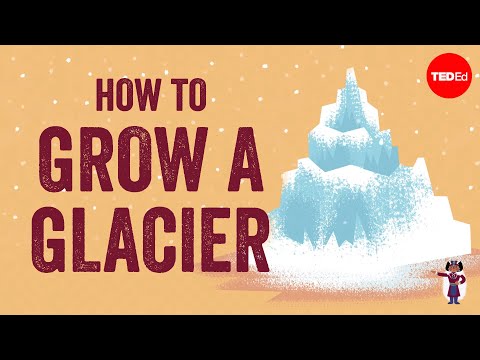
How to Grow Your Own Glacier M Jackson
In the 13th century, Genghis Khan embarked on a mission to take over Eurasia, swiftly conquering countries and drawing them into his empire. But, legend has it that there was one obstacle that even he couldn’t overcome: a towering wall of ice, grown by locals across a mountain pass. M Jackson explores the ancient methods of growing glaciers and how they can be used to combat climate change.

What happens when you remove the hippocampus? - Sam Kean
Explore the famous case of H.M. and learn about memory and the brain.

Why Dont We Get Our Drinking Water from the Ocean Manish Kumar
Humans have been transforming seawater into potable freshwater for millennia. Today, billions of people can’t access clean drinking water, and 87 different countries are projected to be “water-scarce” by 2050. So, how can we use seawater desalination to combat water scarcity? And can we do it without further harming the environment? Manish Kumar digs into how scientists are creating freshwater.

How to Know If You Re Being Selfish and Whether or Not That s Bad Mark Hopwood
The question of whether or not humans are inherently selfish is one of philosophy’s oldest debates. The idea that we only act out of self-interest is an extreme stance that few philosophers would endorse. However, the idea that all humans have a deep selfish streak is something many philosophers would agree with. So, are we innately selfish? Mark Hopwood explores this classic conundrum.

Light Waves Visible and Invisible Lucianne Walkowicz
Each kind of light has a unique wavelength, but human eyes can only perceive a tiny slice of the full spectrum -- the very narrow range from red to violet. Microwaves, radio waves, x-rays and more are hiding, invisible, just beyond our perception. Here is a closer look at the waves we can’t see.

Mosquitos Malaria and Education Bill Gates
Bill Gates hopes to solve some of the world's biggest problems using a new kind of philanthropy. In a passionate and, yes, funny 18 minutes, he asks us to consider two big questions and how we might answer them.
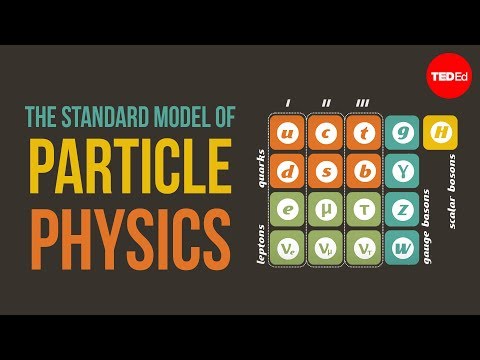
The Standard Model of Particle Physics Jonathan Butterworth
If you were to take a coffee cup, and break it in half, then in half again, and keep carrying on, where would you end up? Could you keep on going forever? Or would you eventually find a set of indivisible building blocks out of which everything is made? Jonathan Butterworth explains the Standard Model theory and how it helps us understand the world we live in.

How to Design Climate Resilient Buildings Alyssa Amor Gibbons
Architecture can't ignore the realities of climate change. For time-tested solutions that perform under extreme conditions, designer Alyssa-Amor Gibbons says we should look to traditional buildings. Taking us to Barbados, where the hurricane season is unforgiving and storms are becoming more frequent, Gibbons points to the brilliance of endemic designs that are built to work with nature.
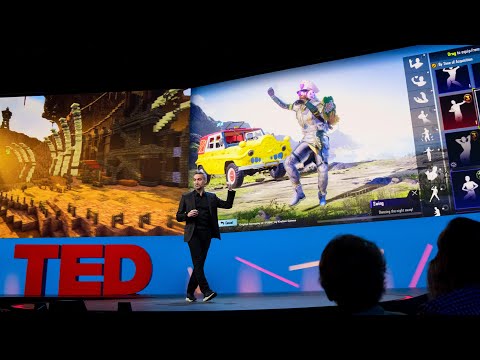
How Gaming Can Be a Force for Good Noah Raford
If you think social media is powerful, keep an eye on immersive video games, says futurist Noah Raford. As more and more people are drawn into gaming and virtual worlds, the communities they forge are spawning real-world social movements. Raford urges us to recognize what's really going on — and then harness those forces to build the future we want.

Why Do Honeybees Love Hexagons Zack Patterson and Andy Peterson
Honeybees are some of nature’s finest mathematicians. Not only can they calculate angles and comprehend the roundness of the earth, these smart insects build and live in one of the most mathematically efficient architectural designs around: the beehive. Zack Patterson and Andy Peterson delve into the very smart geometry behind the honeybee’s home.

A Needle in Countless Haystacks Finding Habitable Planets Ariel Anbar
Out of billions of galaxies and billions of stars, how do we find Earth-like habitable worlds? What is essential to support life as we know it? Ariel Anbar provides a checklist for finding life on other planets.