Discover Resources
Browse curated homeschool resources from the community

Mysteries of Vernacular Miniature Jessica Oreck
Miniature’s root may be Latin, but its meaning is rooted in books, where red pigment was used to denote chapter breaks. Jessica Oreck explains how we got from there to the meaning of miniature today: something smaller than others of its class.
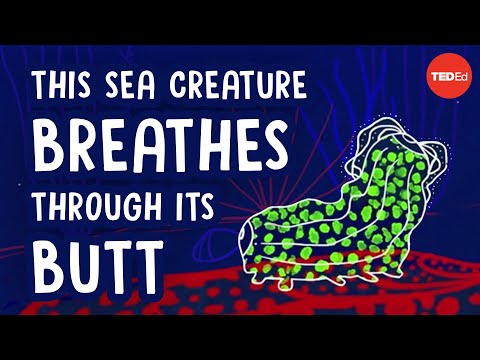
The Most Important Anus in the Ocean Cella Wright
Is it a fuzzy sock? An overripe banana? A moldy tube of toothpaste? No! In fact, it’s a humble sea cucumber: a brainless, fleshy form surrounding a digestive tract, and bookended by a mouth and an anus. And while it might look odd, its daily toil paves the way for entire ecosystems to thrive. Cella Wright journeys to the bottom of the ocean to explore the lives of these sausage-shaped wonders.

What Makes Fireflies Light Up at Night Emily a Geest
The first firefly is thought to have lived over 100 million years ago, illuminating the night with a glowing green light. And today, there are around 2,000 firefly species, found all over the world, from forests and grasslands to marshes and deserts. So, why do these insects glow? Emily A. Geest digs into the bioluminescent signals of fireflies.

Getting Started as a Dj Mixing Mashups and Digital Turntables Cole Plante
DJ and producer Cole Plante is only 17 years old, but he's already worked alongside industry superstars Skrillex, Avicii and Major Lazer (to name just a few). In this combination talk and DJ set, Plante shows off his mixing magic and gives tips to aspiring DJs.

The Secret Language of Trees Camille Defrenne and Suzanne Simard
Most of the forest lives in the shadow of the giants that make up the highest canopy. These are the oldest trees, with hundreds of children and grandchildren. They check in with their neighbors, share food, supplies and wisdom gained over their lives, all while rooted in place. How do they do this? Camille Defrenne and Suzanne Simard explore the vast root system and intricate communication of trees.

The Woman Who Stared at the Sun Alex Gendler
In 1944, amateur astronomer Hisako Koyama’s latest endeavor was sketching the Sun’s shifting surface. She spent weeks angling her telescope towards the Sun and tracking every change she saw with drawings. Little did she know, these drawings were the start of one of the most important records of solar activity in human history. Alex Gendler details the incredible legacy of Koyama's work.

A Guide to the Energy of the Earth Joshua M Sneideman
Energy is neither created nor destroyed — and yet the global demand for it continues to increase. But where does energy come from, and where does it go? Joshua M. Sneideman examines the many ways in which energy cycles through our planet, from the sun to our food chain to electricity and beyond.
Welcome to CK-12 Foundation | CK-12 Foundation
Earth science covering geology, weather, and astronomy for middle school.

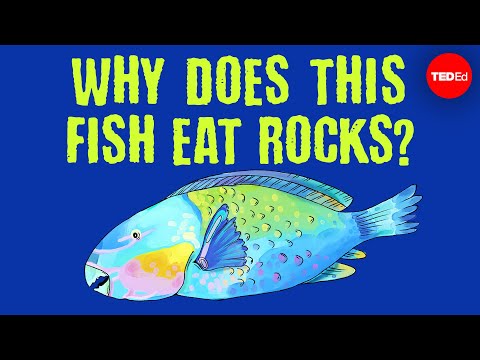
The Big Beaked Rock Munching Fish That Protect Coral Reefs Mike Gil
As the sun rises over a quiet coral reef, one animal breaks the morning silence. Named for its vibrant scales and beak-like teeth, the parrotfish devours a particularly crunchy breakfast: rocks. Why would any creature take bites out of the seafloor? Mike Gil explores how these quirky and flashy foragers play a key role in defending the essential coral reef ecosystem.

How Fast Can a Vaccine Be Made Dan Kwartler
When a new pathogen emerges, our bodies and healthcare systems are left vulnerable. And when this pathogen causes the outbreak of a pandemic, there’s an urgent need for a vaccine to create widespread immunity with minimal loss of life. So how quickly can we develop vaccines when we need them most? Dan Kwartler describes the three phases of vaccine development.

The City That Wasted Nothing Roman Krznaric
400 years ago, Edo was on the verge of ecological collapse. Years of intense logging had led to massive deforestation and the city faced timber shortages, severe erosion, and frequent flooding. But over just a few decades, Edo became one of the most sustainable and efficient cities in history. So, how did this come about? Roman Krznaric explores Edo's transformation into a circular economy.
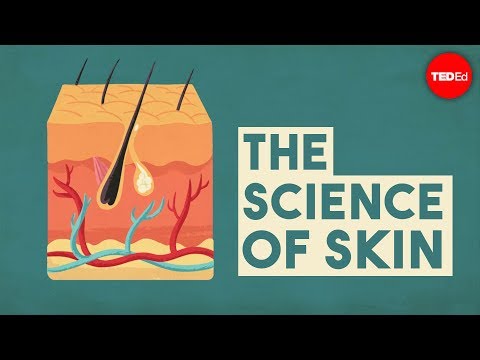
The Science of Skin Emma Bryce
Between you and the rest of the world lies an interface that makes up 16% of your physical weight. This is your skin, the largest organ in your body: laid out flat, it would cover close to 1.7 square meters of ground. But besides keeping your organs in, what is its purpose? Emma Bryce takes us into the integumentary system to find out.

The Life Cycle of a Cup of Coffee a J Jacobs
How many people does it take to make a cup of coffee? For many of us, all it takes is a short walk and a quick pour. But this simple staple is the result of a globe-spanning process whose cost and complexity are far greater than you might imagine. AJ Jacobs traces the journey of this caffeinated elixir from seed to cup.