book-recommendation
Resources
View all
Why should you read "Hamlet"? - Iseult Gillespie
Discover the enduring power of Shakespeare's masterpiece.
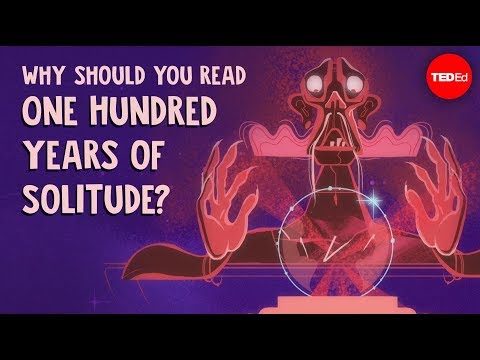
Why should you read "One Hundred Years of Solitude"? - Francisco Díez-Buzo
Explore Gabriel García Márquez's magical realist masterpiece.
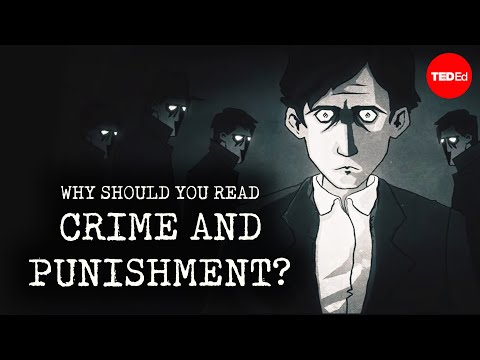
TED-Ed: Why You Should Read Crime and Punishment
What drives someone to kill in cold blood? What goes through the murderer’s mind? And what kind of a society breeds such people? Over 150 years ago Fyodor Mikhailovich Dostoyevsky took these questions up in what would become one of the best-known works of Russian literature: “Crime and Punishment.” Alex Gendler digs into the classic novel's exploration of alienation, morality and redemption.

TED-Ed: Why You Should Read The God of Small Things
Set in a small town in India, “The God of Small Things” revolves around fraternal twins Rahel and Estha, who are separated for 23 years after the fateful hours in which their cousin drowns, their mother’s affair is revealed, and her lover is murdered. The book is set at the point of the twins’ reunion and confronts the social mores of India. Laura Wright dives into Arundhati Roy’s masterful storytelling.
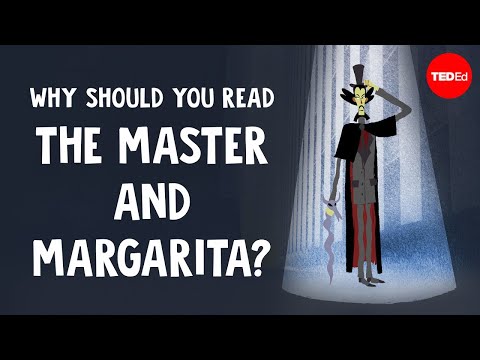
TED-Ed: Why You Should Read The Master and Margarita
The Devil has come to town. But don’t worry– all he wants to do is stage a magic show. This absurd premise forms the central plot of Mikhail Bulgakov’s masterpiece, “The Master and Margarita.” Its blend of political satire, historical fiction and occult mysticism has earned a legacy as one of the 20th century’s greatest novels– and one of its strangest. Alex Gendler explores the subversive novel.

TED-Ed: Why You Should Read Don Quixote
Mounting his skinny steed, Don Quixote charges an army of giants. It is his duty to vanquish these behemoths in the name of his beloved lady, Dulcinea. There’s only one problem: the giants are merely windmills. What is it about this tale of the clumsy yet valiant knight that makes it so beloved? Ilan Stavans investigates.

TED-Ed: Why You Should Read Dune
A mother and son trek across an endless desert. Wearing special suits to dissipate heat and recycle moisture, the travelers aren’t worried about dying of thirst. Their fears are much greater. Soon, the sound of the desert is drowned out by a hissing: a mound of sand 400 meters long bursts from the desert floor and races towards them. This is the world of “Dune.” Dan Kwartler dives into the epic story.
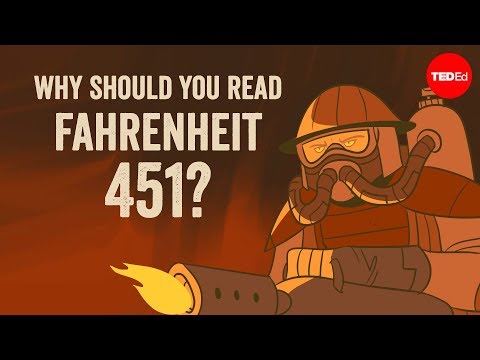
Why should you read “Fahrenheit 451”? - Iseult Gillespie
Ray Bradbury's warning about censorship and conformity.
Why should you read “Lord of the Flies” by William Golding? - Jill Dash
William Golding's dark exploration of human nature.

Why Should You Read Flannery O Connor Iseult Gillespie
Flannery O’Connor scribbled tales of outcasts, intruders and misfits staged in the world she knew best: the American South. She was a master of the grotesque, but her work pushed beyond the purely ridiculous and frightening to reveal the variety and nuance of human character. Iseult Gillespie explores how O’Connor’s endlessly surprising fictional worlds continue to draw readers decades later.
Why Should You Read the Handmaid s Tale Naomi R Mercer
Margaret Atwood's speculative fiction masterpiece The Handmaid's Tale explores the consequences of complacency and how power can be wielded unfairly. Atwood’s chilling vision of a dystopian regime has captured readers' imaginations since its publication in 1985. How does this book maintain such staying power? Naomi R. Mercer investigates.

Why Should You Read Sylvia Plath Iseult Gillespie
Under her shrewd eye and pen, Sylvia Plath turned everyday objects into haunting images: a “new statue in a drafty museum,” a shadow in a mirror, a slab of soap. Her breathtaking perspectives and unflinching language made her a touchstone for readers seeking to break the silence around issues of trauma, frustration and sexuality. Iseult Gillespie shares why Plath's writing continues to captivate.

Why Should You Read a Midsummer Night s Dream Iseult Gillespie
By the light of the moon, a group sneaks into the woods, where they take mind-altering substances, switch it up romantically and brush up against creatures from another dimension. “A Midsummer Night’s Dream” sees Shakespeare play with the boundary between illusion and reality - and dramatize the possibility that life is but a dream. Iseult Gillespie shares what makes this play a timeless classic.
Why Should You Read Kafka on the Shore Iseult Gillespie
Desperate to escape his tyrannical father and the family curse he feels doomed to repeat, Haruki Murakami’s teenage protagonist renames himself “Kafka” after his favorite author and runs away from home. So begins “Kafka on the Shore”— an epic literary puzzle filled with time travel, hidden histories and magical underworlds. Iseult Gillespie dives into Murakami’s mind-bending and whimsical novel.

Why Should You Read Macbeth Brendan Pelsue
There’s a play so powerful that an old superstition says its name should never be uttered in a theater. A play that begins with witchcraft and ends with a bloody, severed head. A play filled with riddles, prophecies, nightmare visions, and lots of brutal murder. But is it really all that good? Brendan Pelsue explains why you should read (or revisit) "Macbeth."
Why Should You Read Waiting for Godot Iseult Gillespie
Two men, Estragon and Vladimir, meet by a tree at dusk to wait for someone named “Godot.” So begins a vexing cycle where the two debate when Godot will come, why they’re waiting and whether they’re even at the right tree. The play offers a simple but stirring question- what should the characters do? Iseult Gillespie shares everything you need to know to read the tragicomedy.
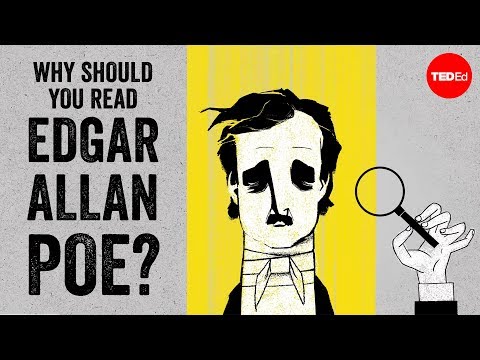
Why should you read Edgar Allan Poe? - Scott Peeples
The genius behind gothic horror and detective fiction.

Why Should You Read Dante s Divine Comedy Sheila Marie Orfano
“Abandon all hope, ye who enter here…” Inscribed above the Gate of Hell, this prophecy sets into motion an epic journey for salvation. Written over 10 years, Dante Alighieri’s three-part narrative poem “Divine Comedy” is both an allegorical imagining of the soul’s journey towards God and a scathing political commentary. Sheila Maria Orfano shares its timeless themes of love, sin and redemption.
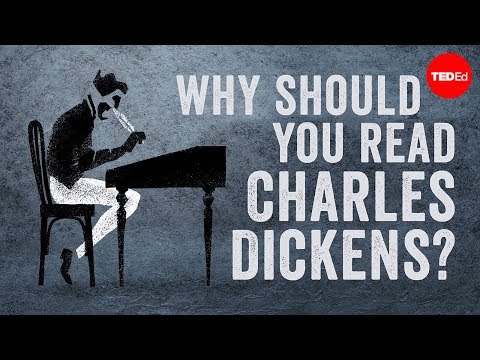
Why Should You Read Charles Dickens Iseult Gillespie
The starving orphan seeking a second helping of gruel. The spinster wasting away in her tattered wedding dress. The stone-hearted miser plagued by the ghost of Christmas past. More than a century after his death, these remain recognizable figures from the work of Charles Dickens. But what are the features of Dickens’ writing that make it so special? Iseult Gillespie investigates.

Why Should You Read James Joyce s Ulysses Sam Slote
James Joyce's “Ulysses” is widely considered to be both a literary masterpiece and one of the hardest works of literature to read. It inspires such devotion that once a year, thousands of people all over the world dress up like the characters, take to the streets, and read the book aloud. So what is it about this novel that inspires so many people? Sam Slote uncovers the allure of this epic tome.