Discover Resources
Browse curated homeschool resources from the community

Why Are Some People Left Handed Daniel M Abrams
Today, about one-tenth of the world’s population are southpaws. Why are such a small proportion of people left-handed -- and why does the trait exist in the first place? Daniel M. Abrams investigates how the uneven ratio of lefties and righties gives insight into a balance between competitive and cooperative pressures on human evolution.

Kabuki the People s Dramatic Art Amanda Mattes
The Japanese dance and theater art of kabuki, derived from the word kabuku, meaning "out of the ordinary," can be traced back to the streets of seventeenth-century Kyoto. Kabuki became a dramatic art for the common people, with its use of makeup and facial expressions rather than masks, as well as a playful take on current events. Amanda Mattes tracks the evolution of kabuki and its place in Japan’s rich cultural heritage.

A Brief History of Graffiti Kelly Wall
Spray-painted subway cars, tagged bridges, mural-covered walls – graffiti pops up boldly throughout our cities. And it turns out: it’s nothing new. Graffiti has been around for thousands of years. And across that span of time, it’s raised the same questions we debate now: Is it art? Is it vandalism? Kelly Wall describes the history of graffiti.

Ugly History Japanese American Internment Camps Densho
On December 7, 1941, 16 year-old Aki Kurose shared in the horror of millions of Americans when Japanese planes attacked Pearl Harbor. Unbeknownst to her, this shared experience would soon leave her family and over 120,000 Japanese Americans alienated from their country, both socially and physically. Densho explores the racism and paranoia that led to the unjust internment of Japanese Americans.

The Incredible History of China s Terracotta Warriors Megan Campisi and Pen Pen Chen
In 1974, farmers digging a well near their small village stumbled upon one of the most important finds in archaeological history – vast underground chambers surrounding a Chinese emperor’s tomb that contained more than 8,000 life-size clay soldiers ready for battle. Megan Campisi and Pen-Pen Chen shares the fascinating history of Emperor Qin Shi Huang.

What it s Like to Be a Parent in a War Zone Aala El Khani
How do parents protect their children and help them feel secure again when their homes are ripped apart by war? In this warm-hearted talk, psychologist Aala El-Khani shares her work supporting— and learning from— refugee families affected by the civil war in Syria. She asks: How can we help these loving parents give their kids the warm, secure parenting they most need?

Could Human Civilization Spread Across the Whole Galaxy Roey Tzezana
Could human civilization eventually spread across the whole Milky Way galaxy? Could we move beyond our small, blue planet to establish colonies in the multitude of star systems out there? These questions are pretty daunting, but their (theoretical) answers were actually put forth decades ago. Roey Tzezana describes the conceptual von Neumann machine.

How the World s First Subway System Was Built Christian Wolmar
It was the dawn of 1863, and London's not-yet-opened subway system — the first of its kind in the world — had the city in an uproar. Most people thought the project, which cost more than 100 million dollars in today's money, would never work. So how did they do it? Christian Wolmar explains how the London Underground was built at a time when no one had built a railway under a city before.

History vs Tamerlane the Conqueror Stephanie Honchell Smith
He was born in the 1330s in the Chaghatayid Khanate, formerly the Mongol Empire. On the steppe, he rose from a lowly sheep thief to become one of history’s greatest conquerors, uniting nearly all of Central Asia, Afghanistan, and Iran under his rule. But was he a great state builder or a bloodthirsty tyrant? Stephanie Honchell Smith puts this controversial figure on trial in History vs. Tamerlane.
A Brief History of Toilets Francis De Los Reyes
On sunny days, citizens of ancient Rome could be found exchanging news and gossip while attending to more urgent business at the public latrines. Today, most cultures consider trips to the restroom to be a more private occasion. But even when going alone, our shared sewage infrastructure is one of the most pivotal inventions in human history. Francis de los Reyes shares the history of the toilet.

Why Change is so Scary and How to Unlock its Potential Maya Shankar
Unexpected change like an accident, an illness or a relationship that suddenly ends is inevitable — and disorienting. With a heartfelt and optimistic take on life's curveballs, cognitive scientist Maya Shankar shares how these challenging moments can inspire transformation, offering three questions to ask when facing uncertainty, so you can let go of rigidity and embrace change.

What Few People Know About the Program That Saved America Meg Jacobs
In 1932, one in four Americans was unemployed, marking the highest unemployment rate in the country’s history. The Democratic presidential candidate Franklin D. Roosevelt promised a New Deal— a comprehensive set of legislation to support struggling citizens and put the country back to work. Meg Jacobs digs into the policies of this bold campaign and how it didn’t fully live up to its promises.

The History of Our World in 18 Minutes David Christian
Backed by stunning illustrations, David Christian narrates a complete history of the universe, from the Big Bang to the Internet, in a riveting 18 minutes. This is "Big History": an enlightening, wide-angle look at complexity, life and humanity, set against our slim share of the cosmic timeline.
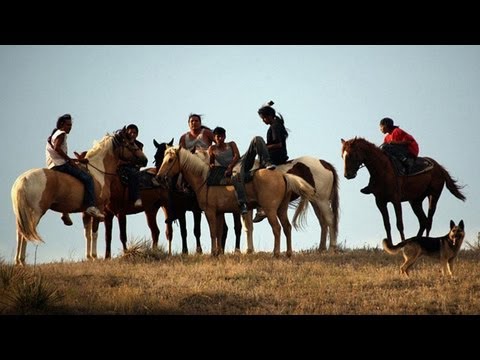
America s Native Prisoners of War Aaron Huey
Aaron Huey's effort to photograph poverty in America led him to the Pine Ridge Indian Reservation, where the struggle of the native Lakota people -- appalling, and largely ignored -- compelled him to refocus. Five years of work later, his haunting photos intertwine with a shocking history lesson in this bold, courageous talk. (Filmed at TEDxDU.)
A Brief History of Divorce Rod Phillips
Formally or informally, human societies across place and time have made rules to bind and dissolve couples. The stakes of who can obtain a divorce, and why, have always been high. Divorce is a battlefield for some of society’s most urgent issues, including the roles of church and state, individual rights, and women’s rights. Rod Phillips digs into the complicated history of divorce.

The History of the Barometer and How it Works Asaf Bar Yosef
A barometer is an instrument that measures air pressure, allowing weather forecasters and scientists to better predict extreme weather events. Despite its incredible usefulness, inventing the barometer was no walk in the park. Asaf Bar-Yosef describes the series of scientists and events that contributed to the birth of the barometer -- and explains how it actually works.

National Museum of the American Indian: Native Knowledge 360
Lessons and resources to transform teaching and learning about Native histories and cultures. #NK360

First Person vs Second Person vs Third Person Rebekah Bergman
Who is telling a story, and from what perspective, are some of the most important choices an author makes. Told from a different point of view, a story can transform completely. Third person, first person, and second person perspectives each have unique possibilities and constraints. So how do you choose a point of view for your story? Rebekah Bergman explores the different ways to focus a story.

What Happened to the Lost Kingdom of Kush Geoff Emberling
Along the Nile River, in what is now northern Sudan, lay the ancient civilization of Kush. Though they were once conquered by a powerful neighbor, the kings and queens of Kush would go on to successfully challenge two of the most dominant empires in history: the Egyptians and the Romans. So what happened to this African kingdom? Geoff Emberling details the rise and fall of the Kush empire.

The Murderous Medieval King Who Inspired Macbeth Benjamin Hudson
Of all Shakespeare’s plays, perhaps none is stranger than “Macbeth”— a parable on power rife with supernatural elements. But according to texts from the 11th century, this tragedy has its roots in reality. What’s more, other accounts mention witches, prophecies, and arboreal armies. Which raises the question: just how much of Shakespeare’s strange story is true? Benjamin Hudson investigates.
